Key Takeaways:
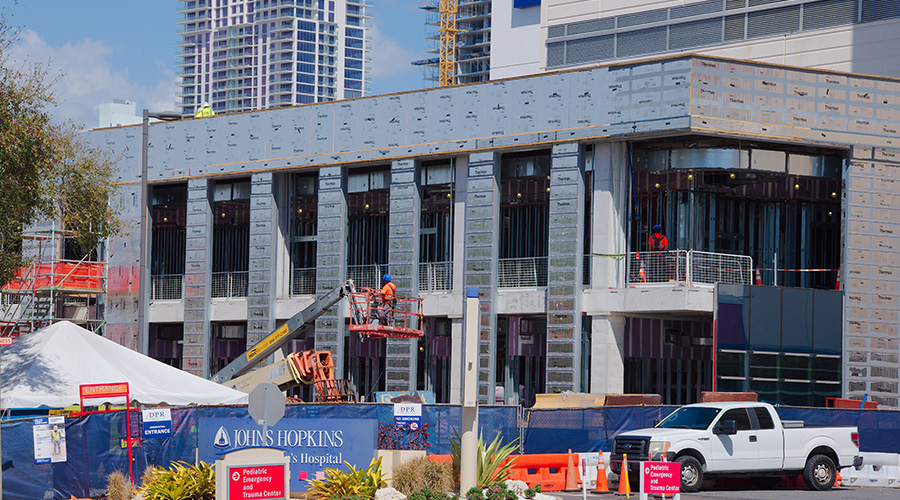
- One key challenge when managing large-scale healthcare construction is ensuring the work is as invisible as possible to hospital staff.
- Regular dialog between the construction team members and healthcare project owners is vital and involves frequent notifications, as well as weekly work summaries on accomplishments, necessary adjustments and pending deadlines.
- Risks can range from day-to-day issues such as noise control and air quality to more urgent concerns such as healthcare-associated infection control and facility security.
In the midst of a rapidly shifting economy, the healthcare industry is shifting, too. As the pandemic drives massive changes in technology and consumer preferences, many healthcare systems are reimagining their campuses by building alternative care models and expanding into new communities. With these opportunities for growth, new challenges arise every day.
Supply chain issues are increasing construction costs and delaying construction schedules. One recent report indicates that prices of construction materials used in new nonresidential construction jumped more than 21 percent from February 2021 to February 2022. Add to that the volatile weather conditions and labor shortages, and the result is a mix of potential disruptions that could easily throw a healthcare construction project off course.
Addressing these potential challenges requires close collaboration among multiple project stakeholders, including owners, facility managers, administrators, subcontractors and crews to ensure the alignment of timelines, ongoing activities and contingency plans.
Here are three ways facility managers and construction leaders can work together to minimize potential disruptions.
1: Plan for the unexpected
Healthcare construction projects usually involve hundreds of participants, from designers and contractors to building materials suppliers and facility technicians. One key challenge when managing large-scale healthcare construction is ensuring the work is as invisible as possible to hospital staff who need to continue doing their jobs safely and providing top-quality care for patients. Planning becomes a vital part of the equation to identify and address potential hurdles and key milestones.
Project managers should be designated early as go-to contacts for the entirety of the project, which can last from three months to several years. As a first step, these field leaders need to consider current market conditions, from procurement logistics to supply chain issues, as well as review material and equipment needs at least 20 weeks out to determine alternative solutions.
HFT Recommends: Aligning Construction and Facility Activities to Minimize Problems
Using a lean process helps project leaders more effectively set project schedules, establish necessary work sequences and determine construction feasibility from the design phase to construction work on site. Shutdown processes and requirements for critical utility and service interruptions often vary by healthcare organization and are important considerations. Field leaders must predict the project footprint and status up to eight weeks in advance and determine the best ways to manage patient flow, utility and life safety system support, interim exits and the modification of workflow.
2: Make daily rounds to check project health
The stakes are higher for healthcare construction projects with patient and staff safety at risk. For this reason, regular dialog between the construction team members and healthcare project owners is vital and involves frequent notifications, as well as weekly work summaries on accomplishments, necessary adjustments and pending deadlines.
Instead of simply relaying tasks, construction field leaders should drive proactive communications with department heads and staff members. In most cases, this process includes daily rounds or weekly meetings based on project complexity with stakeholders to address potential concerns and discuss safety issues and utility interruptions.
It is essential to convey the real impact of each accomplished task to quantify the influence of the actual work. Using technologies like building information modeling, which provide a 3D visualization of projects, drives collaboration and advance dialog around potential issues so they can be resolved before the shovel hits the dirt.
3: Make safety a top priority
Since the onset of the COVID-19 pandemic, awareness of infection prevention has increased, and hospitals are more concerned about ensuring the crews they partner with have the right credentials to ensure patient protection. It is essential for managers to ask about the training and certifications each firm has and look for testimonials from other healthcare system administrators.
Construction field leaders need to act with urgency and delegate with composure. This behavior is key, especially when managing safety issues inside the healthcare facility’s walls. Risks can range from day-to-day issues such as noise control and air quality to more urgent concerns such as healthcare-associated infection control and facility security.
Among the ways in which construction teams can ensure the well-being of patients, staff and workers during construction projects include:
- encouraging healthy habits of their workers and monitoring crews on-site
- creating action plans for traffic patterns and work separation
- following robust infection control and dust mitigation practices
- continued education and training for personnel working with WHEA, AHSE and OSHA.
Demonstrating constant awareness of the healthcare building’s physical environment is also crucial (i.e., mechanical and plumbing infrastructure) to isolate the work and ensure other parts of the hospital remain operational. There are a multitude of special environmental issues that need to be addressed from emergency and normal power distribution and fire alarms to water quality management and hazardous material storage.
Having a team that prioritizes advance planning, constant communication and safety throughout construction projects can help maintain flexibility in the face of a rapidly changing market.
Chris Meier, LEED AP, is a project executive with Riley Construction, headquartered in Kenosha, Wisconsin. He has over 20 years of project management experience and is responsible for the successful acquisition, launch and execution of healthcare construction contracts.
 Creating Healthcare Campus Master Plans That Allow Movement and Respite
 Aspirus Health Celebrates Opening of Chippewa Falls Hospital and Clinic
 AdventHealth to Open Aurora Highlands Medical Campus
 The Future of Healthcare Facility Construction Projects
 Arnprior Regional Health Upgrades Building Controls to Improve IEQ