
To allow healthcare facilities to maximize capital investments and keep pace with industry changes, healthcare design professionals are creating facilities with built-in flexibility, according to an article on the Health Facility Management website.
“Flexibility is an investment in future choice,” said Heather Chung, of SmithGroupJJR.
Mark Patterson of SmithGroupJJR added: “It’s definitely a topic we address with every client, because of their interest in it and the responsibility they have for the capital investment.”
To target resources effectively, project teams should analyze possible scenarios and determine the future likelihood of implementing potential options that were made possible by the flexible design, the article said.
There are several levels of flexibility hospitals and health systems can engineer into their facilities, from acuity-adaptable patient rooms to full interstitial mechanical floors. Installing infrastructure to handle catastrophic events or pandemic outbreaks also can increase a facility’s flexibility. A zoned air handling system at Columbia St. Mary’s Hospital, Milwaukee, for example, allows the hospital to run efficiently under normal conditions while maintaining significant surge capacity for negative-pressure isolation rooms in the event they’re needed, according to the article.
 Cleanliness in Hospitals: Clinical Priority and Community Perception
 Dana-Farber Receives $50M Gift for Planned Cancer Hospital
 Clarinda Regional Health Center Reports Data Security Incident
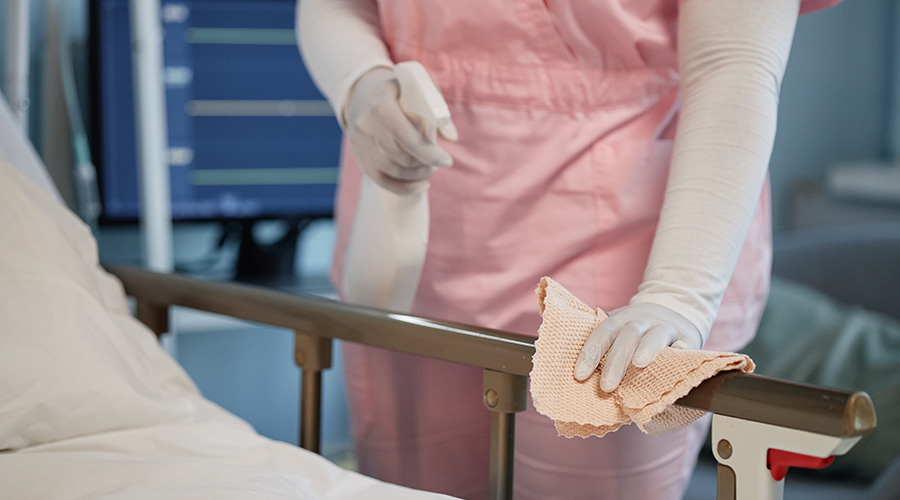 Gaps in Nurses' Environmental Cleaning Knowledge Grow Amid Rising EVS Pressures
 Ground Broken on the Southern Nevada Forensic Facility