
The Hospital Consumer Assessment of Healthcare Providers and Systems (HCAHPS) survey measures patient satisfaction on 27 categories, including noise and cleanliness. This survey offers environmental services departments an opportunity to increase patient satisfaction and improve overall scores.
Because patient perceptions can be very different from staff perceptions, it can be helpful to think like a patient when viewing your facility. What do patients see as they move through your facility? When was the last time you entered your facility’s front door as many of your patients do? It might be an eye-opening experience.
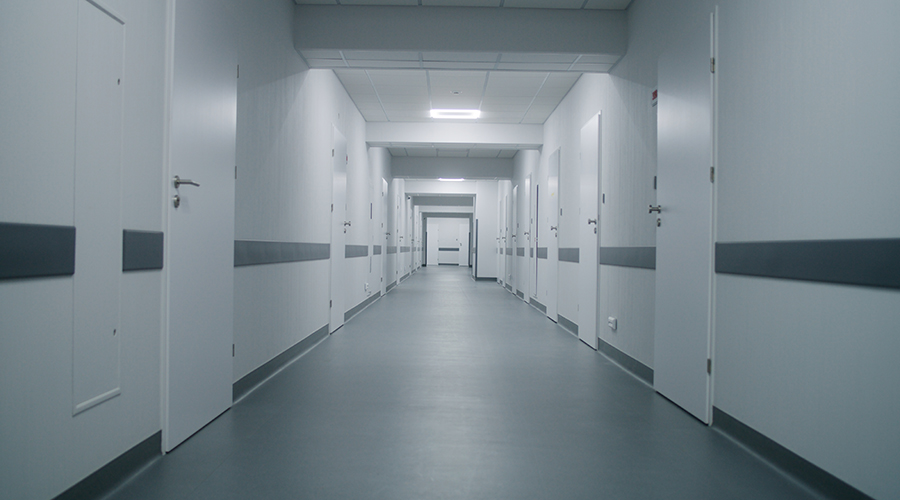
People often look down as they walk through hospitals, so the floor has a huge impact on perceptions of cleanliness. Look with a critical eye on ways to improve what you see.
Excessive noise can create stress in patients, potentially affecting healing and possibly a facility’s bottom line. Noise around the patient environment remains one of the most difficult HCAHPS areas for hospitals to receive top scores.
Today’s floor scrubbers are quieter and may feature chemical-free cleaning, so floors can be cleaned day or night without excessive noise or chemical smells that can affect patient satisfaction. Quieter scrubbers enable housekeeping staff to enter patient rooms more often, enhancing the perception of a clean facility.
“We’re always looking for opportunities to reduce noise levels. Quiet autoscrubbers and vacuums, and the timing of machine use affects noise levels,” said Larry Garrone, director of environmental services, Beth Israel Deaconess Medical Center, Boston, Mass. “Having staff members show interest in maintaining cleanliness and keeping the hospital clean and quiet, sends the message that staff cares.”
A new, rapid drying carpet cleaning system featuring microfiber technology uses less water and leaves up to 90 percent less water in the carpet compared to deep extraction, so carpeted areas are ready for traffic within 30 minutes of cleaning. This allows more frequent interim carpet cleaning that improves a facility’s appearance and reduces odors.
Work with knowledgeable floor care suppliers who can help you meet your goals, and offer a full range of technology and support. Look for a comprehensive nationwide service program, with factory-trained service technicians who have undergone background checks and who are licensed, bonded and insured. This will increase machine uptime, and knowing that the people in your facility will conduct themselves safely and professionally will provide peace of mind.
HCAHPS facts
• Each day more than 26,000 patients are surveyed about their hospital
experience
• More than 7,700 patients complete the HCAHPS survey every day.
• HCAHPS has encouraged numerous efforts to improve patients’ perception of care.
• Healthcare organizations can improve the patient experience by targeting problem areas indicated on patient surveys.
Chris Wetmore is the director of Healthcare and BSC for the Tennant Company.
 Ambulatory Care Facilities Reshape FM Strategies
 Intermountain Foundation Receives $150M Gift for Children's Hospital in Nevada
 Texas HHSC Reaches Construction Milestone for Wichita Falls State Hospital
 Preparing Healthcare Facilities for Wildfire Air Quality Events
 UW Health Set to Open Expansion at East Madison Hospital