
Johnson Controls has entered into an agreement with CBRE, World Resources Institute (WRI) and Lawrence Berkeley National Laboratory (Berkeley Lab) to test and deploy an open-source, web-based energy analysis tool to identify energy efficient retrofit opportunities in commercial buildings. The initiative is part of the Johnson Controls and CBRE Innovation Lab, which was established three years ago to evaluate, connect and leverage products, services and energy data to create value for occupiers and investors of real estate. The initiative also supports the Building Efficiency Accelerator, a public-private collaboration that accelerates local government implementation of building efficiency policies and programs where Johnson Controls serves the role of co-convener along with the World Resources Institute.
Johnson Controls developed the LEAN energy analysis technology over the past eight years and has used the tool to analyze retrofit opportunities in over 700 buildings. Berkeley Lab is working with Johnson Controls to automate and improve the LEAN energy analysis tool and create an open-source version of the tool for public use. CBRE will be an initial deployment partner, using the tool to help their enterprise customers target cost-effective energy efficiency retrofit opportunities across their real estate portfolios. WRI will use the open-source tool to help local governments around the world target the best opportunities for retrofitting public and private buildings within their jurisdictions.
“This is a big step forward in providing commercial, institutional and government building owners and managers with open-source, easy-to-use tools to target building efficiency improvement opportunities,” said Clay Nesler, vice president, global sustainability and regulatory affairs, Johnson Controls. “We believe this initiative will help drive greater investment in energy efficiency by turning readily available, monthly building energy consumption data into specific, cost-effective recommendations for improvement.”
An alpha version of the open-source LEAN energy analysis tool is available on GitHub at https://github.com/LBNL-JCI-ICF/better. The initiative will be announced on January 15 at the 2019 AHR conference in Atlanta, Georgia. A technical paper on the open-source LEAN energy analysis tool will also be presented at the 2019 ASHRAE Winter Conference on January 16.
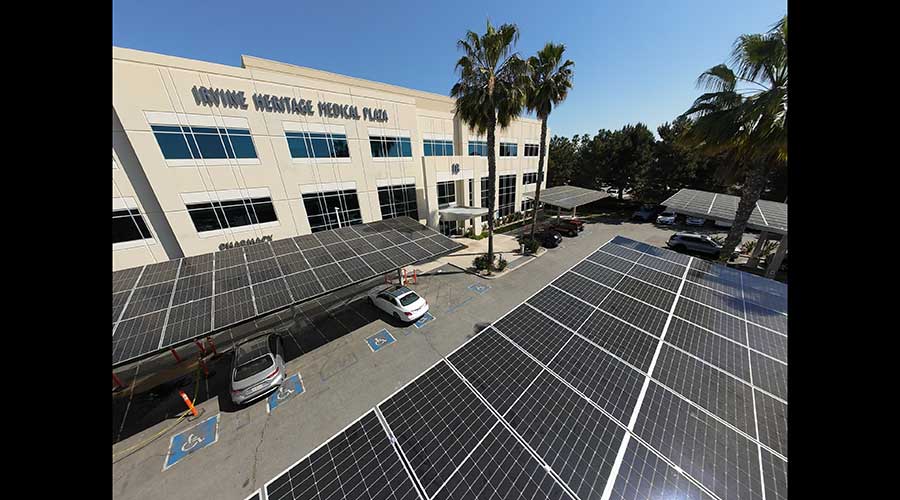 Rethinking Parking Lot Design at Irvine Heritage Medical Plaza
 Repurposing Healthcare Spaces: 5 Critical Questions
 Disinfectant Contact Time: The Case for Biofilm Disruption
 Rethinking How Healthcare Facilities Fund Construction Projects
 Putting Trauma-Informed Design into Practice