
Managing indoor air quality in long-term care facilities can be complicated because older adults are more susceptible to the effects of airborne pollutants, according to an article on the McKnight's website.
In many case, HEPA filters are adequate for controlling dust and pollen in indoor air. But standard HEPA filters cannot capture VOCs, nor are they suited for controlling odors.
To remove odors and chemically reactive gases, HEPA air purifiers combine HEPA technology with additional filtration systems, including carbon and potassium iodide media.
The American Society of Healthcare Engineers recommends that filters in resident care, treatment and support areas in assisted living facilities have a minimum efficiency reporting value (MERV) rating of at least seven.
 Cleanliness in Hospitals: Clinical Priority and Community Perception
 Dana-Farber Receives $50M Gift for Planned Cancer Hospital
 Clarinda Regional Health Center Reports Data Security Incident
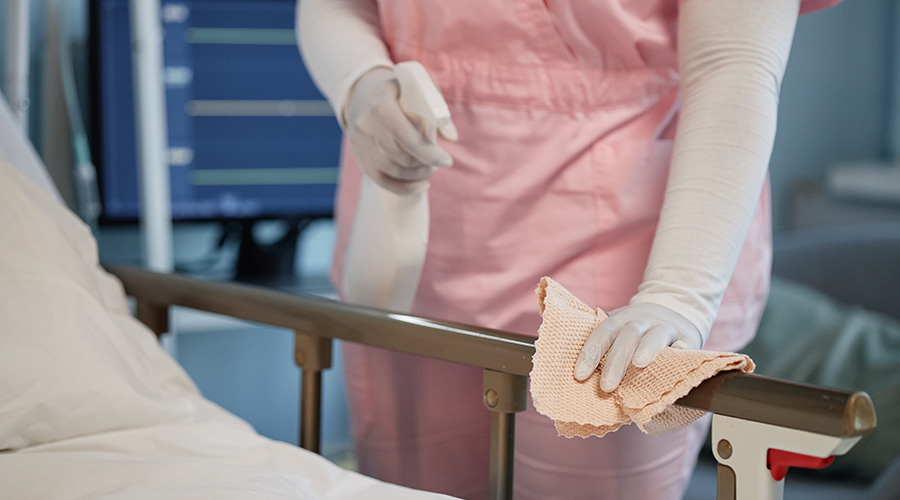 Gaps in Nurses' Environmental Cleaning Knowledge Grow Amid Rising EVS Pressures
 Ground Broken on the Southern Nevada Forensic Facility