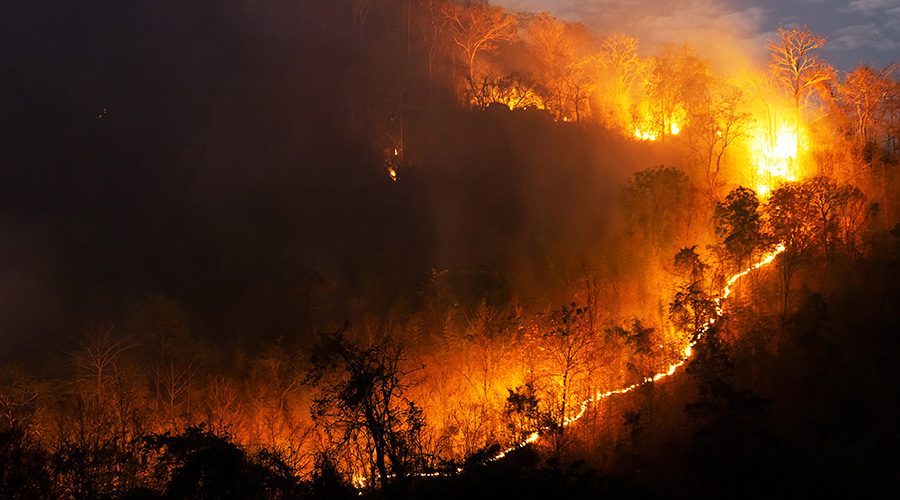
As climate change continues to exacerbate droughts and increase temperature, wildfires are becoming more destructive. Since the beginning of the year, 20,915 wildfires have burned over 1.7 million acres across the country, meaning a 127 percent increase in acreage than the 10-year average. They are especially dangerous in the Western United States, which continues to experience dry, drought conditions in winter.
Heading into the warmer months, the country will continue to face more wildfires at unprecedented levels of destruction. Yet the outdoor environment is not the only thing in danger. Wildfires can affect indoor air quality (IAQ) depending on proximity and density of the smoke. This is extremely dangerous for healthcare facilities, particularly hospitals, with ventilation systems that require outdoor air.
While facilities use HVAC systems and filters to remove harmful pathogens from outdoor air, it may not be strong enough against air polluted with heavy smoke. In these cases, it is impossible to safely house patients and staff. Facilities should have wildfire evacuation procedures in place for such scenarios.
Related IAQ Content: Measuring IAQ Is Crucial in Healthcare Facilities
However, emergency departments near the fire must remain open to treat firefighters and affected residents. The National Oceanic and Atmospheric Administration (NOAA) recommends that facilities in fire-prone areas “isolate emergency department ventilation systems and enable recirculated air during emergency conditions.” They also note that portable air scrubbers or high-efficiency particulate arresting (HEPA) filters can be utilized to capture fumes, smoke, and particles if outdoor ventilation is shut down.
The NOAA points to an example from 2008. Providence Holy Cross Medical Center in Burbank, California, was the only local trauma center in the area when two major wildfires raged across the area for 11 days. They were able to remain operational to over 200 patients due to HEPA filters that maintained the central ventilation system with zero pressures.
A medical center in Oregon was within 20 miles from a wildfire in Oregon in 2020. While they dealt with wildfire smoke about once a year, this proximity put the facility on high alert. They installed charcoal filters to keep particulates out and changed the other HEPA filters more frequently, taking daily indoor and outdoor air samples to monitor their efforts.
Another surgery center in California was in the yellow or red zone of the Environmental Protection Agency (EPA) Air Quality Index almost every day. Their facility team utilized a three-stage filtration system to filter out most airborne particles. While the smell of smoke remained, they decided to install charcoal filters to remove any remaining irritants. They also adjusted their HVAC system from 100 percent outdoor air to 40 percent. This also meant redoing the air handlers to circle more air through.
Poor IAQ can have adverse effects on human health, from flu-like symptoms to an increased risk of heart disease and cancer. It is crucial for facilities to maintain it for patients to recover and avoid obtaining healthcare-associated infections (HAI). Wildfires can create deadly levels of IAQ, and as it seems they aren’t going anywhere anytime soon, facilities must be prepared.
Elisa Miller is an assistant editor for CleanLink.com, Contracting Profits, Facility Cleaning Decisions, and Sanitary Maintenance.
 Sustainability as a Baseline in Healthcare Facilities
 Penobscot Valley Hospital Reports Data Security Incident
 Ballad Health Acquires Land for Future Unicoi County Hospital
 Why Healthcare Facilities Management Is Critical to Patient Safety
 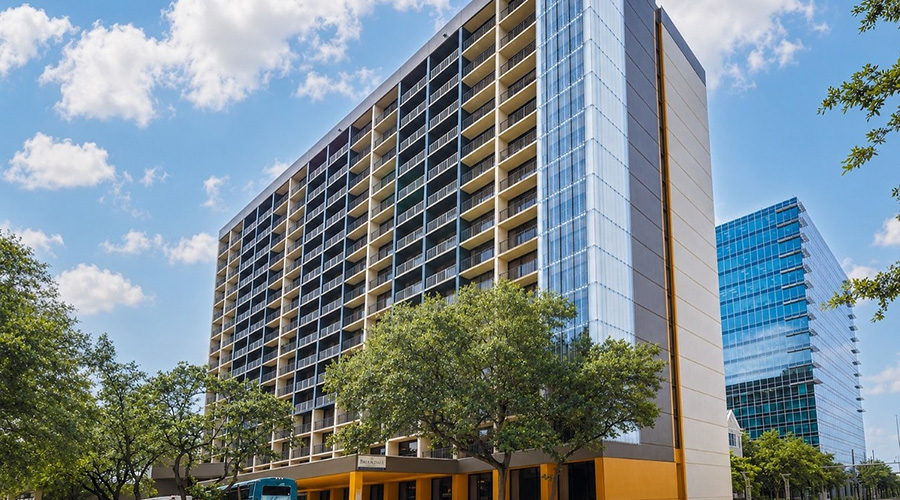 Brookdale Senior Living Announces Acquisition of the Brookdale Galleria Community