
The Sinquefield Center for Research, Inc. announced that its latest cycle of research-related funding to Saint Louis University (SLU), totaling more than $765,000, will support several innovations in COVID-19-related research along with critical, specialized equipment. The donation is part of the Center's 2018 multi-year $50 million gift that established the SLU Research Institute to accelerate the University's rise as a world-class research institution. The funds will be shared across multiple departments, disciplines, investigators and faculty.
Dr. Jeanne Sinquefield, who along with her husband Rex, established the Sinquefield Center for Research, described the inspiration and purpose of the donation, "I refer to this as SLU research… the Jesuit way. SLU's president Fred Pestello and Ken Olliff, vice president for research, have encouraged the University's researchers and faculty to work together with one shared goal, to conduct and advance cutting-edge research that will best serve the community. The projects we are funding fit perfectly into SLU's historic service-focused mission, challenging and providing opportunities for the university's diverse community of students, faculty and researchers to make the world a better place."
The breakdown of funding includes $300,000 for rapid COVID-19 research, which engages more than 40 members of the faculty across 20 departments, including the SLU Center for Vaccine Development, which houses one of only nine Vaccine Treatment and Evaluation Units leading the effort to find a COVID-19 vaccine; public health research; geospatial research; and emergency preparedness.
An additional $300,000 for the SLU School of Medicine Research Growth Fund, involving multiple Investigators doing innovative research across the School of Medicine. The fund will focus on strategic investments that accelerate research growth in the School of Medicine.
The remainder of the grant cycle funding, just under $200,000, is being used to purchase new Single-Cell RNA Sequencing equipment that will be shared among 10 faculty members across five departments and laser-scanning Confocal Microscopy that will be shared among 13 faculty in three departments for use in addressing infectious diseases and other high-priority research.
The Sinquefields' gift is the second grant related to COVID-19 research made public this week by SLU. On Monday, the university announced that alumnus Stephen C. Peiper, M.D. (Med '77) and Zi-Xuan "Zoe" Wang, Ph.D., his wife, have given $750,000 to SLU to support research aimed at developing new vaccines for COVID-19 and other illnesses.
This funding cycle continues the Sinquefield Center for Research's ongoing support for the SLU Research Institute. The Research Institute leverages the Center's contributions to provide critical support for outstanding researchers, advance the university's research growth ambitions and accelerate SLU's rise as a world-class research institution.
The Sinquefield Center for Research, Inc. is an Educational Institutions and Related Activities non-profit organization that provides assistance in the form of charitable contributions.
For more information about the SLU Research Institute, please visit https://www.slu.edu/research/research-institute/index.php. For more information about Dr. Jeanne and Rex Sinquefield, please visit https://www.sinquefieldcharitablefoundation.com/.
April 20, 2020
Topic Area: Press Release
Recent Posts
 Creating Healthcare Campus Master Plans That Allow Movement and Respite
A thoughtful campus master plan looks beyond buildings to the corridors and transitional spaces that shape how people experience healthcare environments.
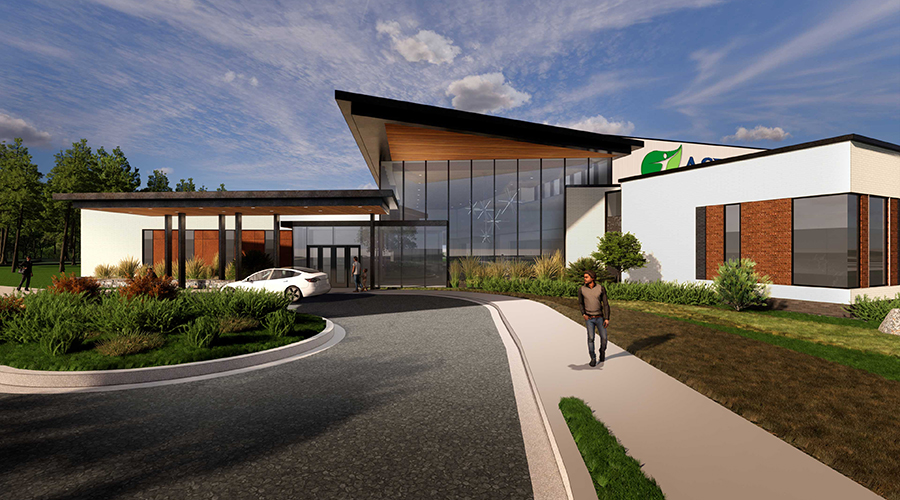 Aspirus Health Celebrates Opening of Chippewa Falls Hospital and Clinic
The new facility combines hospital and clinic services in one location and is designed to support patients with coordinated, patient-centered care.
 AdventHealth to Open Aurora Highlands Medical Campus
AdventHealth Aurora Highlands includes a 24-hour freestanding emergency room, outpatient imaging and clinic services.
 The Future of Healthcare Facility Construction Projects
Brian Cowperthwaite highlights the invisible work that impacts everyone who walks through a healthcare facility.
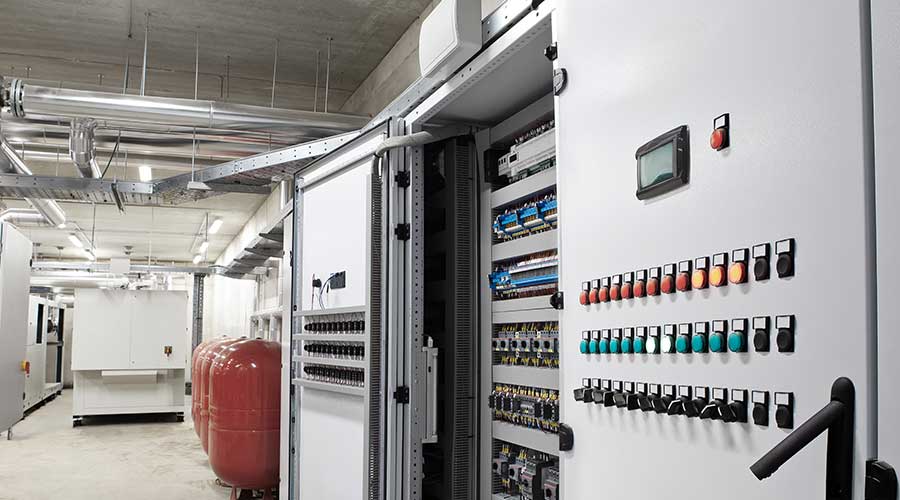 Arnprior Regional Health Upgrades Building Controls to Improve IEQ
Case study: They wanted to improve the hospital facility’s IEQ to support patient care and reduce long-term operating costs.