
Healthcare facilities operate in an environment where every system matters.
From patient monitoring equipment and surgical suites to HVAC systems and emergency communications, healthcare organizations rely on continuous access to power to support patient care and daily operations. As utility grids face increasing strain and healthcare campuses become more energy dependent, maintaining reliable power has become a critical operational objective.
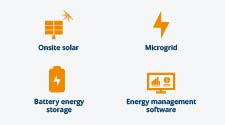
To address these challenges, many healthcare organizations are adopting a more proactive approach to energy resilience. By combining advanced energy management platforms with distributed energy resources such as solar generation, battery energy storage, and microgrid technologies, facilities can gain greater control over their energy infrastructure while reducing vulnerability to grid disruptions.
Why Healthcare Facilities Are Rethinking Energy Strategy
Traditional backup power systems remain an important component of emergency preparedness, but today's healthcare environments require a more comprehensive resilience strategy.
Even brief power disturbances can affect clinical operations, interrupt procedures, and create challenges for critical medical equipment. Extended outages can further impact temperature-sensitive medications, vaccines, and other essential healthcare resources. These risks are driving healthcare leaders to evaluate new approaches for maintaining operational continuity.
At the same time, healthcare organizations must balance uptime requirements with evolving compliance obligations, sustainability initiatives, and increasingly complex facility operations. As a result, resilience planning is becoming a larger component of long-term facility strategy.
Turning Energy Data Into Action
Modern energy management systems provide far more than visibility into electricity consumption.
Today's platforms collect data from utility connections, onsite generation assets, battery storage systems, and building operations, delivering a comprehensive view of facility energy performance. This information allows facility teams to assess system conditions continuously and make more informed operational decisions.
Advanced platforms can also automate key functions such as load management, equipment monitoring, and energy optimization. Rather than simply reacting to changing conditions, healthcare facilities can anticipate potential issues and coordinate resources before disruptions affect operations.
Strengthening Reliability with Distributed Energy Resources
Distributed energy resources (DERs) are becoming an increasingly valuable part of healthcare resilience strategies.
Technologies such as solar arrays, battery energy storage systems, fuel cells, and microgrids provide facilities with additional flexibility when utility conditions become unpredictable. By generating or storing power onsite, healthcare organizations can reduce dependence on external energy sources while strengthening overall energy security.
Battery energy storage systems offer particular advantages because they can respond immediately when power disturbances occur. When paired with onsite solar generation, batteries can store excess renewable energy during normal operations and provide support to critical systems when utility power is unavailable.
Coordinating Resources to Protect Critical Loads
The real benefit of distributed energy resources comes from their ability to work together as part of a coordinated energy ecosystem.
Energy management platforms continuously evaluate factors such as power demand, generation capacity, battery status, and grid conditions. Using this information, the system can help prioritize critical loads and direct available resources where they are needed most.
During a utility disruption, facilities equipped with distributed energy resources, microgrid technologies, and intelligent controls can continue supporting predefined critical functions while automatically managing available energy supplies. This coordinated approach helps maintain power for essential patient-care environments and mission-critical infrastructure.
Improving Performance Beyond Resilience
While uptime remains a top priority, modern energy management solutions can deliver additional operational benefits.
By centralizing information across multiple energy assets and systems, healthcare facility teams gain greater visibility into infrastructure performance and potential risks. Advanced analytics can also support predictive maintenance efforts by identifying equipment issues before they lead to operational disruptions.
Additional advantages may include:
- Improved monitoring of critical electrical infrastructure.
- Better coordination of onsite energy resources.
- Support for carbon-reduction initiatives and sustainability objectives.
- Enhanced operational efficiency across healthcare campuses.
Preparing for the Future of Healthcare Operations
As energy demands continue to increase and healthcare facilities grow more dependent on reliable electrical infrastructure, resilience is becoming a foundational component of facility management.
Combining distributed energy resources with intelligent energy management software enables healthcare organizations to create a more coordinated, flexible, and reliable energy environment. By improving visibility, automating decision-making, and optimizing available resources, healthcare facilities can better protect critical operations and support continuous patient care under a wide range of conditions.
Protect uptime with an energy management and optimization system