
ATLANTA – A newly revised standard from ASHRAE and IES seeks to provide greater guidance and a more comprehensive approach to retrofit of existing buildings for increased energy efficiency.
Published this week, ANSI/ASHRAE/IES Standard 100-2015, Energy Efficiency in Existing Buildings, provides comprehensive and detailed descriptions of the processes and procedures for the retrofit of existing residential and commercial buildings in order to achieve greater measured energy efficiency. Appendices are included for life-cycle cost analysis procedures as well as identification of potential energy conservation measures.
“The total primary energy used in both residential and commercial building sectors is expected by the U.S. Energy Information Administration to rise each year for the next several decades in spite of aggressive efficiency improvements in new construction,” Rick Hermans, chair of the Standard 100 committee, said. “In order to reduce the overall impact of energy used by residential and commercial buildings, the existing building stock must become more efficient. This revision to Standard 100 provides the means to accomplish that goal.”
The standard addresses both residential and commercial buildings. It addresses single and multiple activity buildings with variable occupancy periods and identifies the approach for 53 building types in 17 climate zones/subzones. It identifies requirements for buildings undergoing retrofits that do not fall under the scope of either ANSI/ASHRAE/IES Standard 90.1-2013, Energy Standard for Buildings Except Low-Rise Residential Buildings, or ANSI/ASHRAE/IES Standard 90.2-2007, Energy Standard for Low-Rise Residential Buildings.
Standard 100 directly addresses a building’s energy-use efficiency in a quantitative manner and provides a means to improve that efficiency with an objective benchmark created with the assistance of the Energy Information Administration, the Federal Energy Management Program and Oak Ridge National Laboratory.
Recognizing that the actual occupancy of the building plays a key role in its performance, the standard establishes the need for development of an energy management plan and an operation and maintenance program. It also addresses the requirements for ongoing commissioning.
The standard takes advantage of the fact that any building that has been in operation for at least twelve months can quickly determine its performance relative to some benchmark, which is defined in the standard as an energy-use intensity target. This concept is the new paradigm for energy conscious design, construction and operation of buildings, according to Hermans.
The revision of the standard, last published in 2006, also brings the standard in line with other published ASHRAE documents, specifically Standard 90.1-2013, Standard 90.2-2007 and ANSI/ASHRAE Standard 105-2014, Standard Methods of Determining, Expressing and Comparing Building Energy Performance and Greenhouse Gas Emissions.
The cost of ANSI/ASHRAE/IES Standard 100-2015, Energy Efficiency in Existing Buildings, is $72 ($61, ASHRAE members). To order, contact ASHRAE Customer Contact Center at 1-800-527-4723 (United States and Canada) or 404-636-8400 (worldwide), fax 678-539-2129, or visit www.ashrae.org/bookstore.
ASHRAE, founded in 1894, is a global society advancing human well-being through sustainable technology for the built environment. The Society and its more than 50,000 members worldwide focus on building systems, energy efficiency, indoor air quality, refrigeration and sustainability. Through research, standards writing, publishing, certification and continuing education, ASHRAE shapes tomorrow’s built environment today. More information can be found at www.ashrae.org/news.
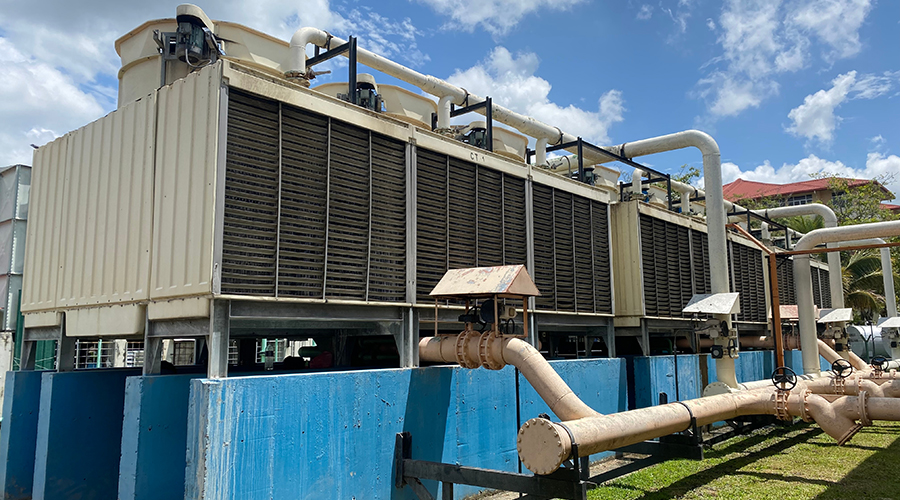 Cooling Towers at NYC Health + Hospitals/Lincoln Test Positive for Legionella
 Prefabricated Wall Panels Accelerate UCF Lake Nona Medical Center Construction
 University of Rhode Island Adds Clinical Space
 How Retail Design Principles Can Improve Healthcare Wayfinding
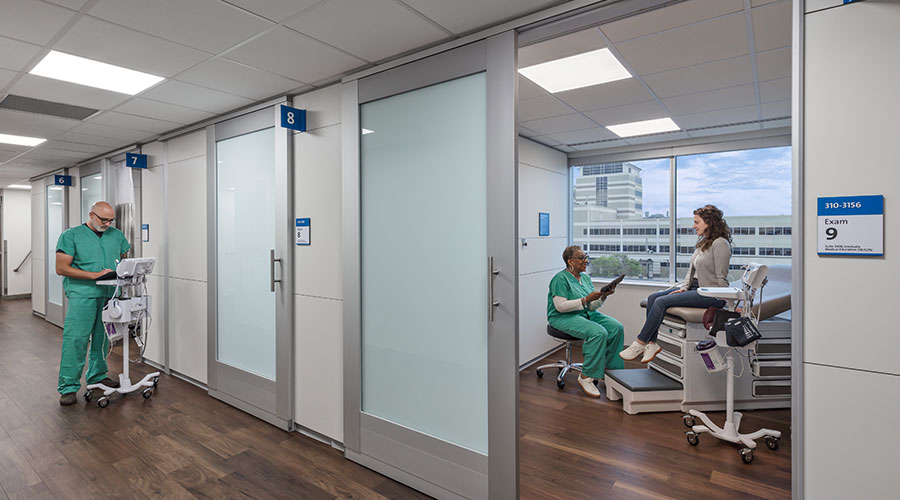 Flexible Design Strategies Help OhioHealth Maximize Clinical Space