Key Takeaways:
- Healthcare systems face supply constraints, escalating construction costs and booming demand for outpatient services.
- Before addressing whether to move, build or renew a lease, healthcare systems must first look inward at their space utilization.
- Systems must assume they will be competing for and heavily adapting standard commercial or retail inventory.
Healthcare real estate is no longer just a passive operational expense. It is actively shaping the future of care and profitability. But small and large healthcare organizations are feeling the pressure to maximize the value and efficiency of their real estate.
Several economic and demographic factors have altered the traditional playbook for site selection, lease renewals and facility budgets, making that exercise more complex and competitive than ever. For its own future success, organizations should be asking for the most updated version of the site selection playbook.
Assessing the market
Healthcare systems face supply constraints, escalating construction costs and booming demand for outpatient services. A few years ago, the first of several structural shifts occurred during the COVID-19 pandemic. Care started to push out of hospitals and into lower-cost settings. Healthcare systems leaned into freestanding clinics and surgery centers, and many patients developed a preference for neighborhood locations and convenience.
National outpatient volume and the associated revenues have surged since that time. Overall outpatient volume is forecast to grow another 18 percent by 2035, according to Vizient’s 2025 Impact of Change Forecast, with outpatient surgery growing by 20 percent and post-acute outpatient care growing by 31 percent.
Healthcare systems scrambling to meet the outpatient demand face a space squeeze. With medical office building occupancies soaring to just under 93 percent in the top 100 metro areas and medical construction starts declining to historic lows, this scarcity places an immense premium on existing spaces just as the cost to customize them rises.
HFT Recommends: How Location Data and Analytics are Revolutionizing Site Success
The national average cost per square foot for new hospital construction has risen by more than 20 percent since 2020, according to Gordian’s RSMeans data-building models. In some cases, medical outpatient fit-out costs have risen to more than $400 per square foot, driven by labor shortages, trade constraints and more complex technology. With construction costs soaring, systems leasing underperforming space are taking a direct hit to the bottom line.
Site selection mistakes
Clearly the stakes are high, so what happens when providers get site selection wrong? In our work advising providers, we see the same costly mistakes. Here are the top mistakes, along with strategies to avoid them.
Underestimating the competition. Independent providers are no longer just competing with the hospital system down the street. The entire industry is converging on the exact same neighborhood-based ambulatory care model. Major employers and corporate entities are moving directly into outpatient healthcare delivery, absorbing premium retail and commercial spaces across major suburban markets.
High-acuity providers and corporate entrants are willing to pay top dollar for premium space, driving up rents. Acknowledging this competition early allows independent and regional providers to secure highly visible locations before being priced out by institutional giants.
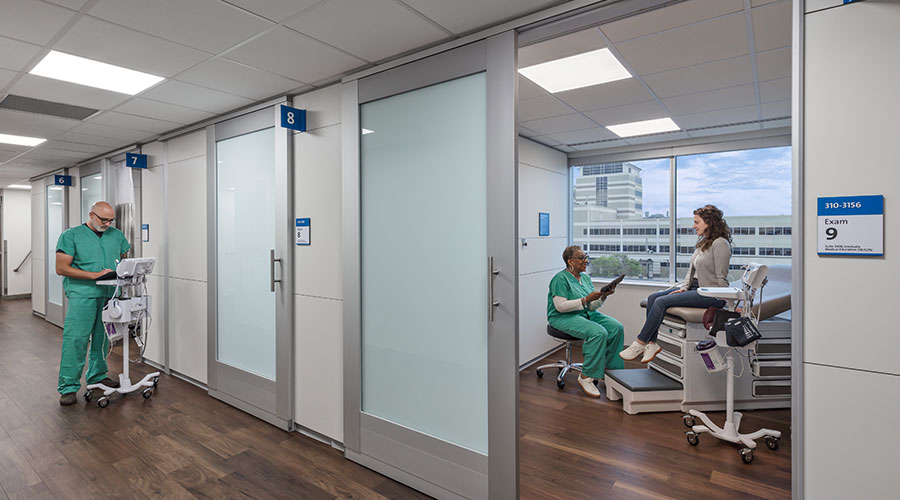
Settling for inefficient space. Before addressing whether to move, build or renew a lease, healthcare systems must first look inward at their space utilization. Intelligent, flexible design is not about shrinking a footprint. It is about maximizing clinical efficiency and driving revenue.
By optimizing provider-to-exam-room ratios, improving waiting room flow and centralizing support areas, a clinic can dramatically increase daily patient throughput. Greater patient flow equals higher revenue, allowing healthcare systems to absorb higher per-square-foot market rents and construction costs without sacrificing care. This optimization also unlocks underutilized space to introduce new, complementary revenue streams — such as specialized diagnostics or wellness offerings — without needing to lease additional square footage.
It can be tempting in a space utilization exercise to focus too heavily on the present state. But what a provider needs today might be quite different in five years. Finding a true forever home means prioritizing long-term value and scaling options. Building flexibility into a design is essential to adapt to multi-specialty consolidation and changing workflows without triggering another costly relocation.
Assuming second-generation space will be available when needed. In previous cycles, expanding providers might have hunted for second-generation medical space to curtail construction costs. In 2026, this process is largely a fool's errand. Pristine, code-compliant second-generation space is rare, and most existing inventory is dated and fails to meet modern clinical or infrastructural standards.
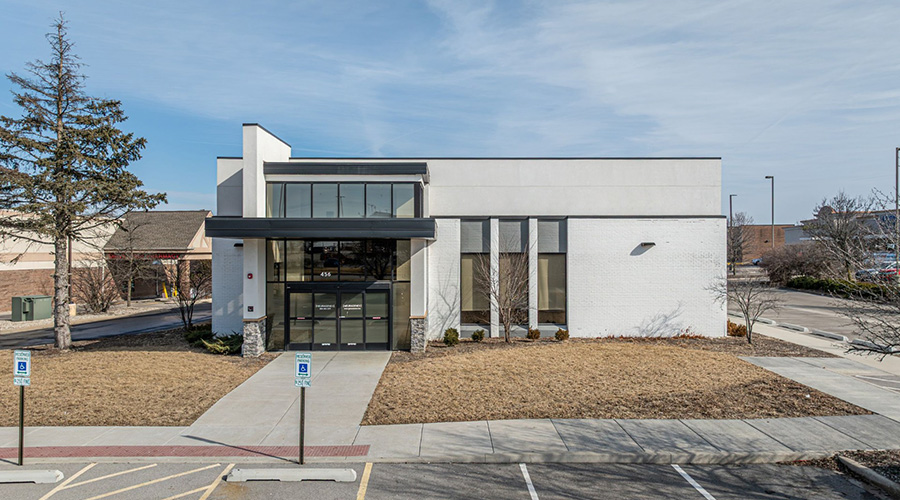
Instead, systems must assume they will be competing for and heavily adapting standard commercial or retail inventory. Much of our work involves advising healthcare providers as they evaluate properties for new outpatient locations. Many of those opportunities include former retail boxes, high-vacancy office buildings and grocery stores that can be adapted for healthcare use. Adaptive reuse projects can often be delivered faster and at a lower cost than ground-up construction, depending on the amount of the existing structure that can be retained.
Peter Cangialosi and Doug Pauly are principals at Lee & Associates of Illinois, a commercial real estate firm.
Editor’s note: This is part one of a two-part article. Click here to read part two.
 How Retail Design Principles Can Improve Healthcare Wayfinding
 Flexible Design Strategies Help OhioHealth Maximize Clinical Space
 Midwest Spine And Brain Institute Suffers Data Breach via Third-Party Vendor
 What Accessibility in Senior Care Facilities Should Look Like
 Corewell Health to Expand Grand Rapids and Troy Hospitals