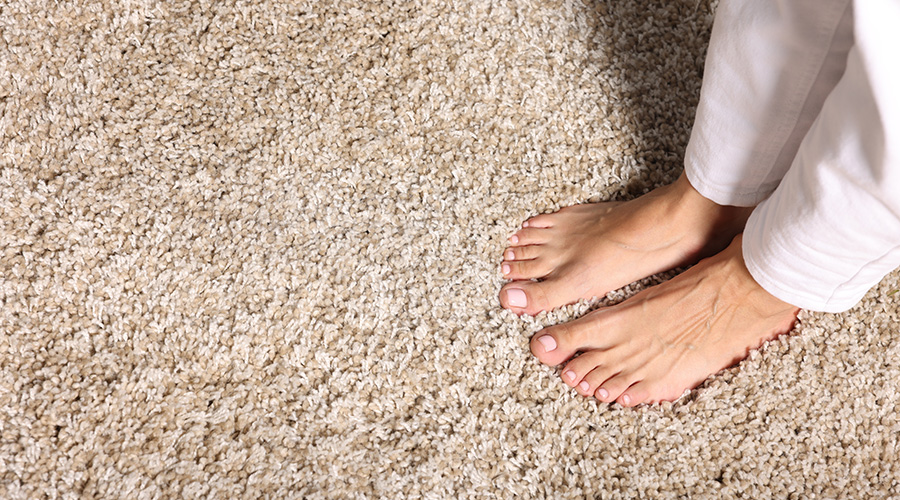
In senior living facilities, comfort is often the first thing people notice, but what they don’t see can matter even more. Every room carries something invisible: airborne particles, and those particles become part of the daily environment people breathe.
Indoor air quality (IAQ) has become a critical focus in senior design. While ventilation and filtration systems often take top priority, flooring plays a much larger role than expected.
A new study from the Carpet and Rug Institution (CRI) and the independent Center for Toxicology and Environmental Health found that carpet retains significantly more particulate matter within its fibers compared to hard-surface flooring, reducing the amount of dust in the air. The research focused on common indoor particles, including PM2.5 and PM10, and measured how much became airborne after normal activity.
Researchers also measured particulate levels at both three-foot and six-foot heights, representing typical breathing zones for seated and standing occupants.
“In these senior facilities, a lot of residents are sitting in a wheelchair and are going to be closer to that three-foot height,” says Darrell Hagan, director of technical and programs for the CRI. “With that type of foot and wheel traffic, it’s much easier to disturb and recirculate particles all day, but having a carpet over time does a good job of holding the dust and limiting what is resuspended in that breathing zone.”
In many senior living environments, carpet can be strategically used in common areas, such as corridors, lobbies and individual bedrooms to support broader IAQ goals, although carpet isn't appropriate for areas with frequent spills or strict infection-control requirements.
Beyond particulate control, carpet also contributes to a quieter, more comfortable environment.
“I think the importance of a carpet is not only from an acoustic and IAQ standpoint, but its comfort underfoot,” Hagan says. “Older individuals can stand comfortably on a carpet much longer than any other hard flooring option.”
But having carpets alone is not enough; their performance depends heavily on maintenance and operations, Hagan says.
“The key is prevention,” he says. “Having walk-off matting and clean outdoor areas at the entrance of the facility plays a part in how the carpet performs.”
Hagan also recommends daily vacuuming in high-traffic areas using CRI Seal of Approval-certified equipment, along with periodic hot water extraction for deep cleaning.
Beyond routine cleaning, long-term carpet performance in healthcare settings also depends on how well the flooring is protected and preserved over time. Facility teams need to think about how carpet is installed and maintained as a complete lifecycle system, Hagan says.
That includes using appropriate backing systems that resist moisture and soil penetration and ensuring proper installation to prevent premature water patterns that can trap debris. Over time, even the best carpet can lose performance if it is not protected, meaning the IAQ benefits will also weaken.
Elaina Myers is the assistant editor of the facilities market. She has covered various topics from pest management to resilience to sustainability and is the beat writer for special days. She also manages the FacilitiesNet social media accounts. Elaina is an avid cat lover and world traveler.
 Cyberattack Results in Patient Reroutes at Anne Arundel Medical Center
 Tangram Furnishes Be Well OC Irvine Behavioral Health Campus
 Suntree Internal Medicine Reports Data Breach
 Why Healthcare Facilities Management Is Critical to Patient Safety
  Sanford Health and North Memorial Health Finalize Partnership