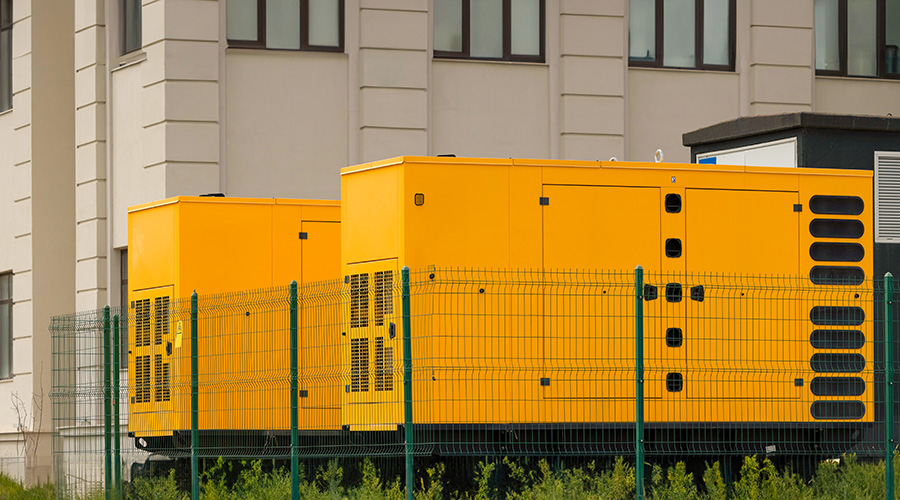
Energy resilience discussions still tend to start and end with the same question: Does the facility have a backup generator? For years, that was a reasonable place to stop. Outages were infrequent, usually weather-driven and short enough that generators felt like a complete solution. Healthcare facilities managers could check the box and move on.
That world no longer exists.
Today, instability often shows up quietly. Utility infrastructure projects stretch for months. Capacity upgrades lag demand. Brownouts disrupt operations without ever triggering emergency protocols. New electrical loads are added to systems that were never designed to handle them. Power still might be available, but reliability becomes inconsistent.
Across healthcare campuses, the pattern is the same. Leadership expects systems to behave predictably under stress. In practice, they often do not. That gap is where resilience fails.
Backup generators still matter
Generators are designed to protect life-safety systems and critical loads. They buy time. What they do not guarantee is continuity when utility power is technically on but unstable. Fuel constraints, extended runtimes and unanticipated loads expose the limits of a generator-only strategy. Systems that perform well during monthly testing do not always behave the same way during prolonged or uneven disruptions.
In healthcare environments, this becomes especially visible. Lighting quality drops. Ventilation struggles. Electric vehicle (EV) charging goes offline. Maintenance teams are forced to make real-time tradeoffs while facilities remain fully occupied. The presence of a generator does not prevent disruption. It just changes its form.
True resilience is not defined by the first hour of an outage. It is defined by what happens on day two or day five, when fatigue sets in and small failures begin to accumulate. That is why resilience needs to be approached in layers.
A layered strategy recognizes that energy systems are interconnected and that no single technology can carry the entire load. Instead of relying on one solution, facilities managers need to build resilience in stages, with each layer reinforcing the next.
Demand reduction: The first layer
A healthcare facility that needs less energy to operate is inherently more resilient. This is not theoretical. Reduced demand directly affects the way long critical systems can be supported during disruptions and the amount of flexibility operators have when something goes wrong.
Lighting is often the most effective place to start. Modern LED systems significantly reduce electrical load while improving reliability and lowering maintenance requirements. When lighting demand drops, backup systems can support critical functions longer. Electrical infrastructure operates with more margin. Problems are easier to isolate instead of cascading across systems.
Related Content: Backup Power Is a Lifeline: What Healthcare Facility Managers Must Get Right
In large healthcare portfolios, lighting upgrades have delivered benefits far beyond energy savings. Standardized systems reduce maintenance interruptions, simplify operations, and extend the effective reach of backup power during periods of grid instability. In these environments, efficiency becomes the foundation of resilience.
Assessing load behavior
Modern facilities increasingly rely on interconnected systems. Medical records are digital and networked. Building systems are automated. EV charging infrastructure adds significant new demand. Many of these systems are sensitive to even minor disruptions. This is where load management and controls matter.
Lighting controls, HVAC controls and building management systems allow facilities to prioritize and sequence demand. Instead of treating all loads equally, operators can protect sensitive systems while reducing strain elsewhere. The goal is not just to use less energy. It is to ensure energy behaves predictably under stress.
For facilities that operate 24/7, this distinction is critical. Hospitals, manufacturing plants and distribution centers cannot power down and regroup. Systems need to respond intelligently when conditions degrade, not just appear sufficient on paper.
Storage and on-site generation
Solar, storage and backup generation can add real value, but they are not cure-alls. Solar without storage does not address many outage scenarios. Storage layered onto inefficient, unmanaged loads becomes expensive quickly. Backup generation that is not integrated into operational planning can create a false sense of security.
When layered correctly, energy storage can function much like a UPS system for a data center. It does not replace the grid. It smooths disruptions, protects sensitive equipment and buys time when conditions become unstable.
In some healthcare facilities, modest storage paired with reduced demand meaningfully extends operational continuity. In others, the benefit shows up in peak management or flexibility during infrastructure upgrades. The goal is not independence from the grid. It is adaptability.
One of the most overlooked aspects of resilience is the way people experience it. During disruptions, staff need systems to behave consistently. Poor lighting, fluctuating temperatures and unpredictable performance erode confidence quickly, especially in healthcare and other public-facing environments.
For this reason, resilience is as much an operational decision as it is a technical one. It is shaped by standardization, by whether teams know what to expect and by whether systems respond predictably when pushed.
A layered approach changes the way healthcare organizations think about risk. Instead of reacting to disruptions, they design for continuity. Instead of overbuilding one approach, they invest in systems that reinforce one another. Instead of assuming energy will always be available, they plan for variability as a normal condition.
Backup generators still matter. They are just one piece of a larger puzzle.
The organizations that get this right do not just perform better during outages. They operate more efficiently, adapt more easily to change and reduce risk every day the power stays on. That is the difference between having backup and being resilient.
Peter Schempp is vice president of client solutions at Chateau Energy Solutions.
 Elevating EVS Professionals: The Case for Certified Hygiene Specialists
 Global Handwashing Day and the Importance of Well-Maintained Restrooms
 Duke Health and CaroMont Health Partner to Develop Two New Hospitals
 Designing for the Psychology of Waiting
 UT Health Sciences Breaks Ground on College of Medicine Interdisciplinary Building