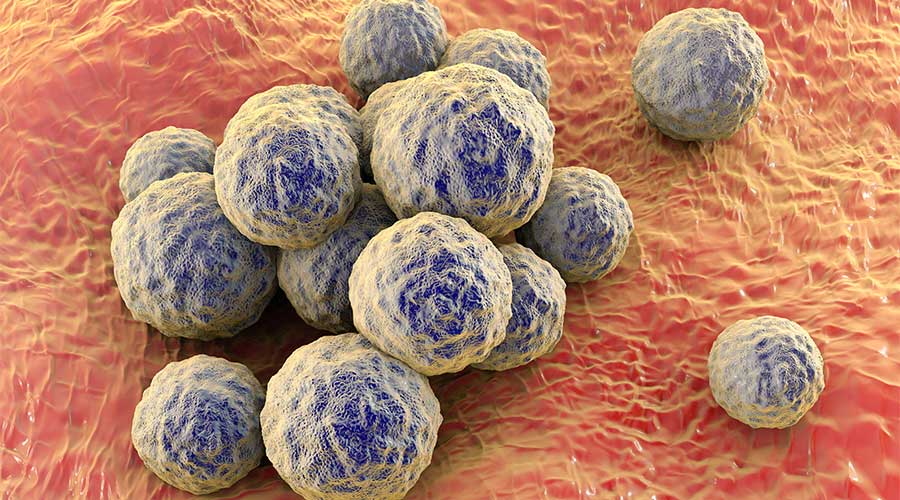
The COVID-19 pandemic pushed back years of progress made combating antimicrobial resistance in the United States, according to a new report from the Centers for Disease Control and Prevention (CDC). The report concludes that the threat of antimicrobial-resistant infections is not only still present but has gotten worse, with resistant hospital-onset infections and deaths increasing at least 15 percent during the first year of the pandemic.
“This setback can and must be temporary,” says Michael Craig, director of CDC’s antibiotic resistance coordination and strategy unit. “The COVID-19 pandemic has unmistakably shown us that antimicrobial resistance will not stop if we let down our guard; there is no time to waste. The best way to avert a pandemic caused by an antimicrobial-resistant pathogen is to identify gaps and invest in prevention to keep our nation safe.”
The CDC report analyzed the state of antimicrobial resistance in the United States immediately following the 2020 peaks of the pandemic. The data show an alarming increase in resistant infections starting during hospitalization, growing an overall 15 percent from 2019 to 2020 among seven pathogens. Increases in specific pathogens included:
- carbapenem-resistant Acinetobacter – 78 percent increase in infections
- multidrug-resistant Pseudomonas aeruginosa – 32 percent increase in infections
- vancomycin-resistant Enterococcus (VRE) – 14 percent increase in infections
- methicillin-resistant Staphylococcus aureus (MRSA) – 13 percent increase in infections.
Antifungal-resistant threats rose in 2020, too, including Candida auris, which increased 60 percent overall, and Candida species excluding Candida auris, with a 26 percent increase in infections in hospitals. By comparison, in a 2019 report, significant national reductions in hospitals were celebrated, where antimicrobial-resistant infections fell by 27 percent from 2012 to 2017. Data show these reductions continued in hospitals until the pandemic began. Clostridioides difficile is the only healthcare-associated pathogen to improve in 2020, likely driven in part by changes in healthcare-seeking behavior.
 Sustainability as a Baseline in Healthcare Facilities
 Penobscot Valley Hospital Reports Data Security Incident
 Ballad Health Acquires Land for Future Unicoi County Hospital
 Why Healthcare Facilities Management Is Critical to Patient Safety
  Brookdale Senior Living Announces Acquisition of the Brookdale Galleria Community