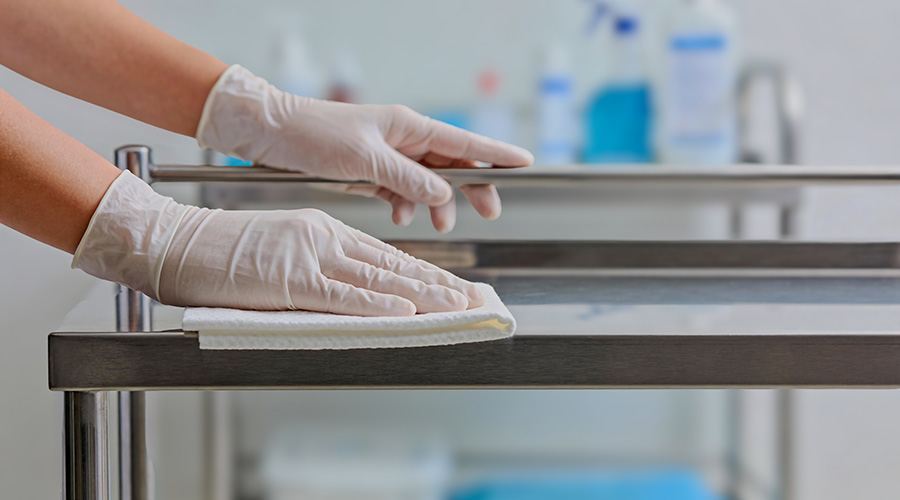
Cleanliness in hospitals and other healthcare facilities occupies two distinct but overlapping worlds: the clinical, evidence-driven priorities of environmental services (EVS) managers and the immediate, perception-based judgments of the communities they serve. Both perspectives matter deeply, yet they operate on different logics, use different measures and drive different decisions.
For EVS managers, cleanliness is a core component of patient safety. Environmental cleaning reduces surface contamination, lowers the risk of healthcare-associated infections and supports compliance with accreditation and regulatory standards.
Managers evaluate cleaning through microbiological sampling, process audits and operational key performance indicators for EVS teams. Investments are justified by long-term outcomes, including fewer infections, reduced lengths of stay, lower readmission rates and avoidance of regulatory penalties.
Managers make decisions about staffing, training, disinfectant selection and new technologies — for example, adenosine triphosphate monitoring or ultraviolet disinfection — with an eye toward measurable reductions in infection risk and integration into clinical workflows.
The community’s view of cleanliness is more immediate and sensory. Patients and visitors judge hospitals by what they see, smell and experience — tidy waiting rooms, uncluttered bedside areas, clean restrooms and staff who appear to practice good hygiene. These visible cues shape trust, comfort and satisfaction.
Patient-reported measures, such as Hospital Consumer Assessment of Healthcare Providers and System (HCAHPS) cleanliness scores and online reviews, can capture this sentiment and influence hospital choice, reputation and even reimbursement. A room that looks clean reassures families and can improve perceived quality of care, regardless of the invisible microbiological reality.
HFT Recommends: Wanted: Scientific Standard for Hospital Cleaning
Tension arises because microbiological safety and visual cleanliness are related but not identical. A surface can look spotless yet harbor pathogens if cleaning protocols are inconsistent. Conversely, rigorous but discreet cleaning processes that are not visible might not register with patients.
EVS managers can implement evidence-based cleaning, but there are tradeoffs to navigate. Overemphasizing optics without robust process control can waste resources and create a false sense of safety. Ignoring perception risks eroding trust and harming reputation, even when clinical outcomes are strong.
The best strategy treats cleanliness as both a clinical safety imperative and a core element of patient experience — investing in interventions that reduce infection risk and are visible and understandable to the people hospitals serve.
The most effective approach aligns both priorities. Combine rigorous process controls, including standardized cleaning protocols, staff training, and objective monitoring, with visible practices that signal care to patients — frequent cleaning of high-touch areas in public spaces; clear signage about cleaning schedules; and staff behaviors that model hygiene.
Managers should use both clinical metrics — infection rates and audit results — and patient-experience data — surveys, complaints and observation — to guide continuous improvement.
In short, EVS managers and communities value cleanliness for complementary reasons: managers for safety and compliance, communities for trust and comfort. When hospitals measure and manage the invisible and the visible, they protect patients and preserve the confidence that makes care possible.
J. Darrel Hicks, BA, MESRE, CHESP, Certificate of Mastery in Infection Prevention, is the past president of the Healthcare Surfaces Institute. Hicks is nationally recognized as a subject matter expert in infection prevention and control as it relates to cleaning. He is the owner and principal of Safe, Clean and Disinfected. His enterprise specializes in B2B consulting, webinar presentations, seminars and facility consulting services related to cleaning and disinfection. He can be reached at darrel@darrelhicks.com, or learn more at www.darrelhicks.com.
 Preparing Healthcare Facilities for Wildfire Air Quality Events
 UW Health Set to Open Expansion at East Madison Hospital
 Central Ohio Primary Care Physicians Falls Victim to Cyberattack
 The Role of Biophilic Design in Healthcare Facilities
 TriStar Centennial Medical Center Invests $90M in Women, Children's Hospital Expansions