
The rise of digital technology, including artificial intelligence (AI), has transformed the way hospitals operate. Digital technology influences every patient touchpoint — admission, stay, discharge and beyond.
But AI can teach healthcare facilities managers more than improving productivity. Thoughtful use of AI has the potential to hyper-optimize hospital operations, change the face of the patient experience and make data-driven intelligence a foundational aspect of hospital design.
Digital technology clarifying priorities
Research has found that without a change in hospitalization rates or the construction of more hospitals, the U.S. healthcare system could reach dangerous occupancy rates of 85 percent of beds full as soon as 2035, leading to excess mortality and a decrease in levels of care. Combating this scenario requires new hospitals that implement scalable, advanced technology infrastructure to meet future healthcare needs and are focused on adaptability and productivity. Implementing digital technology into healthcare facilities from the start allows healthcare workers to focus on the issue at hand and what matters most: patient care.
This focus is not possible without designing healthcare facilities as dynamic operational systems rather than static infrastructure. Healthcare facilities are becoming active participants in the care provided. They influence patient care and operations, and the way clinicians respond to the changes around them. As AI becomes a larger part of the healthcare environment, construction projects will need to carefully align with the technological demands of these organizations.
Streamlining: It’s about the little things
Consider the process of optimizing daily facilities maintenance operations. Moving from reactive to predictive maintenance with AI analytics can help facilities managers anticipate bottlenecks, optimize resource utilization and prescribe the most productive pathways for care.
Flexible, technology-optimized environments also allow healthcare facilities to move and adapt to patient needs. AI can help with this evolution. Say a facility experiences higher patient occupancy during flu season. With AI, managers can predict this influx and open more patient rooms or schedule additional staff in advance.
By implementing AI into building systems in the design phase, managers also can ensure hospital infrastructure — including medical equipment, HVAC systems and elevators — can be monitored to limit preventable disruptions to patient care.
HFT Recommends: Turning Facility Data Into ROI: Where Healthcare Leaders Should Start
AI can analyze data from sensors and daily facility check-ups to anticipate when maintenance should be performed. It can also predict mechanical failures before they occur, allowing hospitals to schedule maintenance of critical equipment — such as MRI, CT, and X-ray scanners — during off-hours and prevent disruptions to patients.
Predictive maintenance on equipment can help extend its lifetime, saving the facility money on equipment that often costs millions to replace, and ensure facilities can perform when patients need them to. It all comes together to dramatically streamline operations, maximize a hospital’s efficiency and minimize energy use and bed occupancy.
The influence on the larger community
The long-term resilience of buildings, especially healthcare facilities, includes their impact on surrounding communities. Globally, the healthcare sector is responsible for 4.4-5.2 percent of the world’s greenhouse gas emissions. By comparison, aviation contributes about 2-5 percent.
Building with the goal of leveraging digital technologies not just as tools but as data-driven, active agents can reshape healthcare operations, efficiency and performance, and it can reduce environmental strain.
For example, AI-driven HVAC units can analyze real-time data, weather conditions, occupancy rates, medical needs and even individual room preferences, then carefully control the hospital's environment. They also can lower the temperature in unoccupied rooms, ramp up airflow in crowded areas, dynamically adjust settings to ensure minimized energy use and reduce the facility’s carbon footprint. AI systems influence not only the physical comfort of patients and staff but also those in the surrounding community and healthcare operations.
Increasing accountability, improving care
Digital technology and AI can streamline operations and reduce disruptions to patient care. Once these goals are achieved, the question then becomes, what now? The answer is human connection.
As digital technology is integrated within healthcare facilities, it becomes a powerful ally, assisting in the review of health data and prompting earlier, more accurate diagnoses. This human-AI balance cultivates enhanced diagnostics, fills care gaps, and maximizes in-person provider-patient interactions for compassionate social-emotional care.
By leveraging digital technology to gain visibility into the way environments facilitate or hinder communication and connection, healthcare facilities managers gain critical insights that can enhance the experience of being in the healthcare system for all involved.
From optional to necessary
The modern medical system — a research-based system that uses scientifically proven diagnostics, pharmaceuticals and surgical procedures to treat diseases and improve health — can only take healthcare so far without additional support. Now, technology and architecture must come together to create healthcare spaces that combine innovation and empathy to deliver optimal care experiences for clinicians and patients.
AI and digital technology are no longer optional but rather foundational to the future of the healthcare sector, and healthcare facilities need to reflect that evolution. Healthcare is at the decisive point where planning for tomorrow needs to start now.
Demand is rising, and hospital space is decreasing rapidly. The balance between technological advancement and human connection is more important than ever, and AI-driven, human-centered healthcare environments will define the next era of care. Building healthcare environments with embedded digital technology from the outset will position infrastructure to be a strategic enabler of resilience and care quality.
Gary Hamilton is a senior vice president and growth leader at Introba, a Sidara company. He specializes in integrating AI and advanced technologies into healthcare design. With over 29 years of engineering leadership, he has driven innovations that include predictive analytics and digital twins to improve hospital operations, patient outcomes and resilience.
 Designing for the Psychology of Waiting
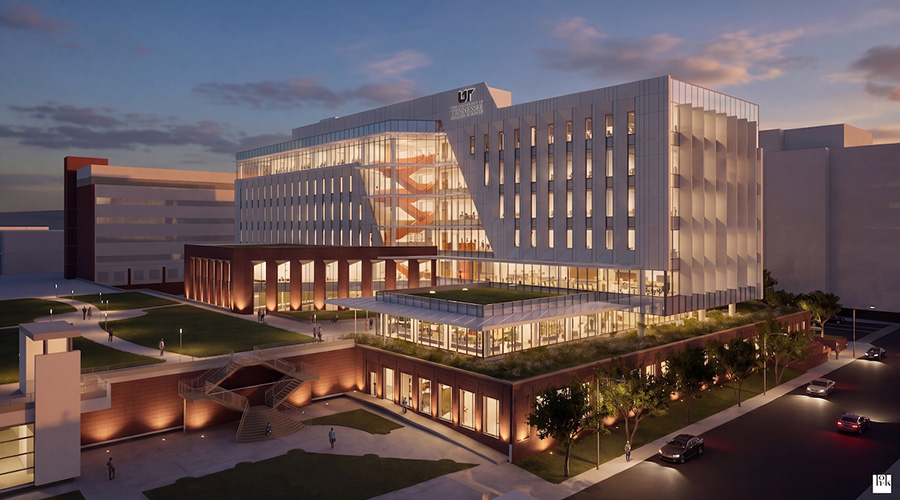 UT Health Sciences Breaks Ground on College of Medicine Interdisciplinary Building
 Vandalia Health, Mary Free Bed Break Ground on New Rehabilitation Hospital
 Why New Era of Care Demands an Ambulatory Facilities Approach
 ClearSky Health Plans New Medical Rehabilitation Hospital in North Carolina