The growing concern around suicide in healthcare facilities, particularly in behavioral health units, has prompted facility managers, clinicians and governing healthcare organizations like The Joint Commission (TJC) to further assess ligature risks. Though patient suicide rates have recently been falling, TJC Journal on Quality and Patient Safety found that 49-65 hospital inpatient suicides occur annually. That is 49-65 too many.
Patients and facilities don't have to become statistics. Patient safety and wellbeing should never be ignored. Understanding ligature risks, conducting a ligature risk assessment in a facility and improving safety accordingly are all pieces of the puzzle to help eradicate suicides in a healthcare facility.
Understanding the risks
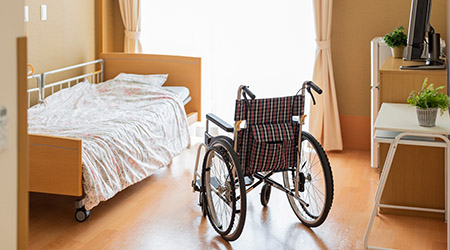
Risks are everywhere. Take a look at a standard hospital room. Note how many ligature points and potential weapons there are: door hinges, equipment, shower rods, beds, and television mounts are all common objects in patients' rooms that could turn deadly in an instant.
Any observable ligature risk, no matter how small, becomes an immediate recommendation for improvement (RFI) when observed in an inpatient psychiatric area, according to TJC. As incidents increased over the years, the federal government placed special focus on suicide, self-harm and ligature observations in hospitals and units to avoid further damage. Today, facilities must correct RFIs within 45 or fewer days depending on the severity or the total number of issues identified, and they are never appropriate for time extensions.
Conducting a ligature risk assessment
Understanding ligature risks is key, but preventing them with a ligature risk assessment takes a facility one step further to safety. A facility manager’s approach should ask three comprehensive questions:
- Is the prevalence of suicide high in the area? Review the rates of suicide and behavioral health illness in the communitybeing serve. Understanding if the prevalence is high or low helps determine how many ligature-resistant treatment rooms a facility needs.
- Which patients in particular are at higher risk? Patients seeking treatment at a facility should be assessed for suicide risk. This is done as part of the clinical assessment. Knowing how many suicide risk patients a facility sees each year is also helpful in understanding how many safe rooms the facility needs.
- Can patients be housed in a safe area? Rooms can either be designed as a ligature-resistant area with specialized beds, fixtures, and accessories, such as sprinklers, smoke detectors, screws, and door hinges or as a regular room by having ligature points removed. Managers can achieve this either through securing ligature points through secured doors or removing equipment. Consider emergency departments and inpatient areas when deploying these safe rooms.
Behavioral health units are not the only areas that require these assessments, especially with the new and revised TJC requirements. Psychiatric patients might pass through or spend time in non-behavioral health units, such as emergency rooms, so ligature risks must be addressed in those areas, too.
“Any physical risks not required for the treatment of the patient that can be removed, must be removed,” states TJC.
Patient safety beyond ligature removal
Managers not only need to ensure an environment is safe. They also need to ensure that patients themselves are safe. It’s not simply a case of surveying a room. Rather, they need to look at the bigger picture by addressing suicide. In addition to safer patient rooms, managers must work with the facility to enact additional policies, such as:
- 24/7 crisis hotline with trained professionals that patients can call at any time
- personalized risk management plans for each healthcare unit
- guidance counseling on depression, anxiety and other mental health disorders
- follow-up once a high-risk patient is discharged.
Ligature safety is not a clinical issue. It’s a patient issue. But just because a facility has a policy in writing doesn’t mean assessments will take place. The program should be living and breathing, trained often, re-evaluated and updated regularly. These plans should be proactive, not reactive, and they must be comprehensive within the environment of care committee.
Given what’s at risk — people’s lives — managers need to understand, assess and remove ligature points. These measures help ensure that no patient harms himself or herself under a manager’s watch.
Scott Cormier is vice president of emergency management, environment of care and safety with Medxcel, He specializes in facilities management, safety, environment of care, and emergency management, and he provides healthcare service support products and drives in-house capabilities, saving and efficiencies for healthcare organizations that, in turn, improve the overall healing environment for patients and staff. Cormier leads the development and implementation of emergency management, general safety and accident-prevention programs for the national network of hospitals Medxcel serves.
 Sustainability as a Baseline in Healthcare Facilities
 Penobscot Valley Hospital Reports Data Security Incident
 Ballad Health Acquires Land for Future Unicoi County Hospital
 Why Healthcare Facilities Management Is Critical to Patient Safety
  Brookdale Senior Living Announces Acquisition of the Brookdale Galleria Community