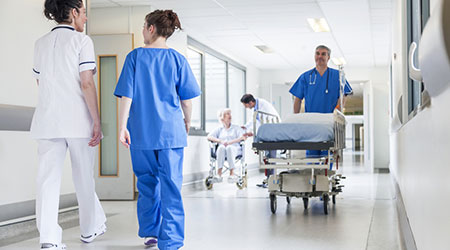
Hospital admissions of obese patients have tripled in the last 20 years, and bariatric patients now represent nearly 10 percent of all hospital admissions.(1) Health care providers often find themselves caring for this influx of bariatric patients with equipment ill-suited to their needs. Two new additions to the Hill-Rom (NYSE: HRC) bariatric portfolio, the new Compella™ Bariatric Bed and the LikoGuard™ Lift system, are designed to ensure hospitals have access to advanced equipment with the flexibility to serve the bariatric patient's needs.
"When I started in nursing in 1985, a 300-pound patient was one of the largest patients we saw in our health care facility. That is not the case anymore. In 2015, I may have five of those patients having surgery in a week," says Sue Bunnell, RN, Bariatrics Center Manager, Princeton Baptist Medical Center, Birmingham, Ala. "We have to have equipment that patients can fit in comfortably and that nurses can work well with. We need to be prepared for when these patients come see us in the hospital."
Hill-Rom is advancing capital and rental equipment offerings to help hospitals transform bariatric patient care by creating solutions that streamline workflow and ensure caregivers can provide safe, high-quality care while protecting patient dignity.
The Compella™ Bariatric Bed: Centerpiece of the Hospital Room
The Compella™ Bariatric Bed is custom-designed for the needs of the bariatric patient and caregiver. The bed's automation helps streamline workflow. For example, both the width and length of the bed can expand automatically with the touch of a button. In addition, its IntelliDrive(®) XL powered transport system makes patient transport more efficient by allowing one caregiver or technician to easily navigate doorways and hallways. Finally, the Compella bed provides lung and skin therapies, as well as customizable exit alarms, to enable greater patient safety and help prevent ventilator-associated complications, pressure ulcers and patient falls.
"Patients of size often do not feel welcome in hospitals. They are not able to receive the same level of care as normal-sized patients," says Bunnell. "When we let them know we can make their bed appropriate for them, they're pleased to see that we meet their individual needs. We can move the patient using power drive with no stress, no strain. The patient does not see four people struggling to pull their bed down the hall. They see caregivers who are able to take good care of them."
Moving and Lifting Patients Safely and Easily with the LikoGuard™ Lift
Nurses and healthcare workers suffer three times as many back injuries as construction workers and a third of those injuries are associated with caring for bariatric patients. Rising obesity rates increase the physical demands on nurses caring for patients, making patient lift systems essential, particularly as the number of larger patients increases. The LikoGuard Lift includes a complete redesign that enhances clinical workflow while protecting both patients and caregivers from injury.
The LikoGuard ceiling-mounted unit offers high safe working loads and carefully designed safety features that were extensively and aggressively tested to ensure caregivers can use them with confidence. Ease-of-use by nurses was closely considered to ensure lifts would enhance clinical workflow - for example, hand controls were redesigned to be easier to use and to offer a graphical interface that provides quick access user and service data.
Taken together, these products are an important step toward innovating the equipment hospitals use to ensure that all patients can receive advanced care, regardless of size. "The bariatric population has been increasing and for too long these patients and their caregivers have not had the technology solutions they need for optimal care," says Alton Shader, Senior Vice President and President, North America, at Hill-Rom. "Products like the Compella bed and the LikoGuard lift are evidence of our commitment to transform bariatric care, helping hospitals to be prepared to care for all their patients with the same high standards and advanced solutions."
 Cleanliness in Hospitals: Clinical Priority and Community Perception
 Dana-Farber Receives $50M Gift for Planned Cancer Hospital
 Clarinda Regional Health Center Reports Data Security Incident
 Gaps in Nurses' Environmental Cleaning Knowledge Grow Amid Rising EVS Pressures
 Ground Broken on the Southern Nevada Forensic Facility