
Q: As always I enjoy reading your articles and appreciate your opinions. My question this time focuses on special relocatable power taps and is centered around the AIV PowerMate special purpose relocatable power taps (Product No. 1020026). This product is listed as UL 1363 A and is attached to an I.V. pole by way of a thumb-screw. Our operating room leadership would prefer this product, but reading the UL 1363A standard it states that the UL 1363A SRPT must be permanently attached. The word 'permanently' is causing the controversy. One part contends that this power tap IS permanently mounted by means of the thumb screw, while the other party takes the stance that the thumb-screw does not constitute a permanently mounted device as no tool is needed to connect or disconnect the power tap. What is your position?
A: I looked up the section in NFPA 99 that addresses this requirement (see NFPA 99-2012, 10.2.3.6) and there is no guidance on what constitutes a “permanently attached” power tap. I looked up the official NFPA 99 Handbook andt they said this under 10.2.3.6:
“Cart mounting of equipment has now been added to the types of examples listed for movable equipment assemblies. It has become a common practice to organize and mount equipment that is used in a variety of treatment areas, including operating rooms and special procedure rooms. All the testing conditions in 10.3.6 still apply, and the outlets must be permanently attached to the cart.”
It is important to note two things regarding the commentary in the handbook:
• They re-iterated that the power tap must be permanently attached to the cart
• They did not offer an explanation what “permanently attached” means
So, my take from these passages are NFPA 99 meant the power tap is attached to the cart in such a way it cannot be easily removed. So my way of thinking would agree with the contending party that the thumb screw does not constitute ‘permanently attached’.
But it doesn’t matter what I think… it only matters what the AHJ believes ‘permanently attached’ means. I was at a conference where I heard a representative from Joint Commission saying a power tap that is screwed to the cart constitutes ‘permanently attached’. But that’s just Joint Commission… what about the other AHJs you have inspecting your facility, such as the state agency on behalf of CMS? There is a possibility they will not agree with the Joint Commission’s interpretation.
My suggestion is to take the more conservation approach and since it does not require a tool to remove, it does not qualify as being permanently attached.
Brad Keyes, CHSP, is the owner of KEYES Life Safety Compliance, and his expertise is in the management of the Life Safety Program, including the Environment of Care and Emergency Management programs.
 Extreme Weather: The Maintenance-Resilience Link
 Encompass Health Lower Providence Opens in Pennsylvania
 Intermountain Health Acquires Fairbourne Building for Healthcare Hub and Medical Campus Conversion
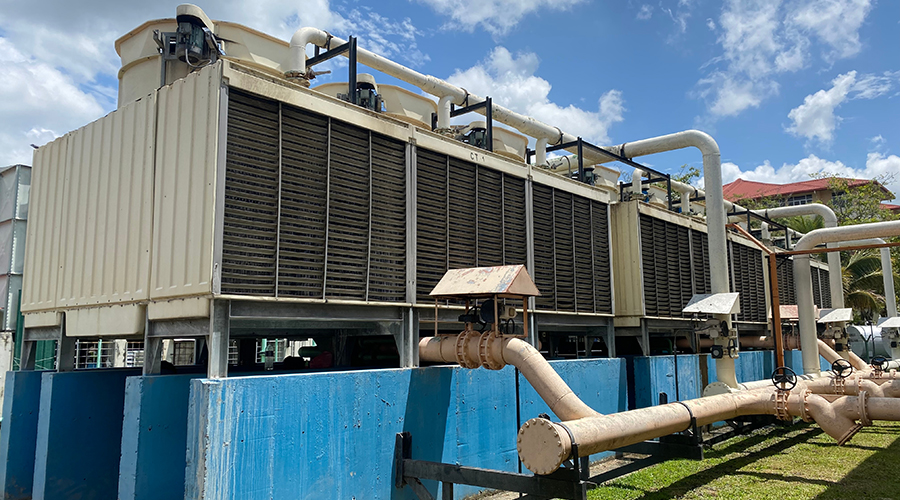 Cooling Towers at NYC Health + Hospitals/Lincoln Test Positive for Legionella
 Prefabricated Wall Panels Accelerate UCF Lake Nona Medical Center Construction