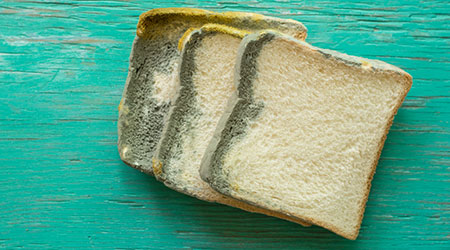
Looking for a new way to reach her students, a science teacher created a clever method for illustrating the spread of bacteria, according to an article on the CleanLink website.
As reported by Parents.com, the experiment involved five different slices of bread — each with varying levels of bacterial exposure prior to being sealed airtight in a Ziplock freezer bag — for three to four weeks.
Bread slice one was wiped on the classroom Chromebooks. Slice two was an untouched slice. Slice three was exposed to unwashed hands by every student in the classroom. Slice four was exposed to soap and water. Slice five was exposed to hand sanitizer.
Slices two (untouched) and four (soap and water) were nearly identical, with no bacterial or mold growth present. Slice five (hand sanitizer) had a mold patch taking up roughly one-fifth of the slice. Slice three (unwashed hands) had similar mold growths, but taking up roughly 75 percent of the slice. The slice one (Chromebook exposure)had the most severe mold growth, taking up nearly the entire slice.
 Cleanliness in Hospitals: Clinical Priority and Community Perception
 Dana-Farber Receives $50M Gift for Planned Cancer Hospital
 Clarinda Regional Health Center Reports Data Security Incident
 Gaps in Nurses' Environmental Cleaning Knowledge Grow Amid Rising EVS Pressures
 Ground Broken on the Southern Nevada Forensic Facility