
Selective coordination localizes an overcurrent condition to restrict electrical outages to the affected equipment, circuit, or feeder, according to an article on the Consulting-Specifying Engineer website. James Ferris, TLC Engineering for Architecture, and Tom Divine , Smith Seckman Reid, answer questions about selective coordination in healthcare facilities.
Question: From my experience, usually time-current curves (TCCs) alone are not sufficient to evaluate selective coordination. For circuit breakers with instantaneous trips or instantaneous overrides, manufacturers publish circuit breaker selective coordination tables. Fuse manufacturers publish fuse selectivity ampere ratios. Your presentation did not cover this aspect.
Ferris: True, manufacturers offer literature that shows coordination tables between their own breakers. However, this is not reflected as an acceptable approach in NFPA documents, so you will have to get the understanding of the authority having jurisdiction (AHJ). In my opinion, good design practice is to do the TCC, study the system, and not rely solely on manufacturer tables.
 Extreme Weather: The Maintenance-Resilience Link
 Encompass Health Lower Providence Opens in Pennsylvania
 Intermountain Health Acquires Fairbourne Building for Healthcare Hub and Medical Campus Conversion
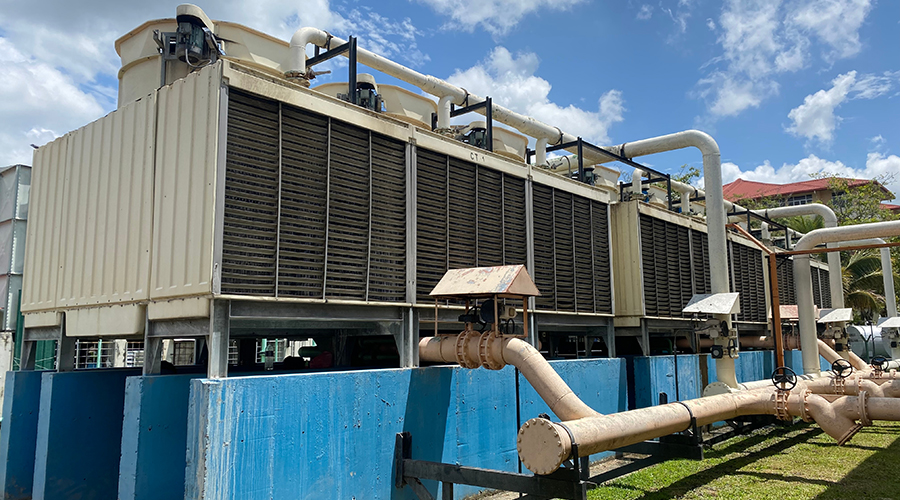 Cooling Towers at NYC Health + Hospitals/Lincoln Test Positive for Legionella
 Prefabricated Wall Panels Accelerate UCF Lake Nona Medical Center Construction