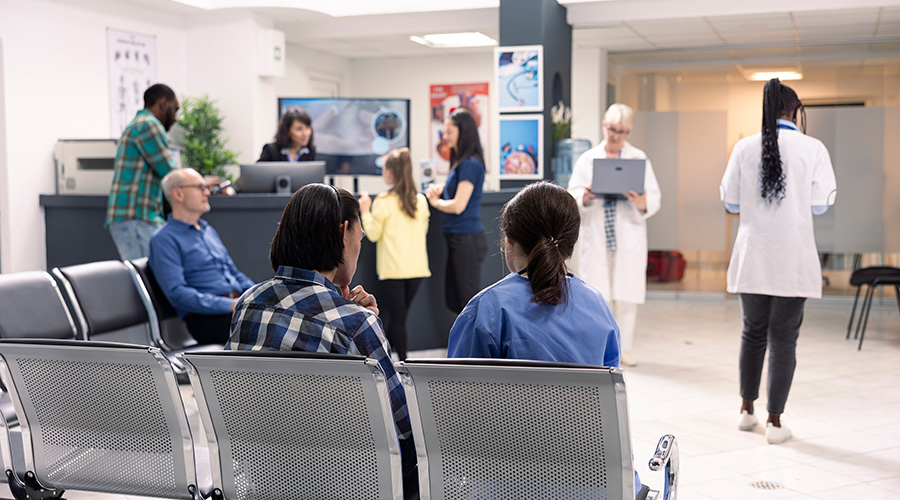
First impressions are important in healthcare facilities. They shape the patient and visitor’s overall perception of the facility and, for better or worse, lay the foundation for the remainder of their experience. One of the first things people notice when entering a facility is the smell, particularly poor ones.
Pleasant or clean smells are often invisible or unnoticed to patients and visitors. Bad odors, on the other hand, are immediately unpleasant and may raise further concerns over the facility’s cleanliness or level of care.
Researchers set out to identify the different types of odors in hospital waiting areas and their physical and psychological impacts in a 2024 study published in Critical Public Health. They considered the concept of a “smellscape”, which involves the total olfactory experience of an area and how people interact with the environment as a result.
The study anonymously surveyed 258 participants with a mix of open-ended and closed questions. Results were analyzed and compared across three categories: odor comfort, preference, and concentration.
The Findings
The nine primary odors in waiting areas included alcohol, disinfectants, drugs, food human body, fishy scent, dust, tobacco, and gasoline. Drugs, disinfectants, and human bodies were the top three. In general, the higher the concentration of odors, the poorer the comfortability and preference levels.
Despite that trend, people had an overall good tolerance of odors in waiting rooms. Researchers point to some odors, such as disinfectants and drugs, are perceived as fitting in the context of a hospital and even indicate cleanliness. However, high levels of disinfectant and human body odors brought negative feelings.
Related Content: How Do HVAC Systems Filter Out Odors in Healthcare Settings?
Participants in poorer health perceived higher odor concentrations but experienced lower comfort and preference. Researchers say, “This may be due to the fact that people with poor physical and mental health often have abnormal perceptions of their environment, making them more sensitive to specific odor.” Additionally, patients and their companions had overall more negative perceptions of scents compared to others in the facility.
Environmental factors were also influential. The longer a patient or visitor remains in the waiting area, the more their odor comfort increases. As crowd density increased, so did the concentration of smells. This also led to a decrease in comfort and experience, as people tended to dislike the scent of human bodies.
Combatting and Utilizing Odors
While people were generally able to tolerate odors in waiting rooms, facilities can still take steps to improve comfortability. Researchers recommended controlling the scent of disinfectants and human bodies, which were notably unpleasant in high concentrations. Facilities should also be aware of space size, openness, and proximity to odor sources when cleaning.
In general, odors can be combatted by neutralizing the source. However, it is common for the public to associate the scent of cleaning products, like bleach, lavender, or lemon, with cleanliness. It is up to individual facilities to decide their own definition of the smell of cleanliness.
Facilities looking to provide the strongest patient and visitor experience must consider scents, especially in high traffic areas like waiting rooms.
Elisa Miller is an assistant editor for CleanLink.com, Contracting Profits, Facility Cleaning Decisions, and Sanitary Maintenance.
 Creating Healthcare Campus Master Plans That Allow Movement and Respite
 Aspirus Health Celebrates Opening of Chippewa Falls Hospital and Clinic
 AdventHealth to Open Aurora Highlands Medical Campus
 The Future of Healthcare Facility Construction Projects
 Arnprior Regional Health Upgrades Building Controls to Improve IEQ