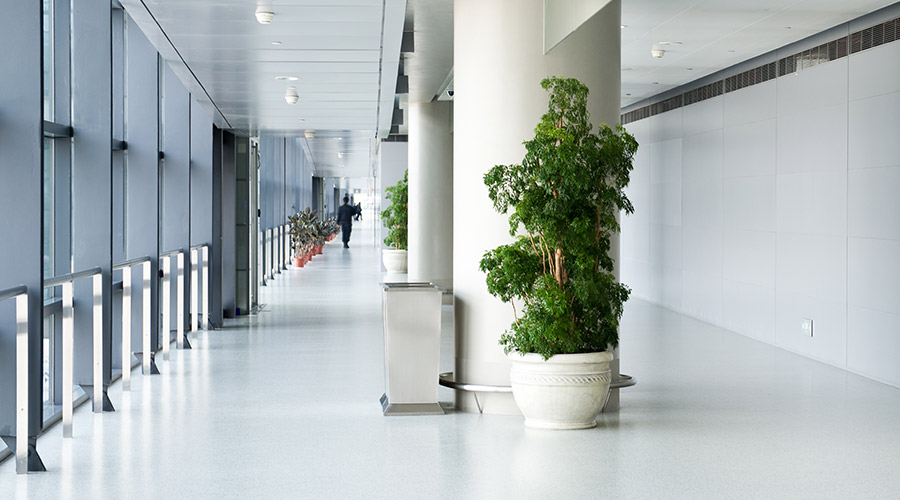
The TV shows do not lie – hospitals and other healthcare facilities can be places of high stress for anyone within the building. Knowing what stress can do on the body, particularly in a place of healing, designers have begun to implement more peaceful elements within these spaces.
Biophilia has long been a popular choice to help reduce stress. According to Piedmont Healthcare, caring for indoor plants can reduce psychological and physiological stress. During its study, they found that interacting with plants helped suppress sympathetic nervous system activity and diastolic blood pressure. Participants also noted feeling comforted while being around plants versus more bland designs that are typically associated with healthcare facilities.
Healthcare Facilities Today recently spoke with Sarah Harvey, senior interior designer at FCA and Beverley Spencer, senior associate at FCA on how biophilic elements contribute to patient recovery and the importance it has in design.
HFT: Can you explain what biophilic design means in the context of healthcare facilities?
Sarah Harvey: Biophilic design means recognizing that the human-animal brain is deeply connected to its surroundings, providing the body with chemicals to assess and navigate those surroundings. We all know the healthcare environment can be stressful; through biophilic design, we can influence these chemical reactions and counteract stress.
Beverley Spencer: Creating environments that allow all inhabitants to be in their natural state—environments where all occupants can thrive.
HFT: How do biophilic elements contribute to patient recovery and well-being? How does it help staff?
Harvey: When we interact with biophilic elements or principles, our brain chemistry releases hormones to lower blood pressure, heart rate, and decrease stress, among a host of other positive benefits.
Spencer: Biophilic elements have been shown to reduce patient recovery time and length of stay, while fostering improved staff performance and reducing burnout.
Related: How to Integrate Biophilia into Healthcare Settings
HFT: How do you balance functionality and aesthetics when integrating natural elements into a hospital?
Harvey: This is a must even without biophilic drivers. Healthcare spaces have ideal propositions that don’t always line up nicely, so I try to capitalize on any space that could be considered wasted for a biophilic moment if possible. This could be a wall graphic, a niche for respite, or a faux window for a sense of daylight.
Spencer: Determining as a team at the start of a project what natural elements are important and where they should be located. It also helps to discuss the benefits and make them a priority throughout the process, as opposed to an afterthought.
HFT: How do you adapt biophilic design for different areas of a hospital, such as patient rooms, waiting areas, and operating rooms?
Harvey: All these spaces have different needs and differing patient, family, and staff mindsets. Biophilic design should adapt to the core driver: Is it stress reduction? Focus on lighting that mimics daylight. Cleanliness? Imitate patterns of nature but with wipeable materials. Need positive distraction or heightened comprehension of information? Include a complex but orderly feature that helps the brain stay active but not overwhelmed.
HFT: How do you envision the future of biophilic design in healthcare? Are there emerging trends or innovations that you’re excited about?
Harvey: It’s most important that we, as an industry, get a clear and consistent narrative of what biophilic design is and what it is not. It is not simply adding a nature graphic to wall protection or putting a live tree in the lobby. Biophilic design is a practice that attempts to harness thousands of years of evolution, influencing brain chemistry to help us navigate our surroundings.
Spencer: The most significant trend is that we are designing healthy spaces for people. It really doesn't matter what the space type is—it's about creating environments that keep people balanced. Spaces filled with natural light, organic features, and visual inspiration naturally help to regulate breathing and digestion, slow down heart rates, and relax muscles. There's an increased focus on wellness, including how biophilic design has influenced both furniture layouts and our planning approach.
Mackenna Moralez is the associate editor of the facilities market and the host of the Facilities in Focus podcast.
 Why Healthcare Facilities Management Is Critical to Patient Safety
  Sanford Health and North Memorial Health Finalize Partnership
 Cornerstone Behavioral Healthcare Falls Victim to Ransomware Attack
 Containing Candida Auris Across the Care Continuum
 Early Entry: Manager's Critical Role in Construction Planning