The rise of Candida auris (C. Auris) across the United States has revealed a truth that healthcare leaders can no longer ignore: Containment cannot be accomplished by one facility type. Patients move fluidly among acute care hospitals, long-term acute care hospitals and skilled nursing facilities. With every transfer, they carry the potential for environmental contamination, equipment exposure, and silent colonization. For this reason, C. auris containment must be unified, consistent and standardized across the entire continuum of care.
Surveillance data from the Centers for Disease Control and Prevention (CDC) show that C. auris is firmly established in multiple healthcare environments. Clinical cases and screening detections continue to rise, driven by increased testing capacity, expanded admission screening and the organism’s ability to persist on surfaces and equipment. Because colonized patients often appear clinically stable, they might be transferred without visible signs of infection, making environmental hygiene and communication essential.
A unified containment strategy begins with transmission-based precautions. Whether a patient is in an intensive care unit, a ventilator unit or a rehabilitation wing, staff must follow the same rules: Gown and glove upon entry, use dedicated equipment whenever possible, and practice strict hand hygiene. They must apply these precautions consistently during acute illness and throughout the patient’s entire care journey.
HFT Recommends: C. auris: A Growing Threat to Healthcare Facilities
Environmental cleaning is the backbone of containment. All three settings must use an EPA List P disinfectant with a C. auris kill claim or an EPA List K disinfectant, which CDC accepts as an alternative. Daily cleaning of high-touch surfaces and terminal disinfection at discharge or transfer are non-negotiable. Because C. auris survives on plastics, metals and fabrics, every surface in the patient’s room must be treated as a potential reservoir.
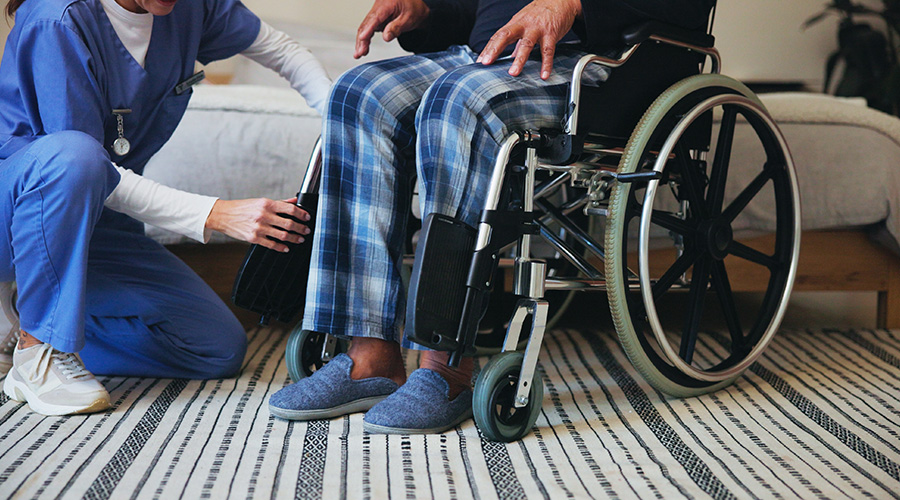
But the greatest vulnerability lies in mobile patient-care equipment. Wheelchairs, stretchers, IV pumps, glucometers, therapy devices and portable imaging equipment frequently move among rooms, units and facilities. Outbreak investigations repeatedly show that shared equipment is a major driver of transmission.
A unified protocol requires that any item leaving a C. auris room be disinfected with a List Por List K product before it touches another patient. Clear responsibility assignments — nursing, environmental services (EVS), transport, therapy — eliminate the dangerous assumption that someone else is cleaning the equipment.
Communication during transfers is equally critical. Every movement between acute care, long-term care and skilled nursing facilities must include the patient’s C. auris status, colonization versus infection, current precautions and the disinfectant platform used. This ensures that receiving facilities continue containment without delay or confusion.
Finally, many organizations are adopting one disinfectant platform for all patient-care areas. While not required, this approach reduces staff errors, simplifies training and ensures that every surface and piece of equipment is covered.
Containing C. auris requires more than isolated facility policies. It demands a unified, cross-continuum strategy. When all healthcare facilities on the care continuum follow the same precautions, disinfectant standards and equipment rules, containment becomes achievable, sustainable and far more effective.
J. Darrel Hicks, BA, MESRE, CHESP, Certificate of Mastery in Infection Prevention, is the past president of the Healthcare Surfaces Institute. Hicks is nationally recognized as a subject matter expert in infection prevention and control as it relates to cleaning. He is the owner and principal of Safe, Clean and Disinfected. His enterprise specializes in B2B consulting, webinar presentations, seminars and facility consulting services related to cleaning and disinfection. He can be reached at darrel@darrelhicks.com, or learn more at www.darrelhicks.com.
 Emergency Preparedness: Building a Stronger Community
 Ground Broken on Lavine Bekenstein Cancer Hospital in Massachusetts
 Camden-on-Gauley Medical Center Reports Data Security Incident
 Elevating EVS Professionals: The Case for Certified Hygiene Specialists
 Global Handwashing Day and the Importance of Well-Maintained Restrooms