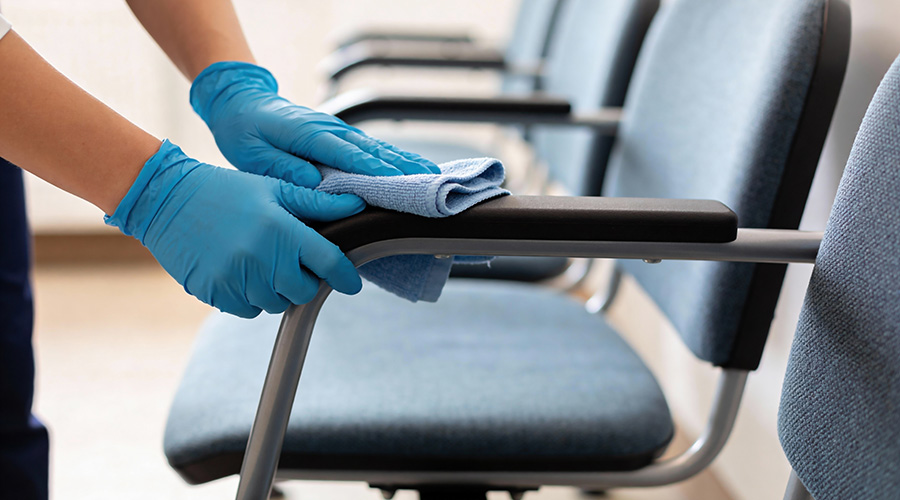
Quaternary ammonium compounds (QACs) are some of the most common active ingredients found in healthcare-use disinfectants. They are highly effective at neutralizing several bacteria and viruses, compatible with many formulations and have a relatively low odor. Globally, the QAC industry is valued at over $20 billion.
However, they might be too good to be true. Researchers recently conducted a review of the clinical and environmental harms of QACs in the Cureus Journal of Medical Science, noting that the compounds are significantly under-investigated.
From improper use to prolonged exposure, environmental services (EVS) teams may suffer from the use of QACs. Over 700,000 tons of QACs are produced annually, posing an additional serious environmental risk. There is also the risk of quat binding: a phenomenon that occurs when QACs bind to cotton cloths, decreasing their concentration and overall effectiveness by up to 50 percent.
The Risks
Researchers point out that, despite their effectiveness, QACs do not work instantly. Instead, many QAC-containing products require a continuously wet surface for four minutes to achieve disinfection. Yet over 50 percent of surfaces begin to dry within 60 seconds at room temperature, meaning EVS staff have to re-wipe the same area up to four times. While certainly possible, in reality, these standards are not often met due to time pressures and workload.
The compounds are associated with various clinical and public health concerns, especially in healthcare facilities with frequent disinfectant use. Routine use of products with QACs is linked with adverse respiratory and dermatologic outcomes, notably inducing or worsening asthma and contact dermatitis.
One study found decreased fertility in female laboratory workers regularly handling QACs, reflecting findings in female rodents where prolonged exposure resulted in impaired reproductive abilities. While researchers state these are simply linkings, not definite causality, they indicate a need for further study amidst serious concerns.
Because QACs have strong absorption to soil, sediment and dust particles, they are resistant to biodegradation. Wastewater treatment does not effectively remove them, leading to their accumulation in biosolids and surface waters. This leads to prolonged exposure even after disinfection. They are also toxic in water: disrupting algae growth, impairing reproduction in crustaceans and inducing sublethal effects in fish.
An Alternative: UV-C
Researchers point to an alternative solution: ultraviolet-C (UV-C) disinfection.
They say, “UV-C inactivates microorganisms by causing photochemical damage to their DNA and RNA, thereby halting replication and rendering them non-infectious.”
Unlike chemical-based disinfectants, UV-C leaves no toxic residue, does not add to antimicrobial resistance and eliminates concerns of systemic absorption. They can also be automated, reducing EVS workload and minimizing human error.
UV-C has become more accessible, cost-effective and broadly used in healthcare facilities over the last decade. While they must be used carefully to ensure safety, in proper doses and the right conditions, UV-C is extremely effective at disinfection.
Weighing Options
QACs continue to be popular choices in healthcare facilities, despite the risks outlined in this 2025 review. Other studies, such as this one published by Sage Journals, indicate that the benefits outweigh the potential hazards. Some researchers decry chemical disinfectants altogether. Ultimately, EVS teams must decide their level of chemical comfort, and what products keep everybody, staff and patients alike, safe.
Elisa Miller is an assistant editor for CleanLink.com, Contracting Profits, Facility Cleaning Decisions, and Sanitary Maintenance.
 Cooling Towers at NYC Health + Hospitals/Lincoln Test Positive for Legionella
 Prefabricated Wall Panels Accelerate UCF Lake Nona Medical Center Construction
 University of Rhode Island Adds Clinical Space
 How Retail Design Principles Can Improve Healthcare Wayfinding
 Flexible Design Strategies Help OhioHealth Maximize Clinical Space