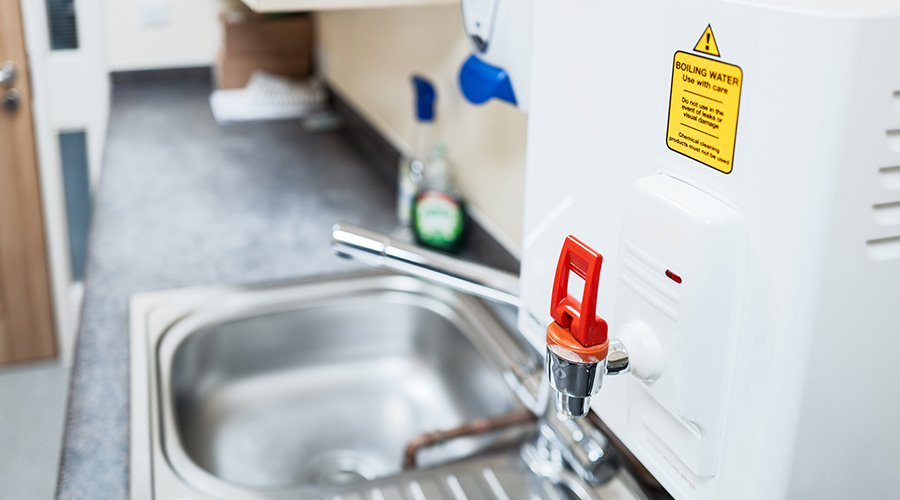
While tap water is highly regulated in the United States, it is not sterile. For general households, the germs that may be present in tap water typically do not pose serious health problems. Healthcare facilities, however, house patients much more susceptible to infections. Water is also used much more widely, from washing medical supplies to showers and sinks in patient restrooms.
According to a 2021 study from the Netherlands, waterborne healthcare-associated infections (HAIs) are considered an important source of infection due to the rate of exposure. Researchers also note that 65 percent of HAIs are associated with the presence of moisture or liquid.
Many HAIs are avoidable with high levels of hand hygiene compliance, environmental cleaning, use of personal protection equipment (PPE), and proper monitoring. But most importantly, healthcare facilities must have proper plumbing systems in place. As the central transporter of water throughout facilities, plumbing is crucial in preventing the spread of waterborne pathogens.
The Centers for Disease Control and Prevention (CDC) recently created a set of guidelines and recommendations for developing a water management program in healthcare settings. First and foremost, patient safety depends on the assurance that water entering a healthcare facility meets all quality standards.
Premise Plumbing
Premise plumbing refers to the portion of a water system connected to the main distribution system via service lines, including devices, fixtures, and drains. It should be designed and maintained to minimize Opportunistic Pathogens of Premise Plumbing (OPPP) growth and spread in both the water supply and wastewater mechanisms. OPPP are microorganisms in building water systems that are more likely to cause disease in at-risk individuals.
HFT Recommends: HAIs Are Worse Than You Thought
The CDC advises that premise plumbing should be assessed on the following parameters: the age and overall design of the system, additions and renovations, water age (the amount of time water spends in the piping system) and ensuring that there are no “dead ends” where water can stagnate. Water management programs should be created with these factors in mind.
Components of Water Management Programs
The CDC recommends seven distinct elements for building a proper water care system. First, there should be a versatile team made of infection prevention professionals, facility managers, clinicians, administrators and/or an individual from the local water utility.
Building water systems should have descriptions with flow diagrams. Teams must continually evaluate hazardous conditions where pathogens can grow and spread. Protective precautions should be noted and placed strategically throughout the water system, with a method of monitoring in place. When these precautions fail, interventions should be ready.
Finally, teams must ensure the water management program works as designed and is effective and provide documentation and communication on all activities.
Water is an often-overlooked source of infection in healthcare facilities. Certain plumbing conditions can even inspire bacterial growth. Yet HAIs are highly preventable with a steady management program in place and quality plumbing. Additionally, environmental services (EVS) staff should be aware of water best practices and continue to follow procedures when cleaning wet surfaces.
Elisa Miller is an assistant editor for CleanLink.com, Contracting Profits, Facility Cleaning Decisions, and Sanitary Maintenance.
 Preparing Healthcare Facilities for Wildfire Air Quality Events
 UW Health Set to Open Expansion at East Madison Hospital
 Central Ohio Primary Care Physicians Falls Victim to Cyberattack
 The Role of Biophilic Design in Healthcare Facilities
 TriStar Centennial Medical Center Invests $90M in Women, Children's Hospital Expansions