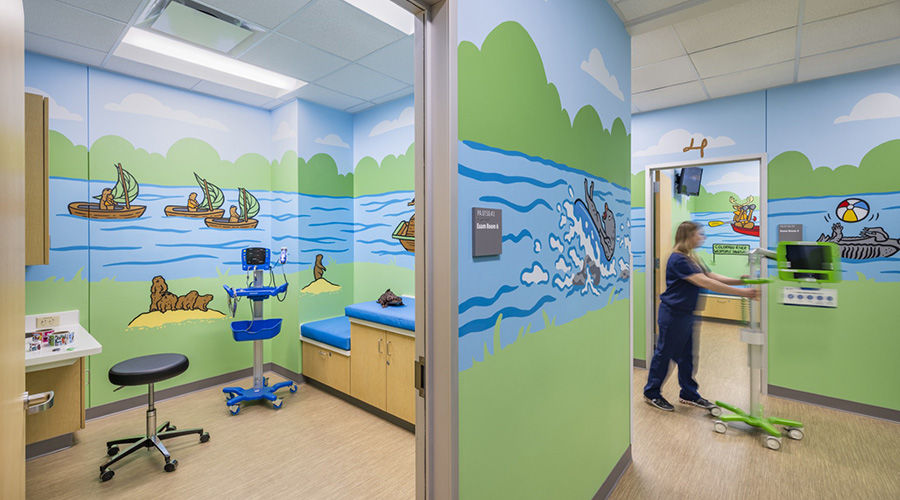
When it comes to children, distraction is one of the oldest tricks in the human playbook. Simple, positive distractions have the power to transform unpleasant experiences into moments of joy. Think about the wonderfully distracting effects of colorful bandages featuring cartoon characters. Similar logic can be applied to design at a larger scale.
When it comes to the built environment, distraction can help or hurt the intended purpose of the environment. This situation is especially true in healthcare facilities, where alarms, clinical noises, unsettling sights or smells and intense emotions can dominate. These factors can amplify anxiety, fear and worry.
But distraction can play a positive role in healthcare. By itself, it does not heal, but it can aid the healing process by addressing the mental well-being of an individual.
“The environment cannot cause healing to occur but can facilitate engagement in behaviors and emotions that support healing,” writes Jennifer DuBose, a designer and researcher at the Georgia Institute of Technology. “The environment can induce physical and emotional responses, such as happiness, joy and relaxation, and the built environment can enhance individual control and functionality — all of which are antecedents to healing.”
Pediatric environments designed for positive distraction are associated with a variety of health benefits. They can relieve stress and anxiety, encourage calm behavior and sleep regulation, and reduce pain perception. Clinical studies are beginning to associate positive distraction with reductions in the need for narcotics and other pain medications used in pediatric populations.
Assessing benefits
How can positive distraction in design help pediatric patients and their families?
It benefits children psychologically. A child’s experience in a pediatric healthcare environment is likely to shape their perceptions of healing, wellness and healthcare for years. When a medical event occurs, children often report experiencing helplessness, loss of identify and control, lack of social support and accompanying fear and pain, which can lead to symptoms associated with depression and anxiety disorders if unaddressed.
HFT Recommends: MEP Engineering to Address Children's Hospitals' Unique Needs
One might think a tablet or smart phone can provide the necessary distraction. But research has shown that too much screen time can negatively affect the wellbeing of children and adolescents. So designers need to look at alternatives for distraction in healthcare facilities.
It reduces parent and caregiver stress. A child’s emergency visit, procedure or hospital stay is among the most stressful experiences a parent can face. Even the calmest parent can enter fight-or-flight mode, shaping negative perceptions of healthcare environments and staff. Positive distraction can significantly lower parental stress and anxiety, improving decision-making, communication with clinicians and overall emotional regulation.
It transforms healthcare delivery into a better, memorable experience. Designs that can deliver delight and wonder alongside high-level care have a hidden benefit. Researchers say positive distraction can improve a patient’s waiting experience, satisfaction and overall perception of their experience.
Positive memories encourage individuals to regularly access healthcare, and this results in better healthcare outcomes. Healthcare designers can harness the power of positive distraction to encourage the creation of meaningful, uplifting experiences that make powerful memories for children and families.
It sets the care team up for success. Providing positive distraction in pediatric healthcare environments allows the clinical and para-clinical pediatric team members to shine. It is easier for them to provide care for a more relaxed, pleasantly distracted child than one who is stressed and fearful.
Therefore, adjacencies are important. Positive distractions should be connected to well-designed, flexible spaces for care. In this way, designs can help the team weave positive distraction into the fabric of day-to-day care.
Incorporating positive distraction into design
During the early visioning and programming phase of a pediatric healthcare project, the
design team must collaborate with providers to explore what positive distraction could look like in their specific context and culture. They should build these elements into the functional program and champion them in the business plan. Harnessing the potential of positive distraction requires intentionality, and the process begins with assigning it a value and square footage.
It is important to discuss the benefits of positive distraction in design because it requires extra programming, extending beyond code requirements and clinical function. Programming these third spaces into a pediatric healthcare facility needs full buy-in from clinical and facility leadership to protect it from value-engineering cuts in later phases.
Beth Carroll is regional healthcare director with Page, now Stantec. Calise Gritters is a healthcare planner with the firm.
 Elevating EVS Professionals: The Case for Certified Hygiene Specialists
 Global Handwashing Day and the Importance of Well-Maintained Restrooms
 Duke Health and CaroMont Health Partner to Develop Two New Hospitals
 Designing for the Psychology of Waiting
 UT Health Sciences Breaks Ground on College of Medicine Interdisciplinary Building