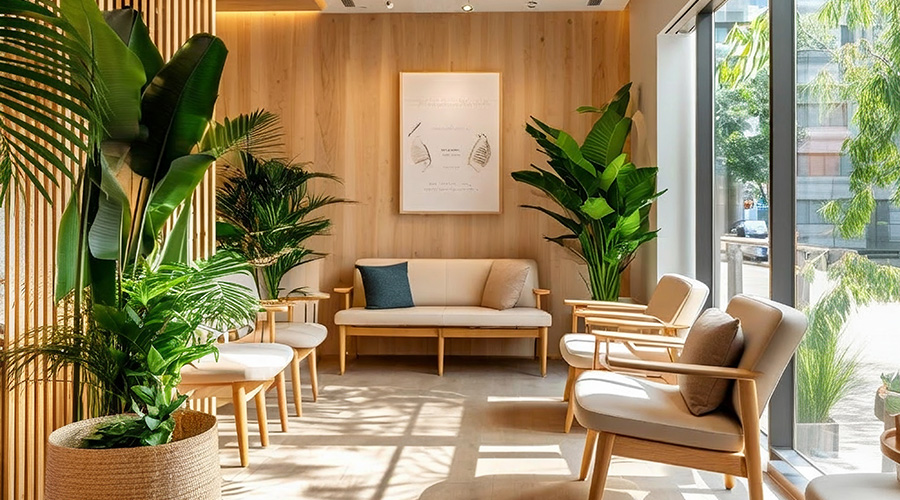
It is rare for designers to switch off their instinct to analyze design decisions in the built environment, even outside of the office. Regardless of the setting, stepping into a space naturally evokes the dissection of the decisions behind it. This process can include the warmth of the lighting, the feel of upholstery against the skin and even a scent.
In hospitality, aromas such as coconuts, eucalyptus, or other sensory cues are often piped through ventilation systems to conjure a specific feeling. In healthcare, the air might skew towards the scent of antiseptics or cleanable materials. That contrast alone can set designers thinking about the way environments come to life.
This awareness becomes especially apparent when applied to healthcare, a space many encounter only when the need arises. Experiencing doctors’ offices, hospitals and treatment centers reveals opportunities to rethink these environments, translating hospitality principles into healthcare spaces that are more comfortable, calming and supportive for patients.
Bridging hospitality and healthcare
At face value, the worlds of resorts and medical facilities could not be more different. The look, feel and emotions experienced while in these spaces seem to be on opposite ends of the spectrum. But what if there was a way to close that gap? Thoughtful design presents the opportunity to establish the calm of a spa and the restorative feeling of a resort in healthcare spaces, bringing benefits for patients and care providers.
The reality is that these environments are more similar than they appear. Whether large-scale or small, the comparison of healthcare facilities and resorts reveals several similarities.
Fundamentally, both are highly technical buildings with complex programming. From an operations standpoint, they both must function well and support efficient operations by staff for the ultimate benefit of the guest. Finally, they need to be extremely resilient, able to withstand heavy wear and perpetual cleaning. That raises the question: Why are these facilities not more similar from a design perspective?
Balancing budget with design
Cost might be the first reason that comes to mind, but in reality, hospitality designers are used to designing on aggressive budgets, just like their healthcare counterparts. This is evident across major hotel chains, each with multiple brands targeting distinct consumer audiences and each with specific design criteria and development budgets.
Servicing these nuanced requirements with ever-evolving creative solutions is the calling of the hospitality designer. For those in the healthcare industry who want to evolve their physical environments to support healing and wellness, there are valuable skills to glean from the realm of hospitality design.
Wellness is the way
Extensive research shows that the physical environment affects health and well-being. This evidence has led healthcare designers to embrace proven design strategies, such as daylighting, thoughtful use of color and VOC-free materials, to name a few. Building on these successes, the industry is seeking to further this approach, borrowing from hospitality design to create spaces that are not only functional but also intentionally supportive of enriching spaces that appeal and add to the wellness journey more deliberately.
“Healthy lifestyle” is one of the most important phrases in the medical field, but the word lifestyle is also a key term within hospitality design. Lifestyle denotes a way of life, including the experiences and routines that shape individual journeys.
As people seek to foster healthy lifestyles, healthcare spaces should be designed with an attitude that interacting with these environments should create feelings of wellness, no different than the way walking into a yoga studio brings a sense of calm.
Just by entering a space, people can feel better. When entering a spa, the colors, lighting, sounds and scents harmonize to create a first impression that prioritizes a sense of serenity. While the motivations for visiting a spa versus a doctor’s office or a rehab clinic might be very different, the right design approach can bring about the same feelings, and design can add that value to healthcare spaces without sacrificing performance.
Responsible materiality
Material science and the push for environmentally responsible building products have matured tremendously in recent decades. In hospitality design, the proven value proposition for these products keeps demand high and brings costs down while maintaining the rigorous performance standards inherent to the industry. Designers can bring these products and their myriad options into healthcare spaces.
The once-limited design palettes of vinyl composite tile (VCT) historically found in the healthcare space are exploding with options, partly as a result of this demand in hospitality. Countertops that used to be plastic laminate can be upgraded to large-format porcelain for a fraction of the price of stone while increasing the design impact by orders of magnitude. This shift further underscores the relationship between the two industries, clearly demonstrating the way designers can inspire each other in approach, as well as in materials and selections.
Design applications are limitless, but the central thesis remains: In healthcare as in hospitality, designers have an innate responsibility to improve the lives of each user in the built environment. Inspired by that passion across industries, creating a more holistic approach to wellness through purposeful design is key to developing healthier, happier spaces now and in the future.
Mike Larson, AIA, NCARB, is a principal and project director at JCJ Architecture.
 5 Reasons Engineering is the Edge in Healthcare Master Planning
 Building an AI-Ready Healthcare Facility
  Family Medical Associates of Raleigh Reports April 2026 Data Breach
 Every Detail Matters: A Patient's Story of Healing, Hope and Healthcare Facilities
 Geisinger Wyoming Valley Medical Center Tops Off New 11-Story Tower