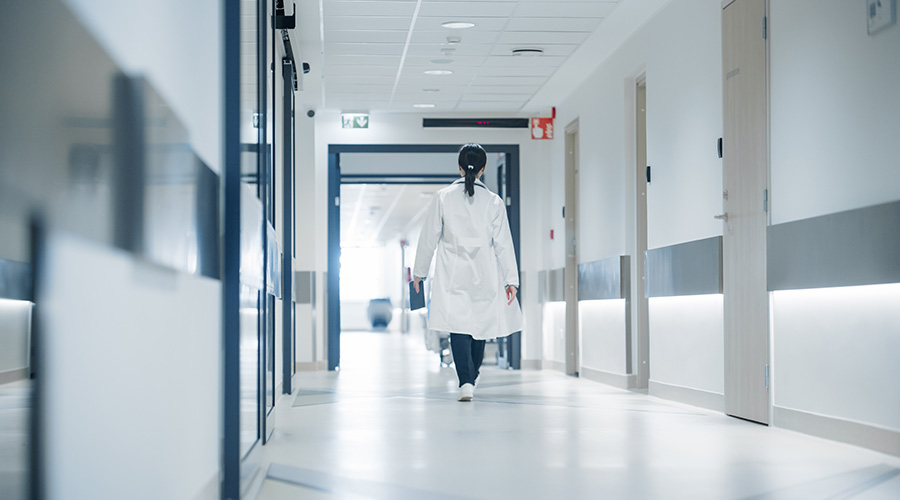
Hospitals and other healthcare facilities are rapidly aging. With more facilities adopting the use of emerging technologies, it is essential that buildings are modernized to keep up with the digital age. The upgrades, which can be cumbersome in any industry, can only succeed when it’s planned early and coordinated across all disciplines.
Healthcare Facilities Today recently spoke with Christy Lindsey, global health of healthcare advisory for SJ Group and Nico Kienzl, senior executive director for Atelier Ten on how integrating planners, architects, engineers and facility managers can help ensure healthcare facilities can evolve with changing care models.
HFT: How can outdated facilities be retrofitted for modern energy efficiency and sustainability standards?
Nico Kienzl: Retrofitting outdated facilities for energy efficiency requires a strategic, system-level approach. Opportunities exist at every level — from controls and distribution systems to overall energy infrastructure — but the strongest ROI comes when energy upgrades are embedded within broader modernization projects rather than pursued in isolation. Bundling capital improvements into a strategic, long-term plan maximizes impact, reduces downtime, and allows proper engineering integration. This approach positions healthcare organizations to achieve energy, resilience, and cost objectives simultaneously.
Related Content: What to Consider When Modernizing Healthcare Facilities
HFT: How can hospitals upgrade HVAC, electrical, and plumbing systems without disrupting patient care?
Kienzl: Successfully upgrading HVAC, electrical, and plumbing systems without impacting patient care demands careful planning and phasing. Many upgrades can be completed incrementally — for instance, replacing HVAC ductwork or switchgear in zones to avoid cross-contamination or downtime. Creating swing space and conducting thorough system optimization studies that assess reuse potential within existing systems often reduce both disruption and cost. By taking a holistic approach that blends temporary and permanent solutions, hospitals can modernize infrastructure safely while keeping patient care uninterrupted.
HFT: What design updates can improve workflow efficiency and reduce staff burnout?
Christy Lindsey: I always advise clients to design for visibility, flow, and proximity. Decentralized supply and medication stations, standardized room layouts, and acuity-adaptable spaces all reduce travel distances and improve coordination. Simulation modeling or digital twins can stress-test workflows before implementation, revealing bottlenecks and opportunities for improvement. Incorporating daylight, biophilic design, and circadian lighting supports cognitive performance and morale. Even modest design refinements can meaningfully enhance staff satisfaction, reduce burnout, and improve patient outcomes.
Mackenna Moralez is the associate editor of the facilities market and the host of the Facilities in Focus podcast.
 Extreme Weather: The Maintenance-Resilience Link
 Encompass Health Lower Providence Opens in Pennsylvania
 Intermountain Health Acquires Fairbourne Building for Healthcare Hub and Medical Campus Conversion
 Cooling Towers at NYC Health + Hospitals/Lincoln Test Positive for Legionella
 Prefabricated Wall Panels Accelerate UCF Lake Nona Medical Center Construction