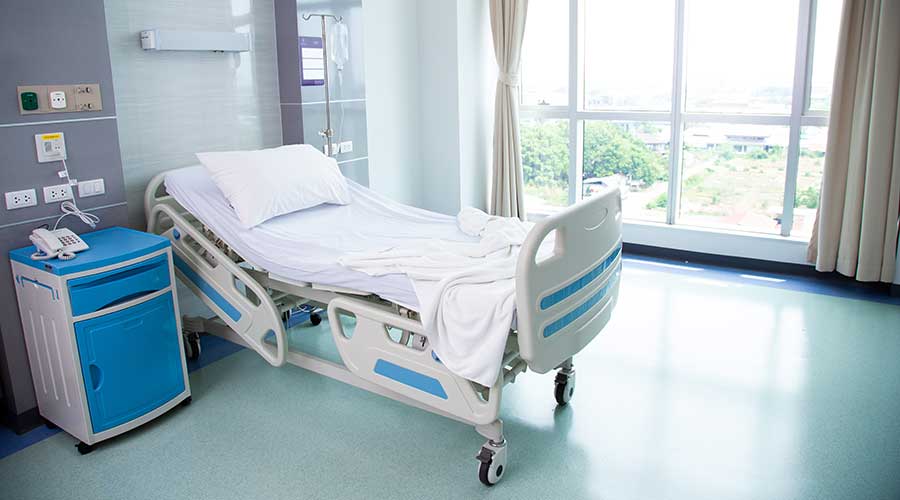
According to WFAA, a patient experiencing a mental health crisis barricaded himself inside a room at Methodist Richardson Medical Center. Richardson police, including officers in tactical gear, responded with a drone and a remote-controlled robot. No one was injured during the three-hour incident. It is uncertain if charges will be filed against the patient. The emergency room remained open during the event, and normal operations continued Sunday night with a few officers remaining on the premises.
Mental health crises are hard to plan for. When they do happen, though, responding promptly with technological solutions and de-escalatory strategies can help ease these tense situations.
As an example, facilities can avoid a barricade situation by having doors that are on double swing hinges. Thomas Morgan, director of business development for healthcare at ASSA ABLOY Door Security Solutions, previously told Healthcare Facilities Today that the product can be released by staff in the event a patient has barricaded the door or otherwise prevented it from opening into the room.
Another available solution is to include a panic button that allows a patient to alert staff they are experiencing a crisis.
“Personal panic devices utilizing real time location services can be initiated by an individual if they perceive a threat, notifying security of who needs help and where to send it,” Doug Coppola, senior director of healthcare solutions, North America at LenelS2 previously told Healthcare Facilities Today. “Additionally, integrated video with voice aggression analytics can help identify an incident before it escalates, alerting security to send a de-escalation team to help mitigate the threat.”
When such technology is not available, however, healthcare facilities can resort to de-escalation tactics to bring down the situation. According to the Joint Commission, these are guidelines to follow when intervening:
- Use communication strategies that are both clear and calm.
- Foster nonconfrontational staff attitudes by refraining from abbreviations or specialized healthcare terminology.
- Use non-threatening body language when engaging with the patient.
- Approach patients with respect, offering support for their concerns and challenges.
- Utilize risk assessment tools for the early identification and intervention of potential issues.
- Ensure that staff members practice and discuss attitudes, knowledge and skills related to de-escalation techniques through educational sessions.
- Address the patient's expressed problems or conditions to establish a trusting relationship with healthcare professionals.
- Set explicit boundaries for patients to adhere to.
- Implement environmental controls, such as reducing lighting, noise and loud conversations.
Jeff Wardon, Jr. is the assistant editor for the facilities market.
 Healthcare Is the New Retail
 Bridgeway Behavioral Health Services Launches Campaign to Renovate Health Center
 Ground Broken for New North Dakota State Hospital
 AI Usage for Healthcare Facilities
 Ground Broken on Pelican Valley Senior Living Modernization Project