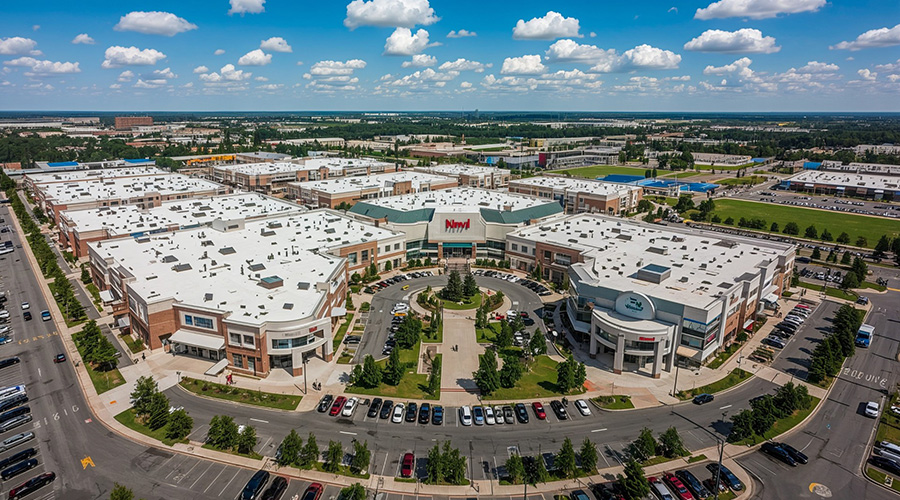
Healthcare systems today are no longer confined to hospitals. They are rapidly expanding into decentralized networks of urgent care centers, outpatient facilities and medical offices across suburban and urban landscapes. This transformation has ushered in a new era in which healthcare functions much like retail, competing for prime real estate to deliver convenient and accessible services.
As a result, site selection has become a high-stakes, data-driven process requiring speed, discretion and deep local expertise. Healthcare providers are approaching land acquisition with retail savvy, using real estate strategies that help them stay ahead in a highly competitive marketplace.
From hospitals to high-visibility hubs
Just two decades ago, most healthcare organizations revolved around the hospital campus. Today, large networks have become some of the most prolific developers in the United States. Their strategies mirror retail chains like Starbucks or McDonald’s. They target prime corners, analyze traffic counts and triangulate on sites near thriving commercial corridors. In a highly competitive landscape, healthcare providers seek locations that maximize visibility, ease of access and community familiarity, often positioning themselves alongside mature retail centers.
This approach is not simply opportunistic. It is deliberate and data-driven. Healthcare networks rely on sophisticated demographic and income analyses once associated exclusively with retailers.
They also consider community demand, service gaps and co-branding opportunities, such as placing coffee shops in medical office buildings to increase foot traffic and patient comfort. As networks expand beyond hospital walls into prime retail corridors, the pressure to secure land quickly brings with it a heightened sensitivity to risk and liability.
Navigating risks and encumbrances
Healthcare providers are exceptionally risk-averse, particularly regarding environmental and legal liabilities. Purchasing land carries hidden risks: contaminated soil from a former dry cleaner, underground tanks left by an auto repair shop or easements that render parts of a site unusable. If a network buys the land, it also buys the liability, and environmental cleanup costs can reach millions. The presence of an unseen access restriction or utility easement also can affect a property’s use and transferability.
To mitigate such risks, networks employ rigorous phase I and II environmental site assessments, American Land Title Association land surveys, geotechnical investigations, hazardous materials surveys and utility investigations as part of their due diligence efforts. These steps uncover potential hazards, including historic soil or groundwater contamination, property deed restrictions, asbestos-containing building materials and potential sinkholes. By developing and involving a team of experienced attorneys and engineers early, networks ensure they understand risks and costs before committing.
One lawyer's quipped, “If you’re going from A to D and your engineers get stuck at step C, I’ll make C go away.” The statement deftly illustrates the necessity of skilled legal counsel when negotiating certain issues with current owners and regulatory bodies. Besides ensuring the allowability of the intended land use, a primary goal is to avoid environmental infractions that could damage community trust and brand reputation.
Healthcare is built on healing, so no provider wants to make headlines for contamination. Even after clearing environmental hurdles, the challenge intensifies as multiple healthcare providers often compete for coveted sites.
Battling for prime locations
Competition for desirable sites is fierce. Just as Burger King and McDonald’s often face off on opposite corners, healthcare networks routinely target the same parcels. Confidentiality is paramount: Non-disclosure agreements and discreet negotiations shield networks from tipping off rivals or being leveraged by owners and developers.
Related Content: The Downfall of Walmart's Health Centers: What Happened?
Each network also brings unique specialties — including orthopedics, maternal health, and wellness services — that can influence site suitability. The most coveted parcels are near retail hubs, where the public is already accustomed to visiting and finding ample parking. As one consultant explained, “Everyone who drives by that site is a neighbor.” Community goodwill and accessibility matter as much as clinical capacity.
This competitive intensity has fueled consolidation. The past decade saw rapid expansion, but as the market matures, networks are beginning to streamline portfolios, balancing new acquisitions with overdue maintenance of existing assets. But the race continues for locations that offer long-term strategic advantages. Winning the site is only half the battle. Rising costs and regulatory requirements add layers of complexity to every project.
Hidden costs of development
Healthcare site development rarely ends at municipal compliance. Networks must account for so-called hurdle costs that far exceed baseline requirements. For example, parking is a constant tension point. Hospitals and outpatient centers typically require far more spaces and closer proximity to the front door than local codes mandate. Securing these accommodations often means negotiating variances or designing creative solutions.
Rising land and construction costs compound the challenge. To manage budgets, many networks avoid speculative land banking. Instead, they focus on well-located, ready-to-develop properties — often underutilized retail sites.
Vacant shopping centers, once bustling, are now prime targets for adaptive reuse. These properties offer strong visibility, existing infrastructure and community familiarity, making them ideal candidates for healthcare expansion. With costs mounting and regulatory approvals in play, speed-to-market becomes the ultimate advantage in turning opportunity into reality.
Racing against the clock
Speed is everything. Once a purchase agreement is signed, due diligence timelines begin, and they are unforgiving. Missing a milestone can scuttle a deal entirely. For healthcare providers, moving quickly is not optional. It is a survival strategy in a market where competitors are vying for the same ground.
To meet these deadlines, real estate teams rely on detailed due diligence processes covering environmental, structural, legal and financial factors. They translate technical findings into plain language, enabling executives to weigh risks with confidence.
Is the environmental risk worth $2 million or $10 million? How long will groundwater monitoring take? Will moving a natural gas main delay operations? The ability to answer these questions concisely can mean the difference between acquiring a site and losing it.
Networks also recognize that sometimes the best decision is to walk away. “If you don’t hire the cheapest real estate professional, you won’t have to hire the most expensive attorney,” according to the adage. Thorough due diligence ensures that walking away is an informed choice, not a missed opportunity. Together, these pressures underscore a set of core lessons that decision makers can rely on to guide successful site selection and development.
What decision makers need to know
Healthcare is the new retail. Networks are applying retail-style data analysis and branding strategies to attract patients and expand market share.
Local expertise is essential. From zoning boards to community relations, real estate remains hyperlocal. Trusted local partners who understand the regulatory landscape are indispensable.
Due diligence cannot be rushed. Cutting corners exposes networks to financial, legal and reputational damage. Comprehensive assessments are the foundation of sound decisions.
Community perception matters. Facilities must be seen as assets to their neighborhoods. Accessibility, traffic flow and even landscaping can influence public goodwill.
Adaptive reuse offers opportunity. Shopping centers and other underperforming commercial properties are ripe for transformation into high-value healthcare destinations.
Trust within the team is critical. Success depends on a collaborative, transparent team of qualified professionals who share information and stay aligned on goals.
The healthcare market is maturing, and the competition for quality real estate has never been more intense. Networks are racing not only to expand their reach but also to maintain community trust, manage costs and navigate complex regulations.
Success lies in more than just finding a parcel of land. It requires building the right team, asking the right questions and approaching every project with the foresight and agility of a top-tier retailer.
In this new era, healthcare is no longer just about healing. It is about location, timing and trust. As the industry continues to evolve, those who master the art of retail-style site selection will define the future of accessible, community-centered care, as healthcare is the new retail.
Matthew B. Malozi is vice president with Remington & Vernick Engineers.
 Cooling Towers at NYC Health + Hospitals/Lincoln Test Positive for Legionella
 Prefabricated Wall Panels Accelerate UCF Lake Nona Medical Center Construction
 University of Rhode Island Adds Clinical Space
 How Retail Design Principles Can Improve Healthcare Wayfinding
 Flexible Design Strategies Help OhioHealth Maximize Clinical Space