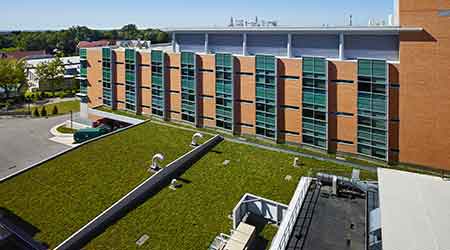
An important sustainability strategy is to pay more attention to the building envelope, according to an article from Building Operating Management on the FacilitiesNet website.
One example is the use of smart glass to reduce glare, solar heat gain, and nocturnal light trespass. The latter allows patients to sleep more peacefully at night, according to Kelly Thayer, senior associate and architect for Stantec Consulting Services.
Smart glass — also called dynamic glass — can change in transparency, going from clear to nearly opaque, or change in tint, like sunglasses. Different types of smart glass use different technologies; electrochromic is the most common.
Hospital staff also benefit from daylighting and views, which can help them to decompress from the stress of patient care while they are on breaks. Thus, the staff lounge in one hospital was also put on the outside of the building and fitted with large windows, and the core was reserved for support spaces, clean and soiled utility rooms, equipment spaces, and nursing stations.
 Cleanliness in Hospitals: Clinical Priority and Community Perception
 Dana-Farber Receives $50M Gift for Planned Cancer Hospital
 Clarinda Regional Health Center Reports Data Security Incident
 Gaps in Nurses' Environmental Cleaning Knowledge Grow Amid Rising EVS Pressures
 Ground Broken on the Southern Nevada Forensic Facility