
Candida auris (C. Auris) is a rare yet potent yeast that gives healthcare facilities a headache whenever it rears its head due to its ability to spread easily and linger for long periods of time.
According to WDTV, a patient tested positive for C. auris, a rare and potentially deadly pathogen, at a WVU Medicine hospital. The facility is working with health authorities to identify exposed patients, conduct tests and take precautions. The specific hospital and patient details are not disclosed. The extent of the pathogen's presence at WVU Medicine is currently unknown.
C. auris can spread via contact with infected patients and contaminated surfaces or equipment according to the Centers for Disease Control and Prevention (CDC).
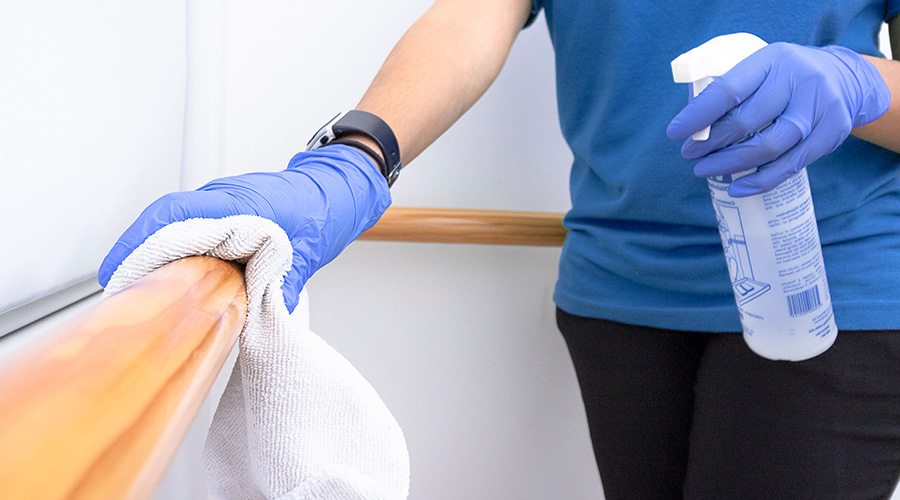
That makes healthcare facilities an ideal breeding ground for the yeast, as it can survive for weeks on surfaces within them. As it becomes more deeply entrenched on both regular surfaces and medical equipment, it becomes much harder to get rid of. If left for too long, it will require facility-wide sporicidal disinfection.
To prevent this from happening, environmental services (EVS) and facility teams can follow these steps as recommended by J. Darrel Hicks:
- Patients that have or are suspected to have an infection should be isolated until discharged or the infection goes away.
- Rooms of isolated patients should be checked twice daily by EVS during morning and night shifts.
- Make sure that EVS members use Personal Protective Equipment (PPE) under the supervision of an EVS department leader.
- Make sure to change out the privacy curtains.
- Disinfect the floors.
Jeff Wardon, Jr. is the assistant editor for the facilities market.
 What To Know Now About OSHA's Updated Hazcom Rule
 How Efficiency Checklists Help Hospitals Save Energy, Water and Money
 Making Healthcare Lighting Retrofits Work
 Harris Health to Build New Freestanding Cancer Center