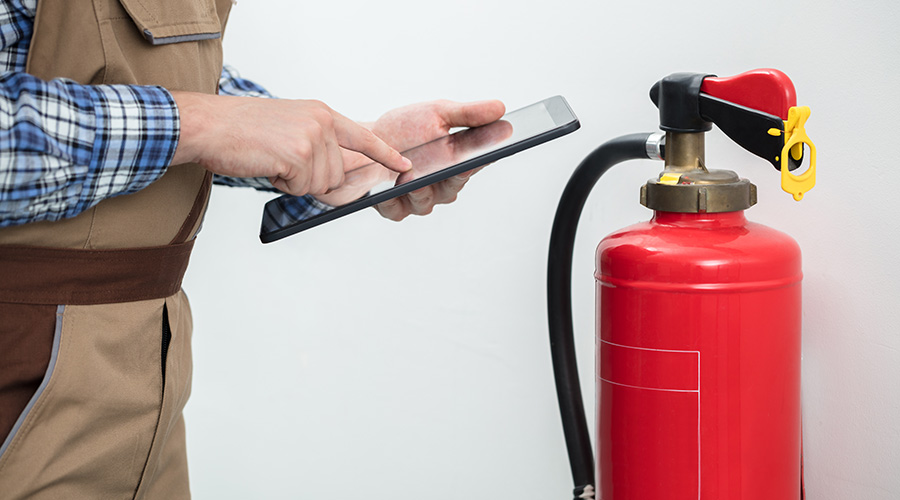
Healthcare facilities are under pressure like never before. Technology is more advanced, medical equipment is more complex, and care delivery is increasingly decentralized. At the same time, patient demand is at an all-time high, creating pressure on facilities managers to upgrade infrastructure, comply with new codes and standards, and maintain environments that can adapt to constant change.
While the changes represent progress in healthcare, the demand for physical facilities to keep pace with these shifts will fall squarely on skilled healthcare facility managers, who staffs must retrofit, upgrade and construct spaces to meet the new norm while facing a persistent shortage of qualified workers. Over one-half of skilled trades professionals identify workforce gaps as their primary operational challenge in 2026, according to a recent survey from the National Fire Protection Association (NFPA), and the healthcare sector is no exception.
All these changes take shape during an era when facility technicians are more time-crunched than ever, so leveraging intelligent, digital resources is becoming mission-critical. Skilled workers need support to surmount workforce challenges and work at the pace of innovation — not only to keep up but to make sure simple oversights or lack of time for training doesn’t result in the next catastrophic fire.
Facilities might be changing at breakneck speed, but with the right tools, managers and technicians will be ready to maintain a safe environment no matter what.
Facility demands and operational strain
Fire safety has always been a critical yet complicated aspect of healthcare because of the industry’s “always on” nature. Inspections and maintenance must occur around the clock without disrupting care or triggering false alarms, leaving facility teams with little margin for error. And that pressure is without mentioning the seismic shifts that further complicate the way skilled workers deliver fire, electrical and life safety in a healthcare setting.
With the expansion of procedures that can legally occur in ambulatory centers and outpatient facilities, many patients are reaping the benefits of convenient, accessible care. But the shift to a more decentralized care model is also placing an unprecedented demand on those who must meet new building standards. Surgical-grade HVAC, medical gas systems, infection-control pressurization and emergency power requirements are expected in an array of buildings.
With this transformation also comes a complete change in the safety profile of hospitals. Now, patients who remain in inpatient facilities tend to require higher-acuity care and might be unable to evacuate independently during emergencies. Life safety strategies that once assumed rapid egress now must account for patients with limited mobility, making “defend in place” approaches and increased provider preparation essential.
Related Content: Fire Protection in Healthcare: Why Active and Passive Systems Must Work as One
Risk and aging infrastructure
These challenges alone can overwhelm a labor-stretched workforce, and that is without acknowledging another critical healthcare challenge: Healthcare facilities rely extensively on electrical systems to power critical medical equipment, which increases operational and fire safety risks.
As the technology within facilities becomes more advanced, overloaded circuits, worn wiring and malfunctioning devices pose serious risks, especially as older hospital buildings degrade. Aging infrastructure compounds the problem, particularly in antiquated buildings that were not designed to accommodate modern electrical demands.
Retrofitting these buildings to current safety standards — including electrical upgrades, sprinklers, alarms and fire-resistant materials — is critical to reducing risk, but that requires immense time and effort from a workforce that is working at its limit.
All of this unfolds in a landscape where codes and standards must move quickly to keep pace with technological advancement and other industry shifts. Facility teams must constantly interpret and implement new regulations, whether during new construction or retrofits, while simultaneously learning how to operate and maintain advanced equipment.
This makes training and upskilling essential, but the labor shortage and heavy workloads often leave technicians without sufficient time to develop these skills. When crucial training is deferred, the risk of oversight or missteps increases, directly affecting facility safety when it matters most.
Leveraging technology to reduce risk
Technology — particularly AI and digital tools — lays out an effective and safe path forward. By automating administrative work, providing real-time access to the latest codes and standards and helping technicians prioritize tasks, these tools give technicians more time to focus on critical maintenance, inspections and emergency preparedness that come with the modern-day healthcare landscape.
AI also can support staff training and research, allowing workers to quickly reference up-to-date codes and standards or even simulate emergency scenarios. For example, an AI chatbot embedded into a digital codebook can help workers quickly access the most current fire, electrical and life safety standards while on the jobsite, greatly decreasing the time it takes to locate up-to-date requirements.
Other tools, like digital dashboards and CMMS platforms, help technicians plan their days efficiently, flag urgent issues immediately and focus attention where it matters most, reducing the risk that small oversights become serious hazards.
Even though tech advancements promise to help facility workers do more with less, managers must understand that these tools are not a replacement for human expertise. Skilled trades professionals remain indispensable. AI cannot replicate their judgment, experience and hands-on ability.
Digital tools augment these capabilities, helping technicians operate at the speed of innovation rather than attempting to replace them. When implemented thoughtfully, technology bridges the gap between growing facility complexity and workforce limitations, allowing teams to maintain the highest safety standards even amid rapid change.
Healthcare facilities are changing rapidly, and the responsibility to maintain safe, reliable environments falls heavily on a limited number of skilled workers. Technology and AI provide the leverage needed to meet these demands. They allow facility teams to move faster, stay current with evolving codes and focus on the highest-value work, all while safeguarding patients and staff. By embracing these tools, healthcare facility managers and technicians can ensure that fire safety keeps pace with the rapid evolution of modern healthcare.
Kyle Spencer is director of NFPA LiNK with the National Fire Protection Association.
 Preparing Healthcare Facilities for Wildfire Air Quality Events
 UW Health Set to Open Expansion at East Madison Hospital
 Central Ohio Primary Care Physicians Falls Victim to Cyberattack
 The Role of Biophilic Design in Healthcare Facilities
 TriStar Centennial Medical Center Invests $90M in Women, Children's Hospital Expansions