
One step to reducing hospital-acquired infections is minimizing the number of times healthcare providers, patients, and others come into contact with surfaces, according to an article from Building Operating Management on the FacilitiesNet website.
That includes doors, on which germs and bacteria can reside. A 2014 study by Charles Gerba of the University of Arizona found the contamination of a single doorknob or table top could result in the spread of viruses throughout office buildings, hotels, and healthcare facilities.
Touchless doors can help stop the spread of germs and bacteria. They also can be easier for some individuals with disabilities to use.
“Low energy” doors are required to be activated by “a knowing action,” such as individual waving his or her hands near the touchless actuator. “High energy” doors, on the other hand, don’t require a knowing action. Instead, they may open when, for instance, an individual steps on a mat or is detected by a motion sensor.
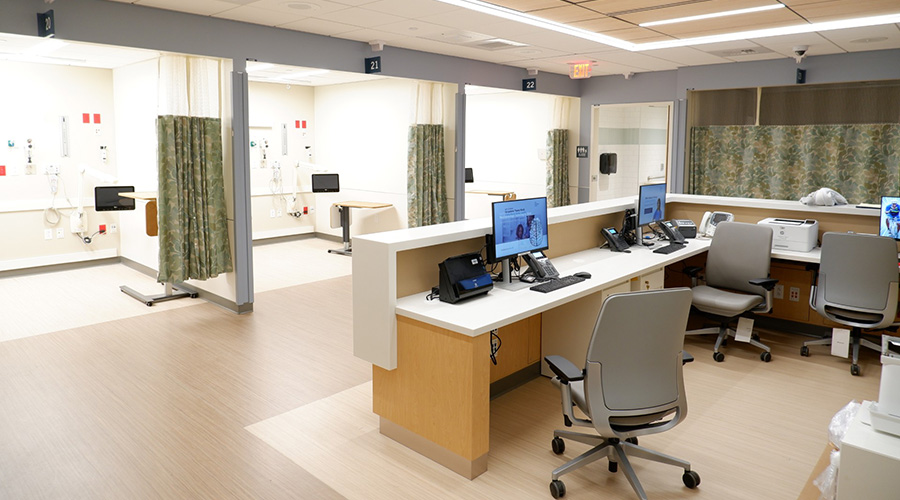 Building Around Care: Lessons in Modernizing Active Healthcare Environments
 St. Luke's Heart Hospital Opens at Anderson Campus in Pennsylvania
 WindRose Health Network Ensnared in Vendor Data Breach
 How Efficiency Checklists Help Hospitals Save Energy, Water and Money
 Intermountain Healthcare Receives $50M Gift for Standalone Children's Hospital