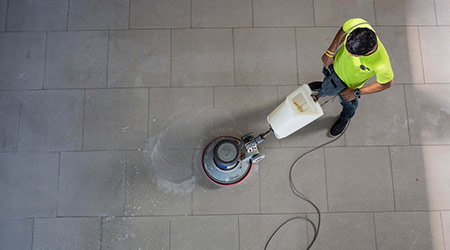
Floor care is often the centerpiece of a facility's cleaning program, according to an article on the StopTheMop website.
The following tips are some of the ways to make a lasting good impression with floor care:
• Know the flooring. If you don’t know what kind of flooring you’re dealing with, you can damage it by using the wrong chemicals. If you’re not sure what kind of flooring you’re dealing with, do a test of the cleaning chemicals in an inconspicuous area.
• A shiny floor is a safe floor. Many people think a shiny floor is slippery, but the shinier the floor, the more dirt free and less slippery it is.
• Proper matting can pick up a significant amount of dirt and debris as people enter the building. However, it’s also important to clean entry mats as they get saturated.
• High traffic areas need to be cleaned on a daily basis. While you may be able to get away with spot cleaning less frequented areas, high traffic areas are also high visibility.
 Why Healthcare Facilities Management Is Critical to Patient Safety
  Brookdale Senior Living Announces Acquisition of the Brookdale Galleria Community
 Erlanger Health System Falls Victim to Data Breach
 Technological Readiness: The Missing Construction Milestone
 From Cooling Towers to Cost Savings: Hospital Seizes Power-Saving Opportunity