
Every year, from October through April, healthcare facilities across the U.S. combat influenza and norovirus season, managing outbreaks that significantly impact their facilities by increasing cases of staff and patient illness, deaths, and unexpected financial expenses. Influenza and other winter germs like colds and norovirus are highly contagious and healthcare settings are particularly susceptible to outbreaks because of the high levels of contact and vulnerable patient populations.
The best way to fight back is with a facility-wide approach using products grounded in science. Learn about what you and your staff can do to help keep pathogens at bay at your facility.
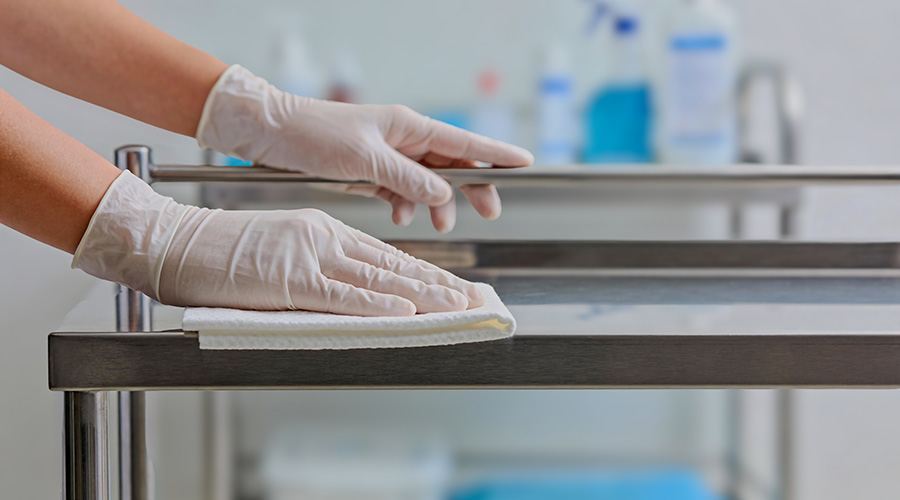
• Clean and disinfect regularly. The flu can spread when people touch infected surfaces and then touch their eyes, mouth or nose. However, flu viruses are fairly easy to kill when using appropriate products as part of the cleaning and disinfecting process, but it must be done regularly, especially during flu season. Remember to always remove visible soil from surfaces, followed by targeted disinfecting.
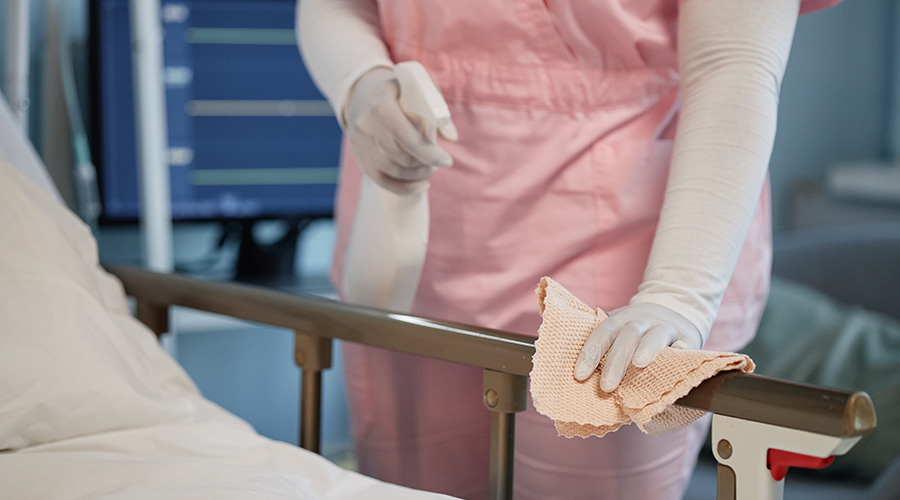
• Target high-touch surfaces. Objects and surfaces that are frequently-touched such as toilets, faucets, hand/bed rails, telephones and door handles need to be disinfected at least once a day with an EPA-registered disinfectant. This is especially important as viruses that cause the common cold and flu can survive on surfaces for hours at a time.
Ready-to-use products and disinfecting wipes are good options for disinfecting high-touch surfaces because they are easy-to-use, require no dilution and deliver the proper chemical concentration each time they are used, minimizing the risk of human error.
• Don’t overlook soft surfaces. From carpets and curtains to upholstery, soft surfaces can be often overlooked germ reservoirs. Flu viruses for instance can survive on soft surfaces for up to 12 hours.[1] Make sure you incorporate decontaminating soft surfaces using products that are EPA-registered to kill illness-causing germs as part of your ongoing approach to facility-wide infection prevention approach.
• Choose the right products. Select products that have label claims to kill bacteria and viruses like influenza and rhinovirus quickly. Remember to always refer to the product label and follow manufacturer’s instructions for use and contact time, or the length of time the disinfectant needs to remain wet on the surface to properly kill germs.
• Practice personal illness-prevention tips. Encourage employees to get vaccinated and practice general healthy habits. Discourage sick employees from coming to work and instruct everyone to wash their hands regularly with soap and water.
Lyles is head of clinical affairs for Clorox Professional Products Company.
Get a free downloadable PDF copy of the Influenza & Norovirus Prevention Tool Kit.
[1] Barker, J., Stevens, D., Bloomfield, S.F. "A REVIEW Spread and prevention of some common viral infections in community facilities and domestic homes." Journal of Applied Microbiology. 91.1 (2001): 7-21.
 Cleanliness in Hospitals: Clinical Priority and Community Perception
 Dana-Farber Receives $50M Gift for Planned Cancer Hospital
 Clarinda Regional Health Center Reports Data Security Incident
 Gaps in Nurses' Environmental Cleaning Knowledge Grow Amid Rising EVS Pressures
 Ground Broken on the Southern Nevada Forensic Facility