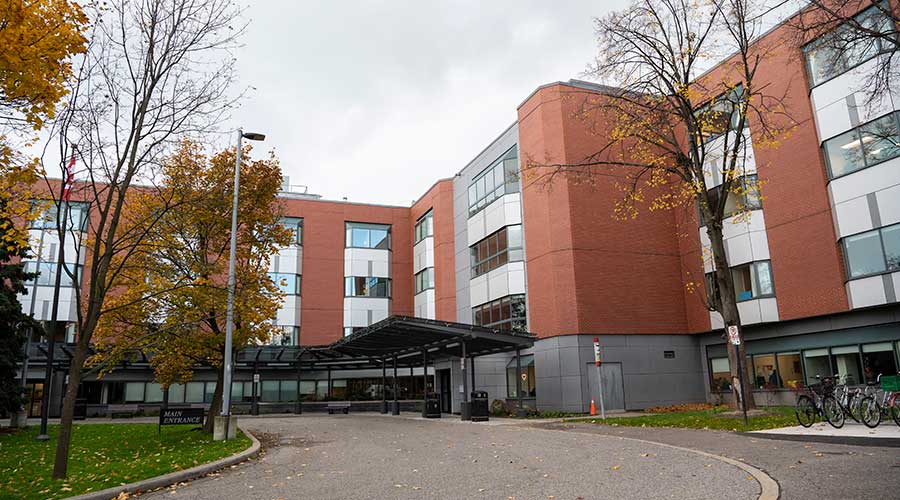
Heat pumps are an alternative technology steadily growing in popularity. This is thanks to more interest being gained in energy efficient alternatives to traditional fossil-based technology. As such, there is an increasing number of healthcare facilities looking at switching to this alternative technology, such as the University Health Network’s (UHN) Bickle Center.
The Bickle Center provides continual care to rehab patients. To have strong heat recovery and reduce the facility’s greenhouse gas emissions, UHN sought out alternative air handling units (AHUs).
“Anytime there are any large capital projects, we always look at enhancing them with energy efficiency and/or carbon reduction. So, we are always bullish on heat recovery,” says Edward Rubinstein, director of environmental compliance, energy and sustainability for UHN. “We have looked at run around loops and heat wheels and things like that and they have potential, but they are problematic.”
With those two options out, UHN decided on using heat pumps instead. Heat pumps are an energy efficient alternative to traditional HVAC systems and AHUs. They work by taking heat from either the air or ground and then increase its temperature to heat up a facility. Heat pumps can also cool facilities and provide them with hot water.
“It was done as a pilot, you know, this is sort of a proof of concept that it should work,” says Rubinstein. “However, we wanted to kind of do it to see if there are any challenges along the way especially in an existing hospital, and it worked amazingly.”
According to Rubinstein, these were the four main benefits from the heat pumps:
- Reduced overall utility costs
- Significantly reduced use of fossil fuels (for boilers) and greenhouse gas emissions
- Added redundancy – heat pumps can be used to provide some heating or cooling if the main boiler or chiller plants fail
- More efficient shoulder season operation – e.g., able to provide cooling in shoulder season using only heat pumps instead of running central chiller plant
Overall, the project to implement heat pumps was a success for the Bickle Center.
“So now it's our standard whenever we can do it,” says Rubinstein. “If we have any places, especially with 100 percent fresh air makeup, we really push to get heat pump heat recovery installed,”
Concrete examples like this can help some healthcare facilities see what heat pumps can do for them. Discussing the benefits can only get some people so on board. Others need to see concrete results if they are to be engaged and brought on board for alternative technologies.
Jeff Wardon, Jr. is the assistant editor for the facilities market.
 The Future of the Global Hospital Hygiene Market
 Rethinking Fire Safety Inspections
 The Ohio State University Wexner Medical Center Officially Opens
 Healthcare and Resilience: A Pledge for Change
 Texas Health Resources Announces New Hospital for North McKinney