
In a recent Q&A on the FacilityCare website, consultant Brad Keyes answered a question about humidity and temperature in central supply.
Q: I’m working with an organization on their temperature and humidity monitoring in their central supply area and was wondering what specific parameters they should follow in the two different areas of central supply/storage and decontamination? Should the FGI Guidelines or AAMI Guidelines be followed?
A: If the organization is CMS-certified, all CMS requires on the subject is found in standard §482.41(c)(4), which says, “There must be proper ventilation, light, and temperature controls in pharmaceutical, food preparation, and other appropriate areas.” In its Interpretive Guidelines section, CMS identifies the FGI Guidelines as an acceptable standard to incorporate. While CMS does reference other standards such as AORN, OSHA, CDC and NIH, it does not mention AAMI. So, it would seem acceptable to use the FGI Guidelines in this application. Could your client use AAMI guidelines instead? Yes, but they may have to defend this decision (through the use of risk assessments) to surveyors and inspectors.
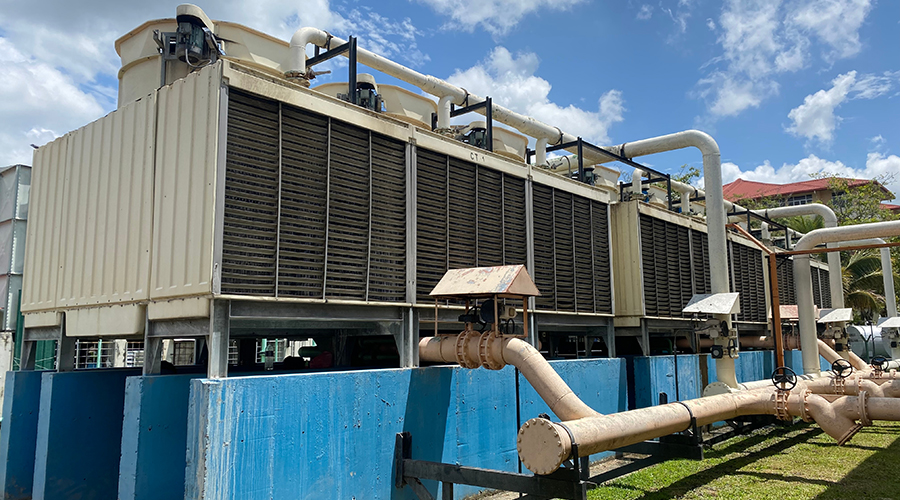 Cooling Towers at NYC Health + Hospitals/Lincoln Test Positive for Legionella
 Prefabricated Wall Panels Accelerate UCF Lake Nona Medical Center Construction
 University of Rhode Island Adds Clinical Space
 How Retail Design Principles Can Improve Healthcare Wayfinding
 Flexible Design Strategies Help OhioHealth Maximize Clinical Space