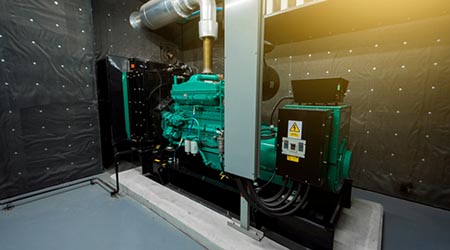
Uninterruptible power supplies (UPS) and standby generators are essential for providing emergency power to institutional and commercial facilities in the event utility power is lost, according to an article on Facility Maintenance Decisions on the FacilitiesNet website.
Standby power systems are often used for life-safety systems and other critical loads, such as emergency lighting, fire-alarm system, fire pumps, data servers, and critical air handling units, just to name a few.
For maintenance and engineering managers responsible for ensuring that standby power systems provide a reliable supply of power, success involves paying attention to three key issues: understanding standby power systems, implementing a comprehensive preventive maintenance program, and arranging for effective monitoring of system performance.
For managers and front-line technicians to effectively oversee and operate standby power systems, they need to have access to the latest updated drawings and an operational manual for each system component. This level of understanding of the standby power system will provide building operators and facility engineering staff with crucial information that will enable them to communicate effectively and maintain normal system operations.
 Sustainability as a Baseline in Healthcare Facilities
 Penobscot Valley Hospital Reports Data Security Incident
 Ballad Health Acquires Land for Future Unicoi County Hospital
 Why Healthcare Facilities Management Is Critical to Patient Safety
  Brookdale Senior Living Announces Acquisition of the Brookdale Galleria Community