
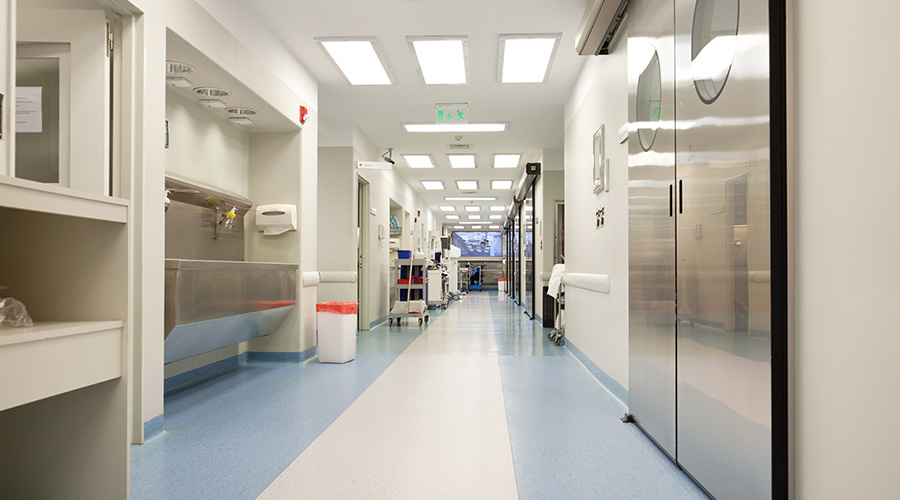
In recognition of operational needs in hospitals, the 2012 edition of the National Fire Protection Association's NFPA 101, Life Safety Code allows limited groups of furniture and certain other projections into corridors in healthcare occupancies, provided corridors are at least 8 feet wide, according to an article in the NFPA Journal. Historically, the requirement has been 8 feet of width that is clear of any obstructions.
Furniture is allowed in the corridor provided it is secured to the wall or floor, and installed on only one side of the corridor so that it still leaves 6 feet of clear width. Each grouping of furniture can take up no more than 50 SF and has to be at least 10 feet away from the next grouping.
Non-continuous projections from the wall up to 6-inches deep are now allowed, as long as they are at least 38 inches from the floor. Items expected to fall under this guideline include telephones and flat screens. Wheeled items allowed in the corridor now also include patient lift and transport equipment.
However, wheeled items must still not reduce the corridor to less than 5 feet, there must be a plan for them to be relocated in an emergency, and the equipment must be in use. Wheeled items may not block emergency equipment, or access to fire and smoke doors or exits.
"The Center for Medicare and Medicaid Services (CMS) issued a Survey & Certification (S&C) letter on March 9, 2012 (Memo 12-21-LSC) that will allow nursing home and hospital providers to use these changes in the 2012 Life Safety Code by considering waivers of the 2000 edition of the Life Safety Code used by CMS," according to the article.
 Hospitals Are Energy Super-Users. Why Is It So Hard to Modernize Them?
 Encompass Health Rehabilitation Hospital of Bangor Officially Opens
 Early Entry: Manager's Critical Role in Construction Planning
 The Evolution of Lighting in Patient Care
 HealthPartners and Essentia Health to Combine Organizations