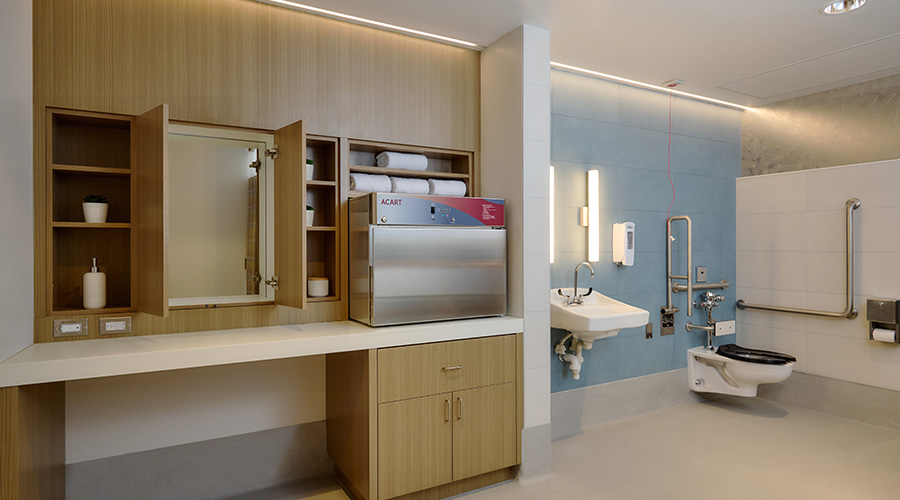
A newly redesigned shower room at the University Health Network’s Toronto Rehab University Centre is improving care for people living with dementia, showing how thoughtful, evidence-based design can support patient wellbeing and clinical outcomes.
Located within the Specialized Dementia Unit, the space responds to a common challenge in care environments, where showering can be disorienting and stressful due to unfamiliar surroundings, noise and limited privacy.
The redesigned space features a biophilic approach, using wood and natural colors to create a calmer atmosphere. This is combined with a spa like, patient centered experience, where accessibility is seamlessly integrated and comfort, dignity and ease of use are prioritized through soft lighting, reduced glare, clear spatial organization, and slip resistant flooring.
The project began at OCAD University through its graduate Design for Health Spatial Studio, where the initial concept was developed in collaboration with Dr. Ron Keren, a geriatric psychiatrist at Toronto Rehab. Led by Associate Professor Maya Mahgoub-Desai and Associate Professor Bruce Hinds, with research methods support from Professor Dr. Kate Sellen, the studio guided students through an evidence-informed design process that led to concepts for the unit, including the existing shower spaces. This early work laid the groundwork UHN’s eventual built solution.
Kasian was selected through a competitive RFP process and, serving as the prime consultant, led a highly collaborative and coordinated process. The team worked closely with UHN, family members, researchers and donors to implement a human centered design approach from schematic design through to construction. Central to this process was direct engagement with a community group of individuals with lived experience in dementia caregiving, whose insights meaningfully shaped the design direction. Kasian’s holistic approach considered evidence-based research alongside input from staff, patients and families to align the built environment with the project goals and objectives. The result is a space grounded in a clear storytelling narrative, where every design decision reflects a deeper purpose and answers the question: “Why is it designed this way?”
Though modest in size, the project represents a meaningful step forward in designing for dementia and aging populations, demonstrating the impact of targeted, evidence-informed interventions. Staff training in personalized care and communication further supports improved outcomes as part of UHN’s broader effort to reimagine care environments for people living with dementia.
 Hospitals Are Energy Super-Users. Why Is It So Hard to Modernize Them?
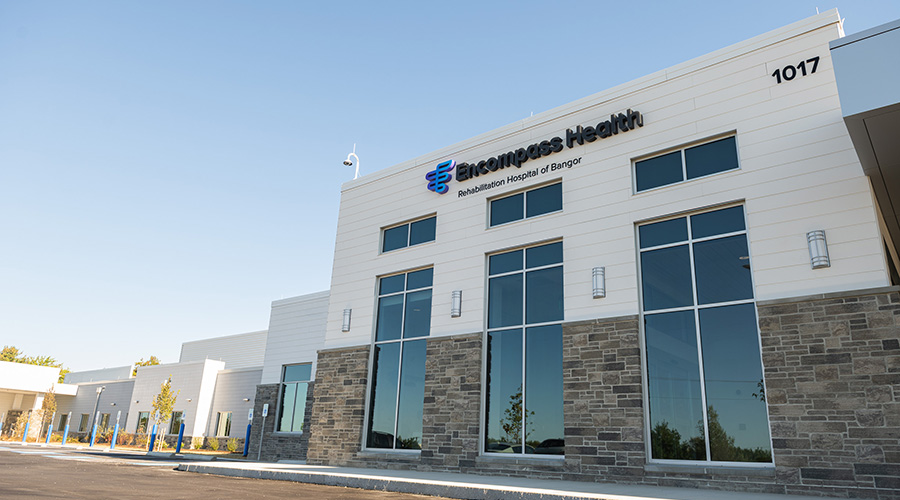 Encompass Health Rehabilitation Hospital of Bangor Officially Opens
 Early Entry: Manager's Critical Role in Construction Planning
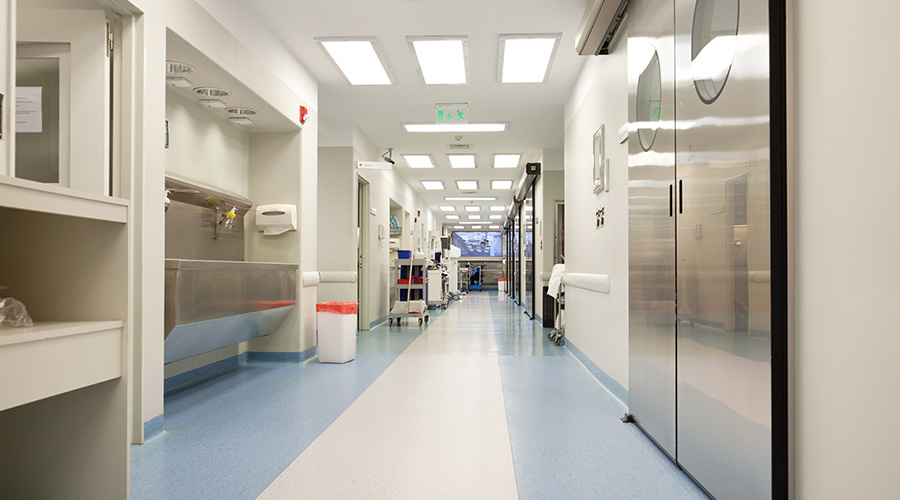 The Evolution of Lighting in Patient Care
 HealthPartners and Essentia Health to Combine Organizations