
Scepter has designated a new yearly event --- Fuel Safety Month --- every July, starting in 2020. Scepter will focus on educating people on fuel safety at home, sporting and in professional landscaping settings.
“Our primary focus each July will be on sharing important fuel safety tips,” says Dan Marshall, vice president of marketing and business development with Scepter. “Details will center on how to properly fill, use and store fuel containers. We will provide safety tips relevant to both children and adults in a variety of everyday settings.
“Handling fuel and fuel containers is something that should only be done by knowledgeable, responsible people. Our hope is that by shining a spotlight directly on fuel safety that we can help prevents accidents.”
Smart, Safe Summer Fun
To bring awareness to Fuel Safety Month, Scepter has developed a logo that the company is making available to all companies and organizations. In July, Scepter will also release an extensive series of tips, do’s and don’ts, and instructions on safely handling three types of fuel --- gasoline, diesel and kerosene.
“We’ve all heard it before: Knowledge is power,” says Marshall. “We plan to target consumers with solid educational information so that they can be safer around all types of fuel.”
Marshall relates that Scepter chose July for the month-long focus because summer is traditionally a high usage time for fuels. “From the annual 4th of July barbeque to yard work to boating, activities using fuel surge in the summertime,” says Marshall. “This is the time of year when all the ‘toys’ come out … like ATVs, jet skis and campers. We fully support people enjoying all of these activities, but we hope they’ll do so in a safe, responsible manner. And, this year especially, we hope they will follow all social distancing guidelines still in effect.”
A History of Innovation
Founded in 1949 by Evald Torokvei, the Scepter company was started in the basement of his Toronto, Canada home. The past seven decades have seen Scepter emerge as a global leader in the design and manufacture of hazardous materials containers, recognized around the world for their best-in-class fuel cans. With manufacturing locations in both Oklahoma and in Canada, Scepter now supplies all of North America with durable consumer and marine fuel containers.
In addition to introducing the world’s first blow-molded fuel container, Scepter produced the first military-style plastic fuel and water cans. This line of military containers was adopted by the U.S. Department of Defense as the new standard, converting all branches from metal to plastic.
For consumers, Scepter offers innovative Scepter™ SmartControl™ fuel containers for gasoline, kerosene and diesel. The rugged SmartControl containers are Made in America and designed to substantially exceed ASTM and CPSC minimum standards. Each product includes child safety locks and a flame mitigation device for added protection.
Recognized by This Old House magazine as a “Top 20 Best New Product of 2019” in the Lawn & Garden category, SmartControl containers are also the recipient of the “Best in Class” Award at the 2018 National Hardware Show.
Constructed of durable and safe high-density polyethylene, SmartControl containers can be found throughout the U.S. in The Home Depot®, Walmart®, Lowe’s®, AutoZone®, Pep Boys, Target and Northern® Tool + Equipment stores. Visit www.scepter.com for more information.
June 23, 2020
Topic Area: Press Release
Recent Posts
 Harris Health to Build New Freestanding Cancer Center
The center is planned to open in 2029, following the opening of the new O'Quinn Hospital along the North Loop at Lockwood.
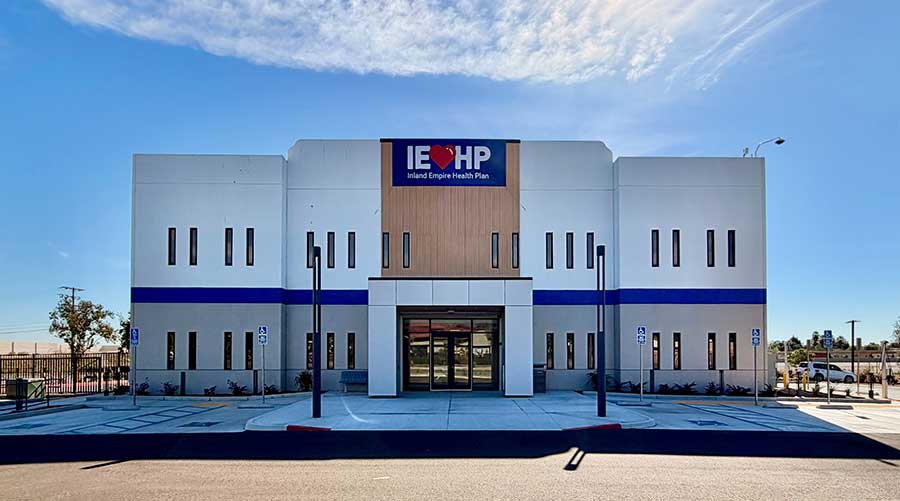 Inland Empire Health Plan Opens Expanded San Bernardino Community Wellness Center
The new 33,000-square-foot center is nearly three times the size of the original location off Second Street.
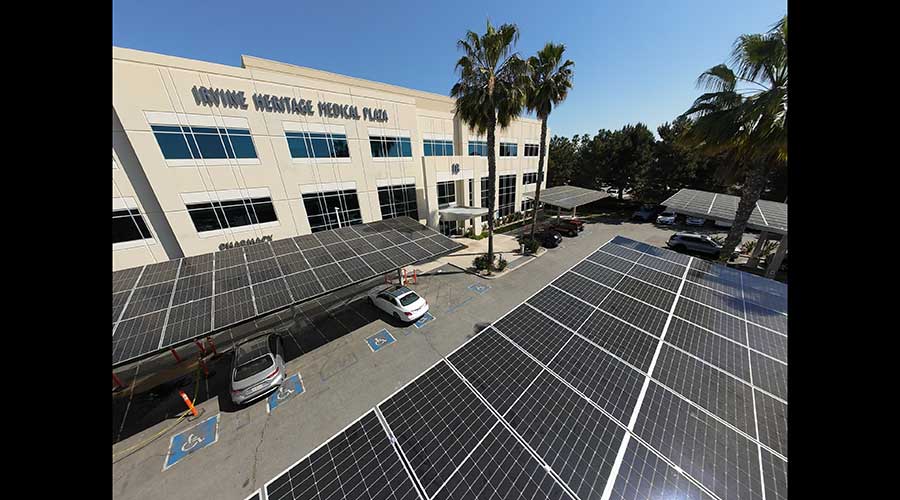 Rethinking Parking Lot Design at Irvine Heritage Medical Plaza
A new solar installation shows how healthcare facilities can improve parking amenities while boosting energy savings
 Repurposing Healthcare Spaces: 5 Critical Questions
Done well, converting existing spaces can trim upfront project costs by up to 40 percent, compared with ground-up construction
 Disinfectant Contact Time: The Case for Biofilm Disruption
Contact time, while essential for compliance, does not reliably predict microbial reduction on actual healthcare surfaces.