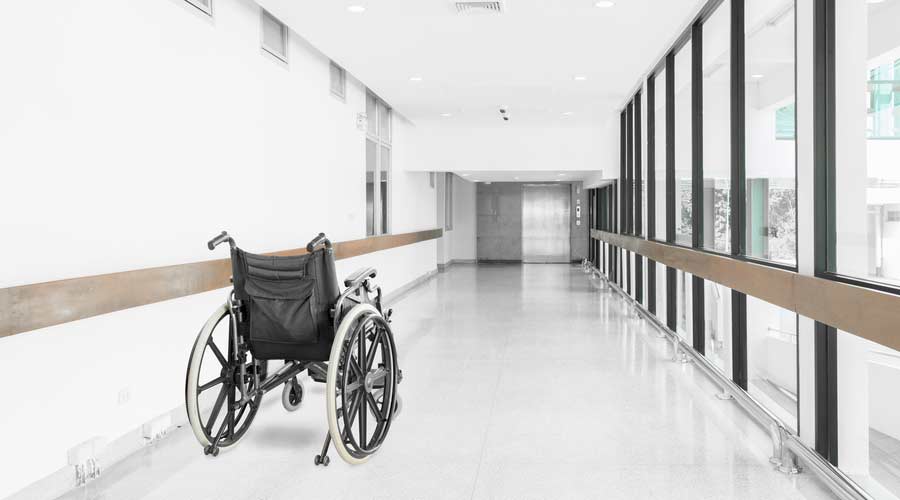
Across the nation, there has been a call to make sweeping improvements to senior care facilities. Earlier this year, President Joe Biden announced plans to improve the quality of the nation’s nursing homes so all residents receive reliable, high-quality care. Under the reform, senior care facilities will be held accountable for the care they provide, and the quality of care and facility ownership will be more transparent for potential residents and their families.
“Improving the quality of care in our nursing homes is a noble cause and something that everyone connected to senior care agrees is needed, and to be successful it must be tied to meaningful changes to funding models to better account for the realities of the cost of caring for seniors,” says Josh Malbogat, vice president of healthcare sales at Brightly. “Senior care communities are upgrading buildings where they can. However, many improvements require an investment in the actual facilities in order to facilitate the change. We are seeing some of this at the higher end of the market, and my hope is that there’s a review of the investment strategies around the skilled nursing and memory care components of housing and a consideration for how these alternate models of care can be accommodated with renovations to existing infrastructure.”
In 2021, American Healthcare Association/National Center for Assisted Living (AHCA/NCAL) released a reform agenda that put forth workforce proposals that would enhance the quality of care for residents and improve the training of employees. However, senior care facilities are primarily funded by Medicare and Medicaid, and they rely on the support and resources from public health officials to recruit and retain new talent. With more reliable resources, senior care facilities could become more competitive.
Reports of rundown facilities continue to deter potential residents and staff. People are now expecting a more personalized experience from nursing homes. High-end homes are becoming more popular, and this is reflected in the upcoming plans for the size of units being built, the number of residents and the ancillary services they offer.
Read Next: Hundreds of Senior Care Facilities Projected to Close in 2022
“The boom in luxury senior care may seem strange to some outside of the industry, but for those who’ve watched it for a number of years, it has been an evolution of senior housing providers preparing for the baby boomers and their higher end desires,” Malbogat says. “A small portion of these seniors have the financial savings to support $20,000 plus monthly fees and developers and providers are all too happy to deliver housing stock to match their desires. That being said, there's a huge middle market in the coming cohort of potential residents that simply do not have the savings to afford the large monthly fees.
“So how can the industry create an experience that fits both the desires and the budgets of this group of potential residents? First, they can adopt technology to streamline operations, driving cost efficiencies through technology to limit the impact – where possible – of staff shortages and turnover. Second, they can offer a la carte services, shifting away from the all-inclusive model and towards the pay as you go model, enabling the offering of additional services beyond just the a la carte medical assistance typically offered. This enables organizations to say yes to a full suite of offerings without driving base rents to the point of unaffordability.”
Senior care facilities have strived to improve over the last decade. According to a report by NCAL, more patients were coming to nursing homes for shorter stays and returning to their permanent residence. Since 2012, successful discharges back to the community have increased 7.8 percent. Meanwhile, in the number of people returning to a hospital during nursing home stays has decreased 8.7 percent since 2011.
“Looking at population trends and the aging group of baby boomers, as well as the associated need for care givers– and the staffing challenges this presents– the drive to create more engaged staff and residents is paramount,” Malbogat says. “As staff become more engaged, the care they deliver improves and the overall experience for residents improves, delivering better quality of life and work for both parties.”
 Why Healthcare Facilities Management Is Critical to Patient Safety
  Brookdale Senior Living Announces Acquisition of the Brookdale Galleria Community
 Erlanger Health System Falls Victim to Data Breach
 Technological Readiness: The Missing Construction Milestone
 From Cooling Towers to Cost Savings: Hospital Seizes Power-Saving Opportunity