Key Takeaways:
- Studies show that 40-60 percent of sepsis deaths are misclassified and often are recorded as organ failure, cardiac arrest or respiratory collapse rather than the infection that caused the fatal decline.
- Hospitals underreport due to penalties and definitions. Hospitals face financial penalties and public ratings tied to HAI performance.
- Nursing homes experience about 400,000 infection-related deaths annually, yet these deaths are not included in CDC’s HAI mortality totals.
The United States cannot solve a problem it refuses to measure accurately.
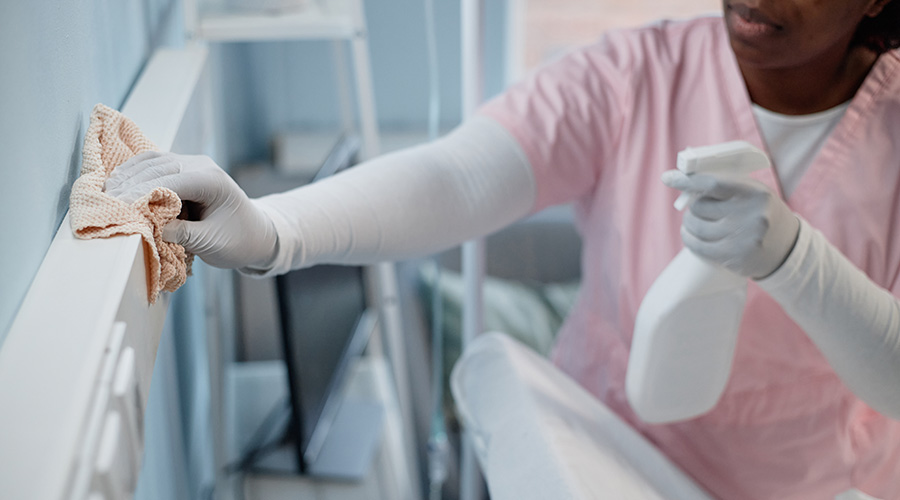
This statement was true during the early AIDS epidemic, when thousands of deaths went uncounted because surveillance systems were fragmented, diagnostic criteria were inconsistent, and stigma discouraged accurate reporting. Today, a similar undercounting is happening with healthcare-associated infections (HAI) — a crisis that kills tens of thousands of Americans each year but remains statistically underestimated.
The World Health Organization (WHO) reports that 7 percent of patients in high-income countries acquire an HAI during hospitalization, and 10.4 percent of those patients die as a direct result. In the United States, that translates to more than 2.3 million HAIs and hundreds of thousands of deaths annually.
Yet official numbers from the Centers for Disease Control and Prevention (CDC) report far fewer deaths. The gap is not due to intentional concealment. It is the result of structural weaknesses in the way the United States counts infections and deaths.
The first and most significant problem is the death certificate. Studies show that 40-60 percent of sepsis deaths are misclassified and often are recorded as organ failure, cardiac arrest or respiratory collapse rather than the infection that caused the fatal decline. HAIs are rarely listed, even when they directly triggered the sepsis. This scenario mirrors early AIDS reporting, when opportunistic infections were listed as the cause of death instead of HIV.
When the underlying cause is not recorded, national mortality statistics become fundamentally inaccurate.
HFT Recommends: HAIs Are Worse Than You Thought
The CDC’s National Healthcare Safety Network (NHSN) tracks only a narrow set of infections: CLABSI, CAUTI, MRSA bacteremia, C. difficile, ventilator-associated events and selected surgical site infections. But hospitals experience many more types of HAIs — hospital-acquired pneumonia, fungal infections, gram-negative sepsis, wound infections, pressure-ulcer infections and multidrug-resistant organisms that fall outside NHSN definitions. If an infection is not part of NHSN’s surveillance categories, it is not counted in national mortality estimates.
Also, hospitals underreport due to penalties and definitions. Hospitals face financial penalties and public ratings tied to HAI performance. As a result, independent audits often find two-three times more HAIs than hospitals report. Complex definitions allow borderline cases to be reclassified, and busy clinicians might not document infections consistently. Again, this scenario echoes the early AIDS era, when hospitals struggled with evolving definitions and inconsistent reporting requirements.
Also, long-term care deaths are almost entirely missing. Nursing homes experience about 400,000 infection-related deaths annually, yet these deaths are not included in CDC’s HAI mortality totals. With the revolving door between hospitals and skilled nursing facilities, infections move freely between settings. But the deaths are counted nowhere.
The result of these situations is a national blind spot. The best available evidence suggests that true HAI-related deaths in the United States are two to three times higher than official CDC figures. As with AIDS in the 1980s, undercounting delays action, weakens public awareness and obscures the scale of preventable loss.
The United States cannot reduce HAI deaths until it counts them accurately. The first step toward saving lives is acknowledging the accurate number of deaths. There are times when doing nothing poses the greatest risk.
J. Darrel Hicks, BA, MESRE, CHESP, Certificate of Mastery in Infection Prevention, is the past president of the Healthcare Surfaces Institute. Hicks is nationally recognized as a subject matter expert in infection prevention and control as it relates to cleaning. He is the owner and principal of Safe, Clean and Disinfected. His enterprise specializes in B2B consulting, webinar presentations, seminars and facility consulting services related to cleaning and disinfection. He can be reached at darrel@darrelhicks.com, or learn more at www.darrelhicks.com.
 Cooling Towers at NYC Health + Hospitals/Lincoln Test Positive for Legionella
 Prefabricated Wall Panels Accelerate UCF Lake Nona Medical Center Construction
 University of Rhode Island Adds Clinical Space
 How Retail Design Principles Can Improve Healthcare Wayfinding
 Flexible Design Strategies Help OhioHealth Maximize Clinical Space