
By investing in design to impact occupant experiences positively, academic and healthcare institutions can see growth in learning as well as recruitment and retention, according to an article from Building Operating Management on the FacilitiesNet website.
When drafting design plans, there are a handful of principles and practices that will help promote a more positive experience.
Once a rather individualistic setting, higher education — particularly STEM programs — have embraced a more collaborative approach to learning curriculum and spaces. Students learn faster and with greater retention working with their colleagues as opposed to independently.
With environments like maker-spaces, tiered classrooms, and various types of flexible informal spaces, occupants have options for greater connection to facilitate problem-based learning.
 Why New Era of Care Demands an Ambulatory Facilities Approach
 ClearSky Health Plans New Medical Rehabilitation Hospital in North Carolina
 Bacon County Health Services Reports Data Breach
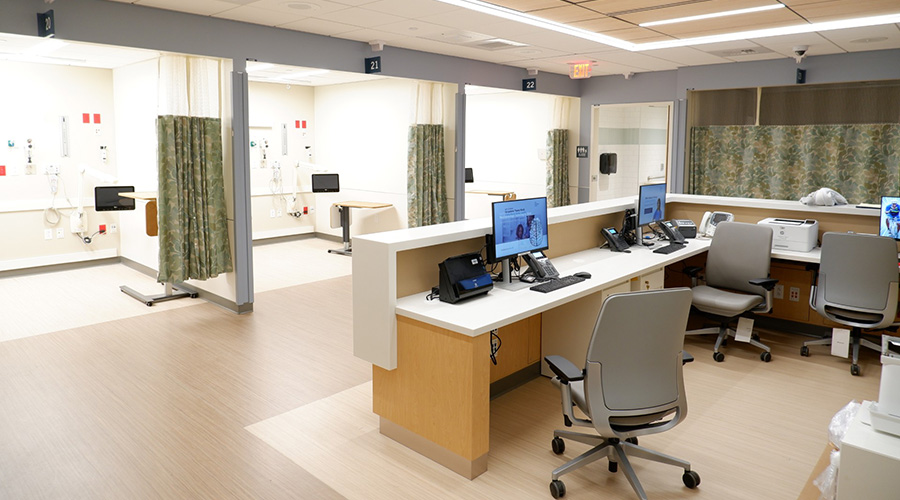 Building Around Care: Lessons in Modernizing Active Healthcare Environments
 St. Luke's Heart Hospital Opens at Anderson Campus in Pennsylvania