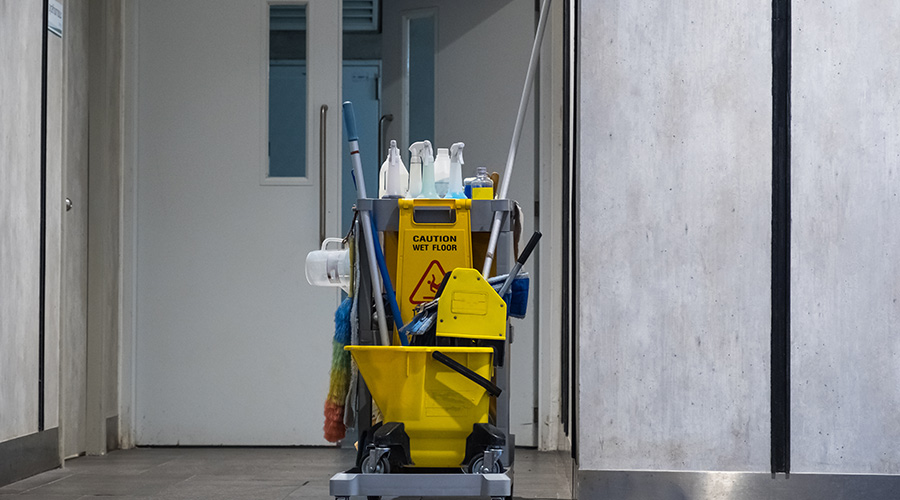
As the first line of defense against the spread of infection, environmental services (EVS) staff have a lot on their plates. They are constantly in direct contact with various bacteria and pathogens, while utilizing a wide breadth of supplies to follow correct infection control procedures. Especially in a department that often lacks proper training, keeping everything in order can be overwhelming for workers.
One of the most important tools to keep EVS staff organized and safe is the cleaning cart. They are used every single day in healthcare facilities, enabling workers to stay mobile and efficient. A properly stocked cart negates wasted trips to the closet for supplies and actively prevents the spread of infection.
Cleaning Cart Best Practices
There are a number of basic recommendations for stocking and maintaining cleaning carts. The Center for Disease Control and Prevention (CDC) states that, firstly, carts should be stocked with a sufficient amount of supplies. Clean and soiled items, such as cloths, should always be separated to prevent cross-contamination. They should have a lockable compartment for cleaning and disinfectant solutions. It is also crucial that staff never place food, beverages, or personal items on the cart, which can bring outside germs or become infected themselves.
In terms of mopping, the CDC says that a two- or three-bucket system is best. For routine cleaning, utilize a two-bucket system where one bucket contains a detergent or cleaning solution, and the other contains rinse water. The three-bucket system should be used for disinfection: one bucket contains the detergent or cleaning solution, one for rinse water, and one for the disinfectant.
The California Department of Public Health (CDPH) also recommends ensuring that alcohol-based hand rub is always accessible, using microfiber mops, and keeping a reference list of high-touch items and surfaces.
Carts must also be properly cleaned at the end of each shift; a task often overlooked. Carts are highly susceptible to obtaining germs, as well as spreading them. Facilities should have a procedure for cleaning carts, especially the high touch areas like handlebars and shelves.
Related Content: Five Key Points to an Effective Infection Control Program
Additionally, carts should never be unattended while in use. When they’re not being used, they should be stored in a designated EVS area.
Training and Implementing
Training should involve discussing how to organize and set up a cleaning cart, reviewing high-touch surfaces, and an interactive demonstration. It should also reinforce the importance of carts and keeping them clean throughout, ensuring that staff have a deep understanding of their role in infection control.
While training will differ between facilities, management should establish clear cart procedures and policies that staff can return to as needed. Carts should be standardized throughout the facility so that EVS workers can grab any cart at the start of their shift and know that everything is in its proper place.
There are plenty of training resources available online, including instructive slides and worksheets, a discussion guide, and an instructor guide/module. No matter what training looks like in a facility, ensuring that it is offered to every member of the EVS team is crucial to making healthcare facilities safe and healthy.
Elisa Miller is an assistant editor for CleanLink.com, Contracting Profits, Facility Cleaning Decisions, and Sanitary Maintenance.
 Preparing Healthcare Facilities for Wildfire Air Quality Events
 UW Health Set to Open Expansion at East Madison Hospital
 Central Ohio Primary Care Physicians Falls Victim to Cyberattack
 The Role of Biophilic Design in Healthcare Facilities
 TriStar Centennial Medical Center Invests $90M in Women, Children's Hospital Expansions