
A Colorado medical office building is among 14 facilities that have been recognized by the National Institute of Building Sciences and the Better Buildings Building Envelope Campaign (BEC) program for achievements in building envelope energy performance.
The campaign plans to recognize high-performing projects annually. Its first-year success stories represent a range of diverse projects, including building retrofits and new construction of K-12 schools, higher education, commercial real estate, health care, and multifamily structures.
Boulder Community Health’s newest medical office building supports an eye clinic and an ambulatory surgery center for a leading Colorado retina practice. Energy-efficient design elements include masonry walls with 2 inches of continuous rigid insulation complemented by R-19 batt within the stud cavity, exceeding code requirements, and a canopy on the building’s south entrance that will accommodate a 99 kW photovoltaic array in the future.
The building showcases emerging hybrid vacuum-insulated glass (HIVG) technology, which improves year-round energy efficiency and comfort by reducing thermal transmittance and convection at the windows. In contrast to the U-value of 0.29 for low-emissivity insulated glass, the HVIG used on the project has a U-value of 0.071 on the north façade and 0.064 on the others. The HVIG also allowed for a 13 percent reduction in visible light transmittance, decreasing glare on façades with higher solar radiation.
The Building Envelope Campaign recognizes energy-saving success stories in four categories: Novel 40 and Novel 20 recognize new construction envelope projects that achieve 40 percent and 20 percent building envelope performance improvement over code, while Retro 50 and Retro 30 recognize retrofit projects that achieve 50 percent and 30 percent improvement over code. In addition to these four categories, projects also may be designated as Role Models, which meet one of the four categories and incorporate an additional advanced strategy or technology into their enclosures.
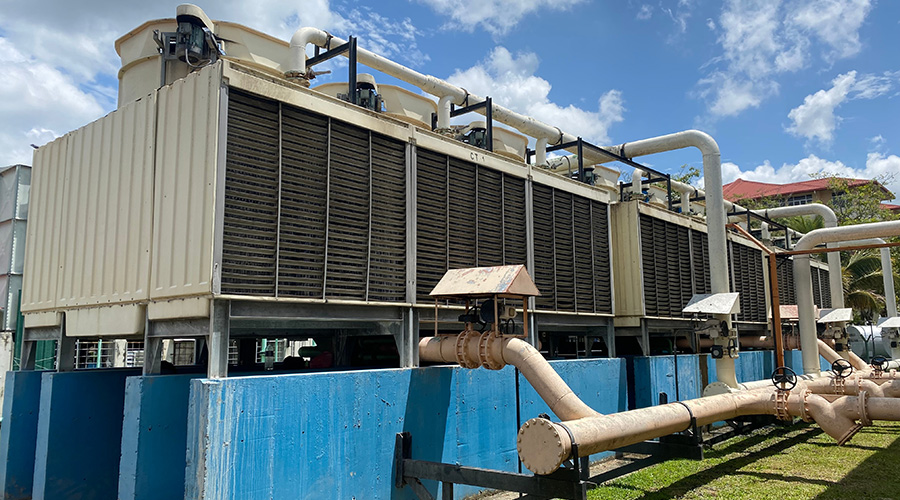 Hospitals Are Energy Super-Users. Why Is It So Hard to Modernize Them?
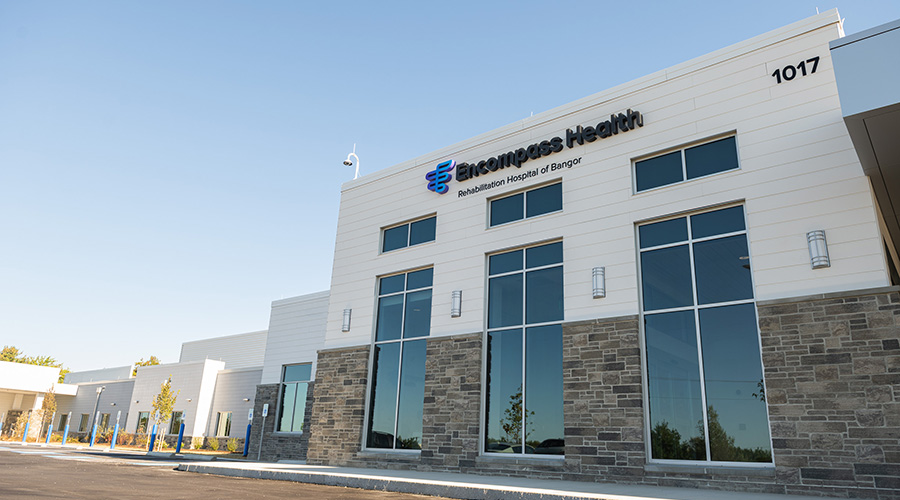 Encompass Health Rehabilitation Hospital of Bangor Officially Opens
 Early Entry: Manager's Critical Role in Construction Planning
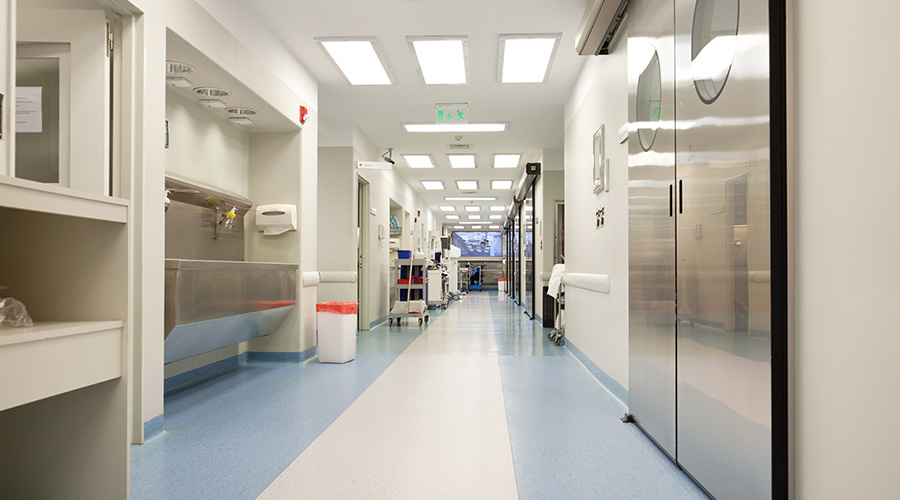 The Evolution of Lighting in Patient Care
 HealthPartners and Essentia Health to Combine Organizations