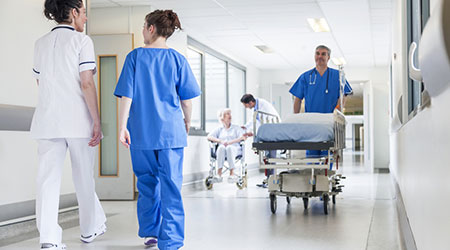
At Jewish Home and Care Center in Milwaukee, more than 50 percent of items disposed of as infectious waste would fall into the general waste category, according to an article on the CleanLink website.
“Infectious waste collection, handling and disposal are among the biggest problems in this industry,” said Eric Bates, director of hospitality at Jewish Home and Care Center, adding that education is the ultimate solution.
According to the World Health Organization, 80 percent of the waste generated by healthcare activities is general waste, and 20 percent is considered hazardous material that may be infectious, toxic or radioactive. Fifteen percent of the hazardous material is classified as infectious waste, the article said.
The method used to determine whether or not material is considered hazardous or infectious includes whether it is saturated, pourable, drippable or flakeable.
 Sustainability as a Baseline in Healthcare Facilities
 Penobscot Valley Hospital Reports Data Security Incident
 Ballad Health Acquires Land for Future Unicoi County Hospital
 Why Healthcare Facilities Management Is Critical to Patient Safety
  Brookdale Senior Living Announces Acquisition of the Brookdale Galleria Community