
The state of Washington has called for diffusers to use low air volumes. But there was a problem: No diffuser satisfied both the industry code requirements and the functional and aesthetic needs of engineers, architects and building owners. Titus, a world leader in air distribution, fills that void with TJD, a standard OMNI diffuser designed specifically to address low air volume codes.
While most air outlets typically work at 100 CFMs, the patent pending TJD performs at 20 to 50 CFMs and throws air at 50 feet per minute up to nine feet from the diffuser. The high mixing increases the discharge isovel and its throw, providing uniform temperatures and equally distributed outside air throughout the space.
TJD also earned a perfect 100 score during ASHRAE’s extremely low air volume Air Diffusion Performance Index (ADPI) testing, proving the product’s ability to satisfy functional and comfort requirements. That means engineers can both meet the latest codes and reduce air volume dependence, and building owners can achieve noticeable energy and operations savings while ensuring occupant comfort.
“Forward-thinking customers can get ahead by using a solution specifically designed to meet industry codes and achieve functional, aesthetic and comfort needs,” said Mark Costello, product manager of grilles, registers and diffusers, Titus.
Best suited in areas where low airflow codes are applicable, TJD is ideal for smaller spaces with low equipment and external loads. It is also highly suitable for occupied spaces, as TJD incorporates Titus’s popular architectural plaque diffuser, giving it a polished look.
TJD’s release comes on the heels of Titus’s 2017 AHR Innovation Award win in the Ventilation category for its Helios diffuser, the industry’s first ambient light-powered digital diffuser.
 Sustainability as a Baseline in Healthcare Facilities
 Penobscot Valley Hospital Reports Data Security Incident
 Ballad Health Acquires Land for Future Unicoi County Hospital
 Why Healthcare Facilities Management Is Critical to Patient Safety
 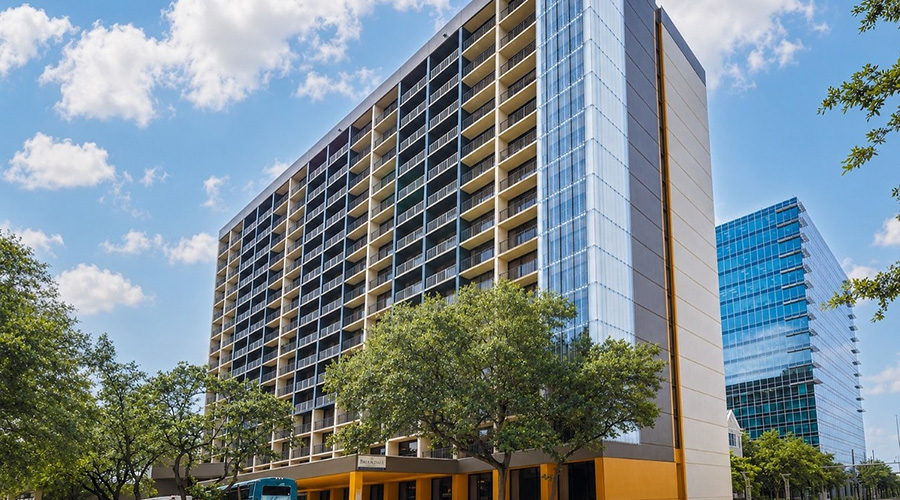 Brookdale Senior Living Announces Acquisition of the Brookdale Galleria Community