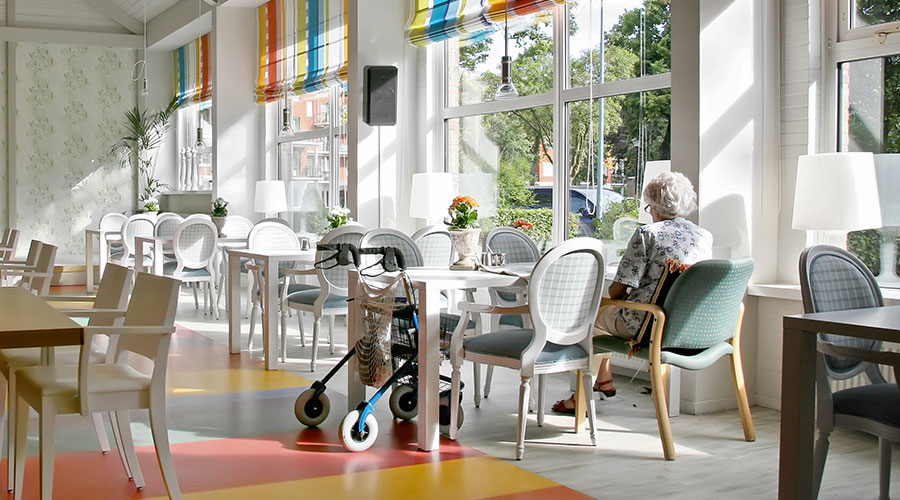
It’s weird to think about it, but furniture really is a central part of everyone’s lives. We gather together at the kitchen table and snuggle in bed with a loved one each night. Children first pull themselves to standing on furniture, and these pieces can become heirlooms and get passed on from generation to generation. Furniture selection matters, and no one knows this more than designers for senior care facilities.
Healthcare Facilities Today recently spoke with Laurel Tommarello, project manager & interior designer, Kolano Design on why selecting furniture for senior care facilities requires a tremendous amount of thought and behind-the-scenes decision making.
HFT: How do you ensure that the furniture minimizes fall risks?
Laurel Tommarello: Several key considerations can minimize fall risks in a care environment. Tables should be equipped with weighted bases to provide stability and prevent tipping if a resident uses them for support. Rounded corners are crucial on tables and other furniture to prevent injuries, especially for individuals with mobility or vision challenges. Chairs should have sturdy, well-placed arms to assist with sitting and rising, along with non-slip glides to prevent sliding. A slightly weighted chair base can further enhance stability but should be used primarily in lounge settings Dining rooms and areas where group activities occur should have chairs that are sturdy, but light enough for a resident to pull in/out of a table with little effort. Protruding chair legs or arms are a common tripping hazard and should be avoided. All storage furniture, including shelves and wardrobes, must be securely fastened to the wall to prevent tipping. Even artwork should be hung with secure hangers to prevent it from being knocked down and potentially causing harm.
Related Content: Designing for Flexibility: How Healthcare Furniture Is Evolving with the Times
HFT: Are there any regulations or industry standards that guide your furniture selection? Please explain.
Tommarello: When selecting furniture and planning spaces in senior care facilities, it's crucial to comply with regulations and guidelines designed to protect residents. Key examples include the Americans with Disabilities Act (ADA) and the American National Standards Institute (ANSI) standards. Typical features that are regulated by these standards are table height, chair height, clearances, etc. For example, many residents are confirmed to a wheelchair and would need tables that have the correct clearance from the floor and an appropriate base to allow a wheelchair to easily roll under it. Overlooking this, will prevent wheelchair-bound individuals from utilizing the tables in the dining and activities areas.
HFT: How do you select materials that are easy to clean and maintain in a healthcare setting?
Tommarello: Soft seating in senior care facilities requires careful attention to material selection to ensure both comfort and hygiene. Moisture barriers are crucial for preventing spilled liquids and body fluids from soaking into cushions and creating a breeding ground for bacteria. Stain-resistant fabrics further enhance cleanability and maintain a fresh appearance. Non-porous materials that can be cleaned with bleach and possess antimicrobial properties are essential for minimizing the spread of illness within this vulnerable population. While these requirements might seem restrictive, manufacturers have developed a wide array of attractive and functional options. Consider coated vinyl and silicone upholstery that offer the look and feel of leather or woven textiles while being easy to clean, woven fabrics treated with stain and moisture-resistant finishes, and antimicrobial laminates for added protection. Textures and patterns in material allow for a more homey and less sterile look in a space, which enhances resident’s comfort.
Mackenna Moralez is the associate editor of the facilities market and the host of the Facilities in Focus podcast.
 Preparing Healthcare Facilities for Wildfire Air Quality Events
 UW Health Set to Open Expansion at East Madison Hospital
 Central Ohio Primary Care Physicians Falls Victim to Cyberattack
 The Role of Biophilic Design in Healthcare Facilities
 TriStar Centennial Medical Center Invests $90M in Women, Children's Hospital Expansions